

- News
- Politics
- G7 Leaders Navigate Tumultuous Political Landscape Amidst Domestic Pressures and Upcoming Elections
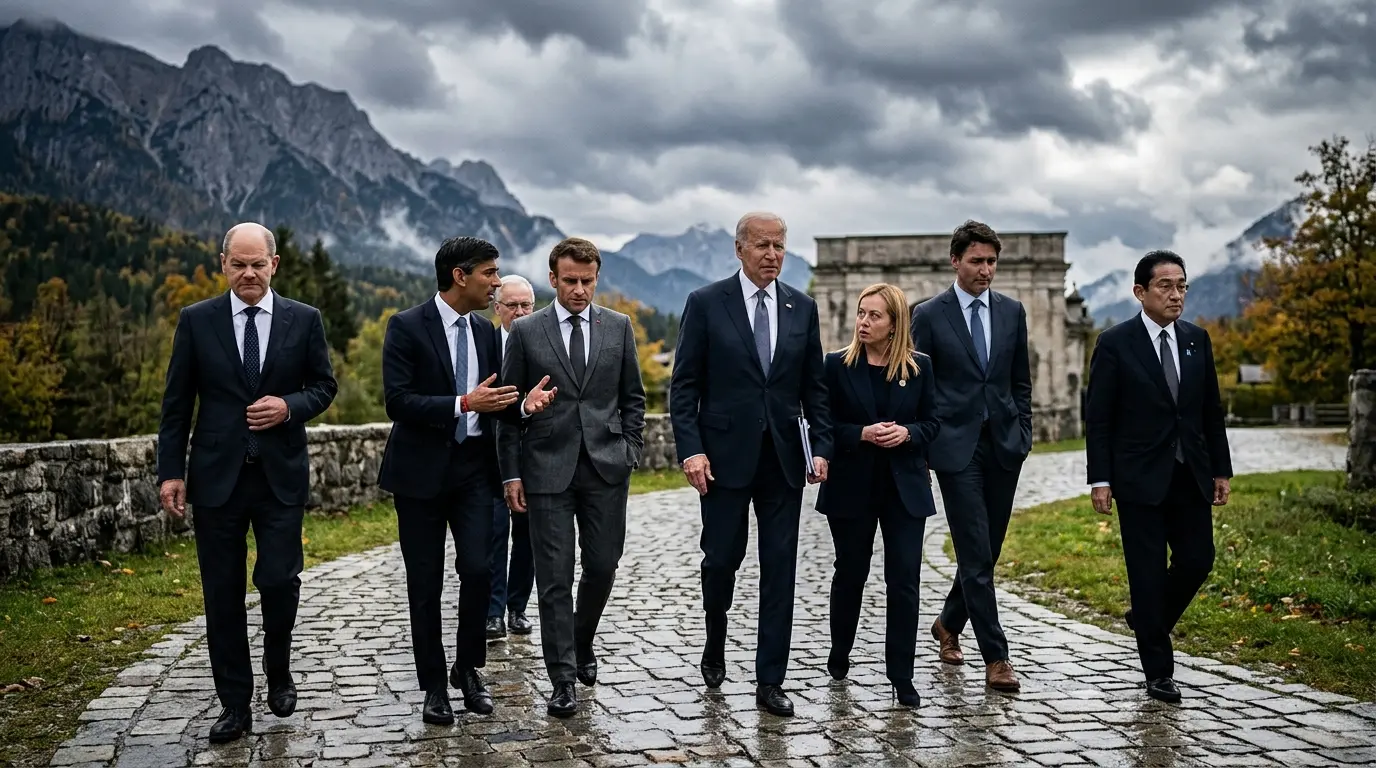
G7 Leaders Navigate Tumultuous Political Landscape Amidst Domestic Pressures and Upcoming Elections
The political landscape across the G7 nations is marked by considerable fluidity, as several heads of government contend with declining approval ratings, persistent economic challenges, and looming electoral contests. While the stability of these leading industrial democracies is often presumed, the reality reveals a complex interplay of domestic discontent, geopolitical shifts, and the inherent volatility of democratic mandates, raising questions about potential leadership changes within the next two years.
In Europe, several G7 leaders face significant headwinds. French President Emmanuel Macron, having navigated a contentious pension reform, continues to grapple with domestic unrest and the rise of far-right opposition. His ability to maintain a strong parliamentary majority and advance his reform agenda will be severely tested in the coming months and years. Similarly, German Chancellor Olaf Scholz's coalition government has seen its public support wane amidst economic slowdowns and internal disagreements over budget priorities and energy policy. With municipal and European elections providing regular temperature checks, the pressure on Scholz and his SPD-led government is palpable. In Italy, Prime Minister Giorgia Meloni has consolidated her position somewhat, but her government's long-term stability remains under scrutiny, particularly as economic strains persist and the broader European political dynamic shifts.
The United Kingdom is bracing for a general election widely anticipated within the next year. Prime Minister Rishi Sunak's Conservative Party faces an uphill battle, consistently trailing the Labour Party in opinion polls. Should Labour secure a victory, it would mark a significant leadership transition for one of the G7's core members, ushering in a new era of governance. This potential change reflects a broader trend of public desire for fresh leadership in response to economic challenges and lingering political fatigue. Across the Atlantic, U.S. President Joe Biden is gearing up for a highly anticipated and potentially divisive presidential election later this year. The outcome will not only determine American leadership but also have profound implications for global alliances, economic policy, and international relations.
Meanwhile, Canada's Prime Minister Justin Trudeau, now in his third term, has seen his Liberal Party's popularity dip, facing growing public dissatisfaction over housing affordability and cost-of-living issues. While an election is not mandated until 2025, the potential for an earlier snap election or significant shifts in political fortunes cannot be discounted given the dynamic nature of Canadian politics. In Japan, Prime Minister Fumio Kishida has likewise struggled with low approval ratings amid economic stagnation and a series of minor scandals impacting his ruling Liberal Democratic Party. Despite the LDP's long-standing dominance, internal party dynamics and public sentiment could precipitate a leadership challenge or a change in government composition before the end of 2026.
The cumulative effect of these individual national political situations contributes to a broader sense of uncertainty across the G7. Changes in leadership, whether through electoral defeat, internal party challenges, or unforeseen circumstances, can lead to shifts in national policy priorities, diplomatic approaches, and contributions to multilateral initiatives. The continuity of global governance, particularly on pressing issues like climate change, economic stability, and geopolitical security, often relies on consistent engagement from these leading nations. Any significant turnover among G7 leaders could introduce new dynamics, requiring renewed efforts to forge consensus and maintain the collaborative spirit essential for addressing global challenges.
The stakes are high for both the domestic populations of these countries and the international community. Stable and effective leadership within the G7 is critical for navigating complex global crises, maintaining economic resilience, and upholding the rules-based international order. The coming months and years will test the political acumen and resilience of these leaders, determining not only their individual political fates but also shaping the collective direction of some of the world's most influential economies and democracies.
As the world watches, the internal political machinations and electoral cycles within the G7 nations will undoubtedly remain a focal point of international observation, underscoring the ongoing evolution of global power dynamics and the continuous challenges of modern governance.
Stay Informed. Act Smarter.
Get weekly highlights, major headlines, and expert insights — then put your knowledge to work in our live prediction markets.
Related News
G7 Leaders Navigate Tumultuous Political Landscape Ahead of Key Electoral Tests
G7 Leaders Face Intensifying Political Pressures and Electoral Challenges Through 2026
G7 Leaders Face Intensifying Scrutiny Amid Electoral Cycles and Geopolitical Pressures
G7 Leaders Grapple with Widespread Political Volatility and Looming Electoral Challenges

G7 Nations Face Intensifying Scrutiny Over Leadership Stability Amid Domestic and Global Pressures
Political Turmoil and Electoral Pressures Challenge G7 Leaders Ahead of 2026
G7 Leaders Face Heightened Scrutiny Amid Turbulent Political Landscape Through 2026
G7 Leaders Face Intensifying Political Pressures, Raising Questions About Tenure Through 2026

Political Headwinds Batter G7 Leaders, Threatening Major Shakeup by 2026

Political Volatility Intensifies Scrutiny on G7 Leadership Stability Through 2026