

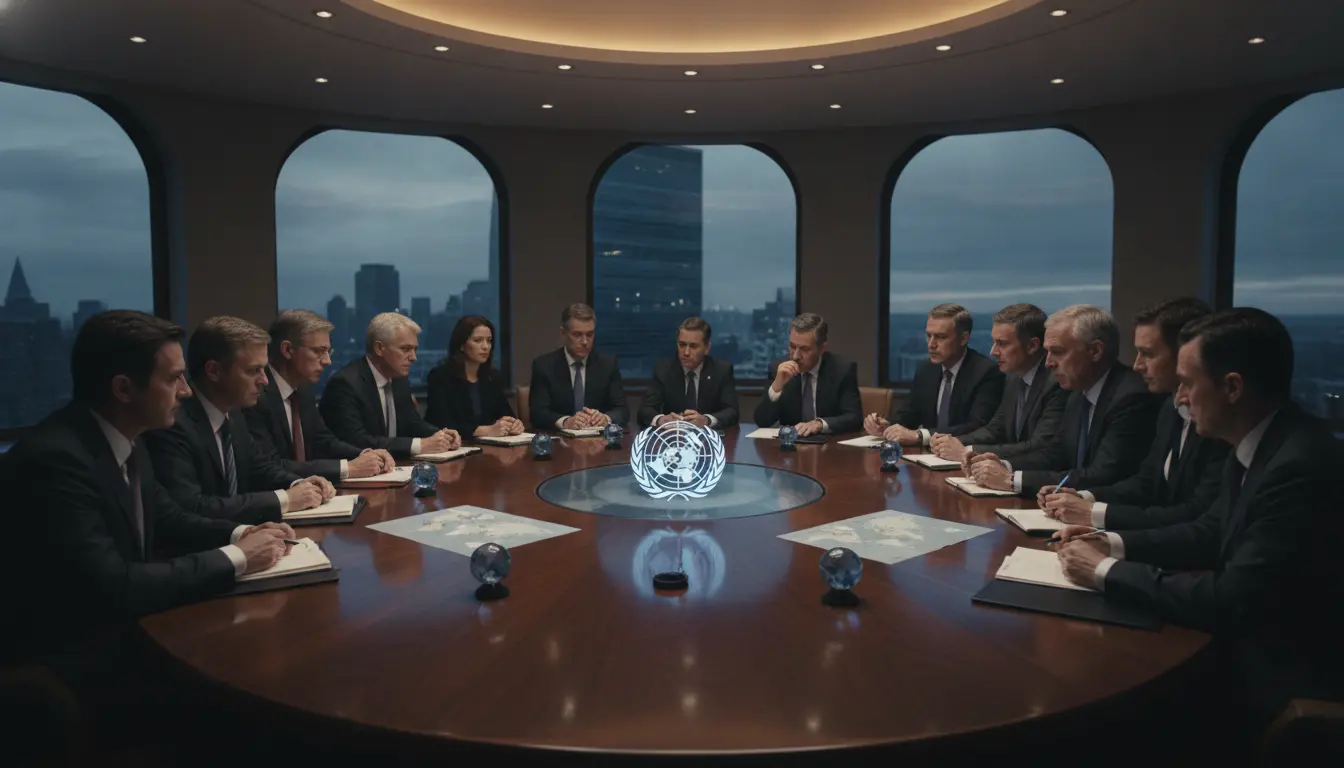
Global Diplomatic Scramble Intensifies for Next UN Secretary-General
The discreet but increasingly vital race to determine the next Secretary-General of the United Nations is gathering momentum, even as incumbent António Guterres continues his second five-year term. With Guterres’s mandate set to conclude at the end of 2026, the global diplomatic community is already engaged in preliminary discussions and soundings for a successor to lead the world’s foremost international organization through an era of profound geopolitical shifts and escalating global crises. The process, known for its intricate blend of backroom negotiations and public declarations, will ultimately decide who inherits the immense responsibility of guiding the UN’s multifaceted efforts in peace, security, development, and human rights.
The selection of the Secretary-General is a complex and often opaque affair, involving both the powerful Security Council and the broader General Assembly. Traditionally, the Security Council first recommends a candidate, who must secure the support of at least nine of its fifteen members, crucially without a veto from any of the five permanent members (China, France, Russia, the United Kingdom, and the United States). This recommendation then goes to the General Assembly for a simple majority vote. While the process has seen some reforms in recent years aimed at greater transparency, the influence of the P5 nations remains paramount, making their consensus a prerequisite for any candidate’s success.
Several unwritten conventions have historically guided the selection. These include a geographical rotation, which suggests that the next Secretary-General should come from the Eastern European Group, as no individual from that region has ever held the top post. However, this convention has been challenged in previous selection cycles and may once again be disregarded in favor of a candidate deemed universally strong. Another significant push, gaining considerable traction among member states and civil society organizations, is the call for the first female Secretary-General, recognizing that in nearly 80 years, the role has always been held by men. This confluence of regional expectations and gender equality advocacy adds layers of complexity to an already intricate selection process.
Potential candidates emerging in early discussions typically hail from backgrounds of high-level diplomacy, former heads of state or government, or leaders of major international organizations. They must possess not only impeccable diplomatic credentials but also the political acumen to navigate the often-conflicting interests of 193 member states. The next Secretary-General will face an array of formidable challenges, from persistent regional conflicts and the escalating climate crisis to widespread humanitarian emergencies and a fracturing multilateral system. The ability to broker consensus, advocate effectively for UN principles, and reform the organization to meet contemporary demands will be critical attributes for any serious contender.
The stakes are exceptionally high. The Secretary-General acts as the UN’s chief administrative officer, but also serves as a crucial moral authority and a global diplomat-in-chief, tasked with preventing conflicts and mediating disputes. The individual chosen will shape the UN’s response to existential threats, influence global policy dialogues, and symbolize the organization’s ongoing relevance in a multipolar world. The credibility and effectiveness of the United Nations itself, often criticized for its structural limitations and perceived inertia, will hinge significantly on the leadership provided by its ninth Secretary-General.
As the formal process draws closer, likely commencing in earnest in early 2026, more candidacies are expected to materialize, and informal polling among Security Council members will intensify. Member states, particularly the P5, will weigh candidates' perceived impartiality, leadership qualities, and their capacity to garner broad international support. The upcoming year and a half will witness a carefully orchestrated dance of diplomatic maneuvering, public campaigning, and private consultations, all aiming to position a favored candidate to take the helm of one of the world’s most demanding and globally significant roles.
Stay Informed. Act Smarter.
Get weekly highlights, major headlines, and expert insights — then put your knowledge to work in our live prediction markets.
Related News
Succession Discussions Intensify for NATO's Top Post as 2026 Deadline Approaches
Mark Rutte Poised for NATO's Top Post Amid Broad Alliance Support

G7 Nations Brace for Potential Leadership Shifts Ahead of 2026
German Presidency Succession Looms as Federal Assembly Prepares for 2027 Vote
G7 Leaders Face Heightened Scrutiny Amid Turbulent Political Landscape Through 2026
Political Turmoil and Electoral Pressures Challenge G7 Leaders Ahead of 2026
G7 Leaders Navigate Tumultuous Political Landscape Ahead of Key Electoral Tests

G7 Nations Face Heightened Prospects of Leadership Changes by End of 2026
G7 Leaders Grapple with Widespread Political Volatility and Looming Electoral Challenges
G7 Leaders Face Intensifying Scrutiny Amid Electoral Cycles and Geopolitical Pressures