

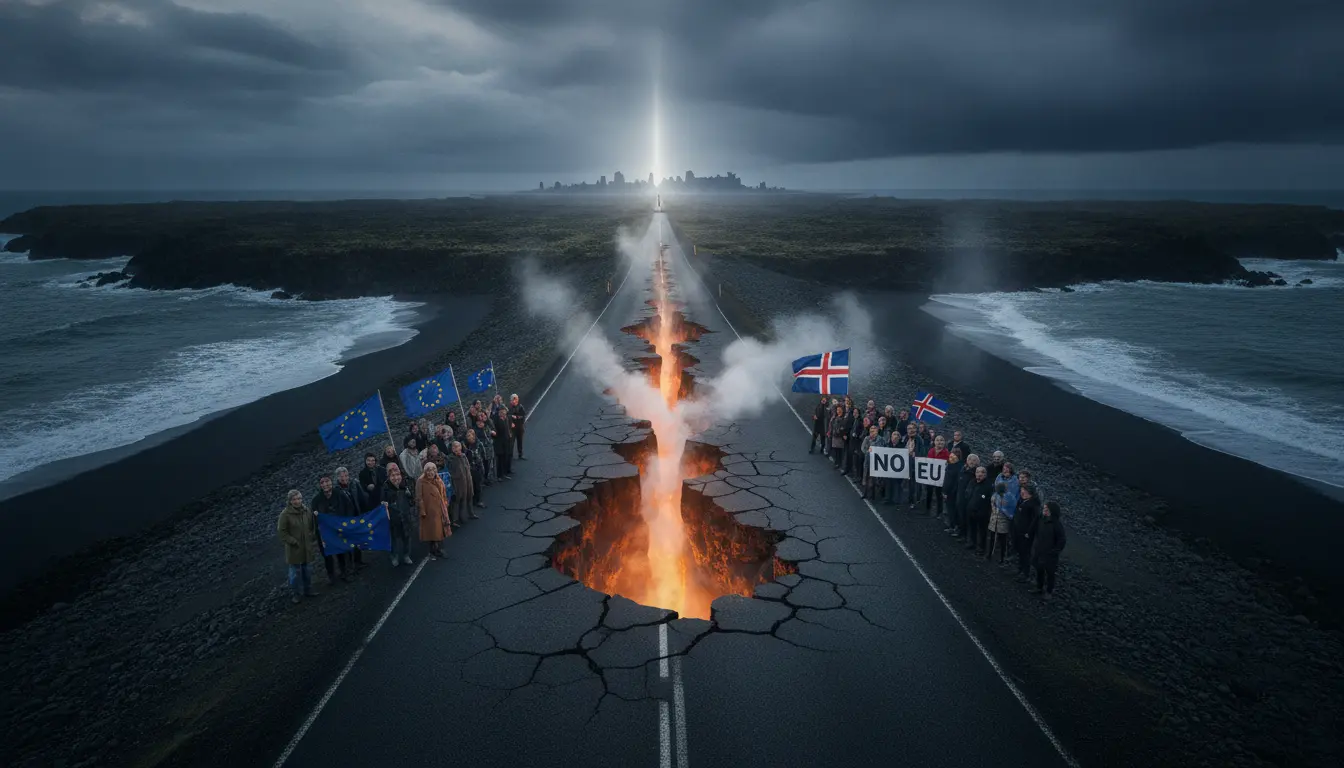
Iceland's Referendum on EU Membership Talks Reveals Nation Deeply Divided
Iceland finds itself at a critical juncture following a national referendum on whether to restart accession talks with the European Union, a vote that has laid bare profound divisions within the island nation. Early indications and public sentiment suggest the outcome is on a knife's edge, reflecting years of contentious debate over the country’s relationship with the continent. The close result underscores the deeply ingrained ideological and practical considerations that have long shaped Iceland's wary approach to full EU membership, leaving the political establishment and the public awaiting a clear path forward amidst the uncertainty.
For decades, Iceland has navigated a complex relationship with the European Union, balancing the benefits of close economic ties with a fierce protection of national sovereignty and unique industries. The nation first applied for EU membership in 2009, a decision heavily influenced by the profound economic collapse of its banking sector during the 2008 financial crisis, which many hoped closer integration with the Eurozone could mitigate. However, those accession talks quickly stalled, primarily over the thorny issue of fisheries management. Iceland, whose economy is inextricably linked to its rich fishing grounds, was unwilling to cede control over its quotas and regulatory framework to the EU's Common Fisheries Policy, a stumbling block that proved insurmountable. By 2013, the Icelandic government formally withdrew its application, effectively pausing the membership ambition.
The arguments for restarting talks, and ultimately joining the EU, often center on economic stability and market access. Proponents argue that full membership would provide Iceland with a stronger voice within Europe, diversify its economy beyond fisheries and tourism, and offer greater resilience against future economic shocks by integrating into a larger single market. They point to the potential for increased foreign investment, access to EU research and development funds, and the benefits of shared legal frameworks. For some, it represents a step towards a more modern, interconnected Iceland, moving beyond what they perceive as a somewhat isolated existence on the fringes of Europe.
Conversely, the opposition to EU membership is equally robust and deeply rooted. Critics emphasize the potential loss of sovereignty, particularly over the nation's critical fishing resources, which are seen as a birthright and the foundation of Icelandic prosperity. There is a strong cultural resistance to what many perceive as the bureaucratic overreach of Brussels and a fear that Iceland's unique identity could be diluted within the larger European bloc. Furthermore, many argue that Iceland already enjoys the benefits of the EU's single market through its membership in the European Economic Area (EEA), without the obligations and compromises of full political integration. This existing arrangement, they contend, offers the best of both worlds, preserving independence while ensuring economic access.
The political landscape surrounding this issue has historically been fractured. Parties on the left, such as the Social Democratic Alliance, have generally been more open to EU membership, viewing it as a path to greater social and economic stability. In contrast, conservative and agrarian parties, including the Independence Party and the Progressive Party, have staunchly defended sovereignty and resisted further integration. The current government, a coalition encompassing various viewpoints, has maintained a cautious approach, often reflecting the national ambivalence. Public opinion polls have consistently shown a divided populace, with slight shifts over time but rarely a clear majority for either side, underscoring why any referendum on the matter would inevitably lead to a nail-biting finish.
The stakes of this referendum are considerable. A 'yes' vote to restart talks would signal a monumental shift in Icelandic foreign policy, setting the stage for renewed, complex negotiations that could redefine the nation's economic and political future. It would likely involve deep concessions and reforms across various sectors, from agriculture to competition law. Conversely, a 'no' vote would reaffirm Iceland's independent course, potentially strengthening its existing EEA ties while solidifying its position as a sovereign entity charting its own destiny outside the EU's direct political orbit. Regardless of the technical outcome, the referendum has undeniably forced Icelanders to confront their national identity, economic future, and their place in a rapidly evolving Europe, underscoring the enduring tension between tradition and the allure of deeper integration.
The close nature of the vote means that even if a definitive result emerges, the underlying societal divisions are unlikely to dissipate quickly. The political implications are vast, potentially influencing future elections and the stability of any governing coalition. Iceland’s journey toward defining its European relationship remains a testament to the complexities nations face when balancing economic opportunity with the protection of cherished national interests and identity. The coming weeks and months will reveal how the country navigates the fallout from this deeply felt decision, shaping its trajectory for years to come.
Stay Informed. Act Smarter.
Get weekly highlights, major headlines, and expert insights — then put your knowledge to work in our live prediction markets.
Related News

Iceland Schedules 2026 Referendum on Resuming EU Accession Talks

European Union Intensifies Scrutiny of Meta's 'Addictive Features,' Significant Fines Loom
Central African Republic Grapples with Mining Safety Crisis After Deadly Goldmine Collapse
US, Iran agree on ‘roadmap’ towards final deal in Switzerland talks
Andy Burnham's Growing Influence Fuels Speculation Over Future Labour Leadership Bid

US-Venezuela Talks Intensify Over Potential New Oil Drilling Rights for American Firms

Shein Advances Hong Kong IPO Plans, Seeking Valuation Exceeding $30 Billion

Fears of Direct Conflict Mount as US and Iran Escalate Military Posturing in Persian Gulf
Fast-Fashion Giant Shein Prepares for Hong Kong IPO Amid Intensifying Global Scrutiny

US-Iran Tensions Escalate as Potential Military Options Against Nuclear Program Surface