

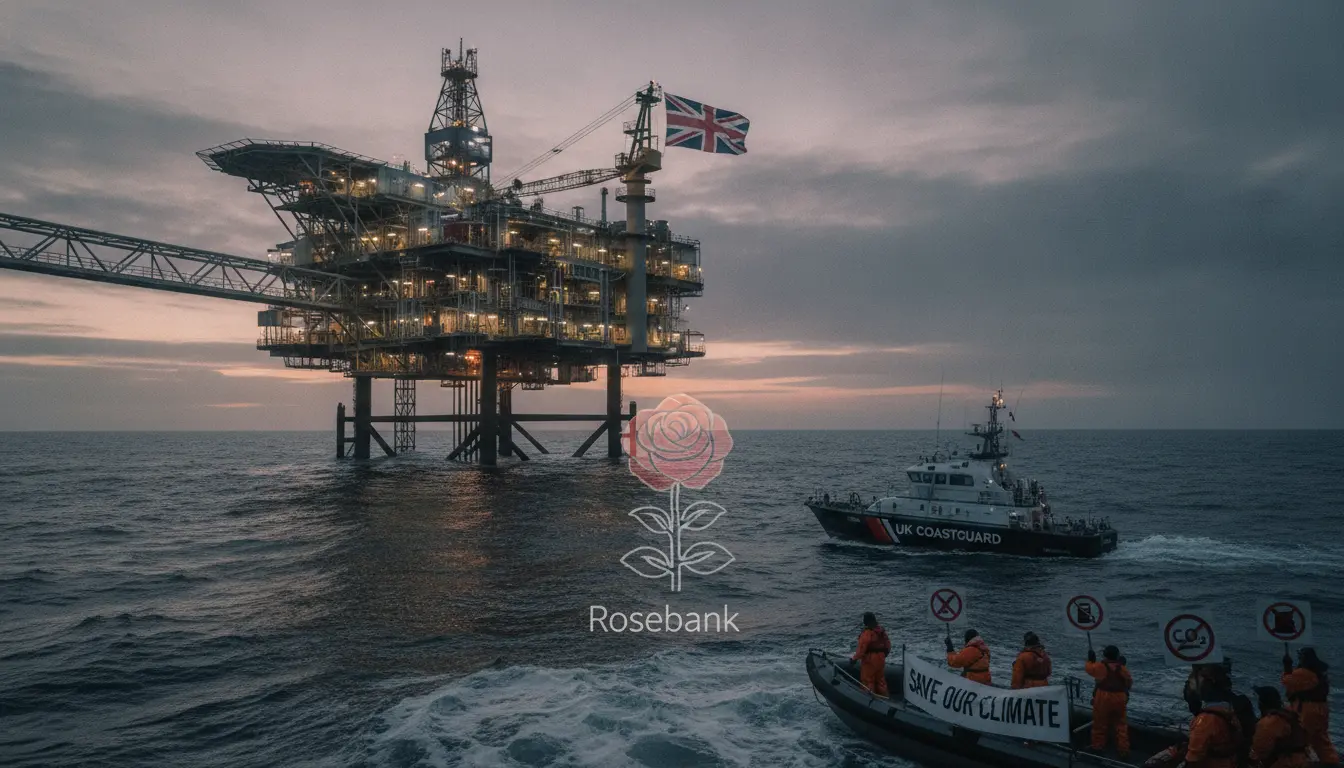
UK Government Greenlights Controversial Rosebank Oil Field Amid Climate Debate
In a move that has ignited fierce debate across the United Kingdom, the government has given its final approval for the development of the Rosebank oil and gas field in the North Sea. The decision, spearheaded by the Department for Energy Security and Net Zero, underscores a delicate balancing act between bolstering domestic energy security and adhering to ambitious climate change commitments, drawing immediate and stark reactions from both industry leaders and environmental campaigners.
The Rosebank field, located approximately 80 miles west of Shetland, is one of the largest undeveloped oil and gas reserves in the UK continental shelf, estimated to hold some 300 million barrels of recoverable oil. Majority owned and operated by Norwegian energy giant Equinor (80%) in partnership with Ithaca Energy (20%), the project is projected to play a significant role in reducing the UK’s reliance on imported fossil fuels. Proponents of the development, including the government and industry bodies, argue that it will create thousands of jobs, both directly and indirectly, inject substantial investment into the UK economy, and ensure a more stable energy supply in the wake of global market volatility exacerbated by geopolitical conflicts. They emphasize that while the transition to renewables is paramount, a pragmatic approach requires utilizing existing domestic resources during this critical interim period to meet current energy demands.
However, the approval has been met with vociferous opposition from environmental organizations and climate scientists, who contend that proceeding with Rosebank is a grave betrayal of the UK's legally binding Net Zero targets and its international climate leadership. Groups such as Greenpeace and Friends of the Earth have highlighted warnings from the International Energy Agency (IEA), which states that no new oil and gas fields should be approved if the world is to limit global warming to 1.5 degrees Celsius. Critics argue that the carbon emissions generated from extracting and burning Rosebank’s reserves will severely undermine efforts to tackle the climate crisis, painting the decision as short-sighted and inconsistent with the urgent need for a rapid transition away from fossil fuels. The project's operational emissions, though subject to regulatory scrutiny, are also a point of contention, with campaigners pointing to the broader scope 3 emissions from the eventual consumption of the oil and gas.
The government's rationale for approving Rosebank rests heavily on the argument for energy independence and the economic benefits it purports to bring. Following the energy price shock triggered by the conflict in Ukraine, the imperative to secure domestic energy sources has become a central tenet of the UK’s policy agenda. Prime Minister Rishi Sunak’s administration has consistently stressed the importance of maximizing the country’s own resources to protect consumers from volatile international markets. The North Sea Transition Authority (NSTA), the UK’s oil and gas regulator, confirmed that the project meets stringent environmental and energy security criteria, paving the way for its progression. This decision comes after years of uncertainty and extensive lobbying from both sides, illustrating the deep divisions within the national discourse on energy policy.
Looking ahead, the approval of Rosebank sets a significant precedent for future fossil fuel developments in the UK and beyond. Environmental groups have vowed to explore all avenues, including potential legal challenges, to halt the project, intensifying the scrutiny on the government's climate credentials. The decision also prompts renewed questions about the UK’s role on the global stage as it navigates the complex path to net zero, particularly as it continues to advocate for international climate action. While the government insists that Rosebank is compatible with its climate goals and that the oil will be produced with lower emissions than imports, the long-term ramifications for the UK’s energy landscape and its environmental legacy will undoubtedly remain a focal point of national and international discussion for years to come.
The debate surrounding Rosebank encapsulates the broader global challenge of reconciling immediate energy needs with long-term climate imperatives. As the project moves towards development, its journey will serve as a high-profile test case for how advanced economies balance their carbon commitments with the enduring realities of energy demand and economic stability. The implications of this decision will resonate not only within the North Sea basin but across the broader spectrum of global energy policy and environmental advocacy. It highlights the deeply entrenched complexities and compromises inherent in the global transition to a sustainable energy future, underscoring the political and economic pressures that shape such pivotal decisions.
Stay Informed. Act Smarter.
Get weekly highlights, major headlines, and expert insights — then put your knowledge to work in our live prediction markets.
Related News

Iceland's Referendum on EU Membership Talks Reveals Nation Deeply Divided

US-Venezuela Talks Intensify Over Potential New Oil Drilling Rights for American Firms

Global Warming Approaches Critical 2-Degree Celsius Threshold, Scientists Warn of Pre-2050 Breach

Iceland Schedules 2026 Referendum on Resuming EU Accession Talks

Central African Republic Grapples with Mining Safety Crisis After Deadly Goldmine Collapse

Shein Faces Intense Scrutiny After Public Debut with $26 Billion Valuation

Shein Advances Hong Kong IPO Plans, Seeking Valuation Exceeding $30 Billion

Fast-Fashion Giant Shein Prepares for Hong Kong IPO Amid Intensifying Global Scrutiny

Tehran Rejects Trump's Claim of 'Highest Level' Nuclear Inspection Agreement Amid Sanctions Relief Talks

Rare T. Rex Skeleton 'Gus' Poised for Sotheby's Auction, Eyes Potential Record $30 Million-Plus Sale