

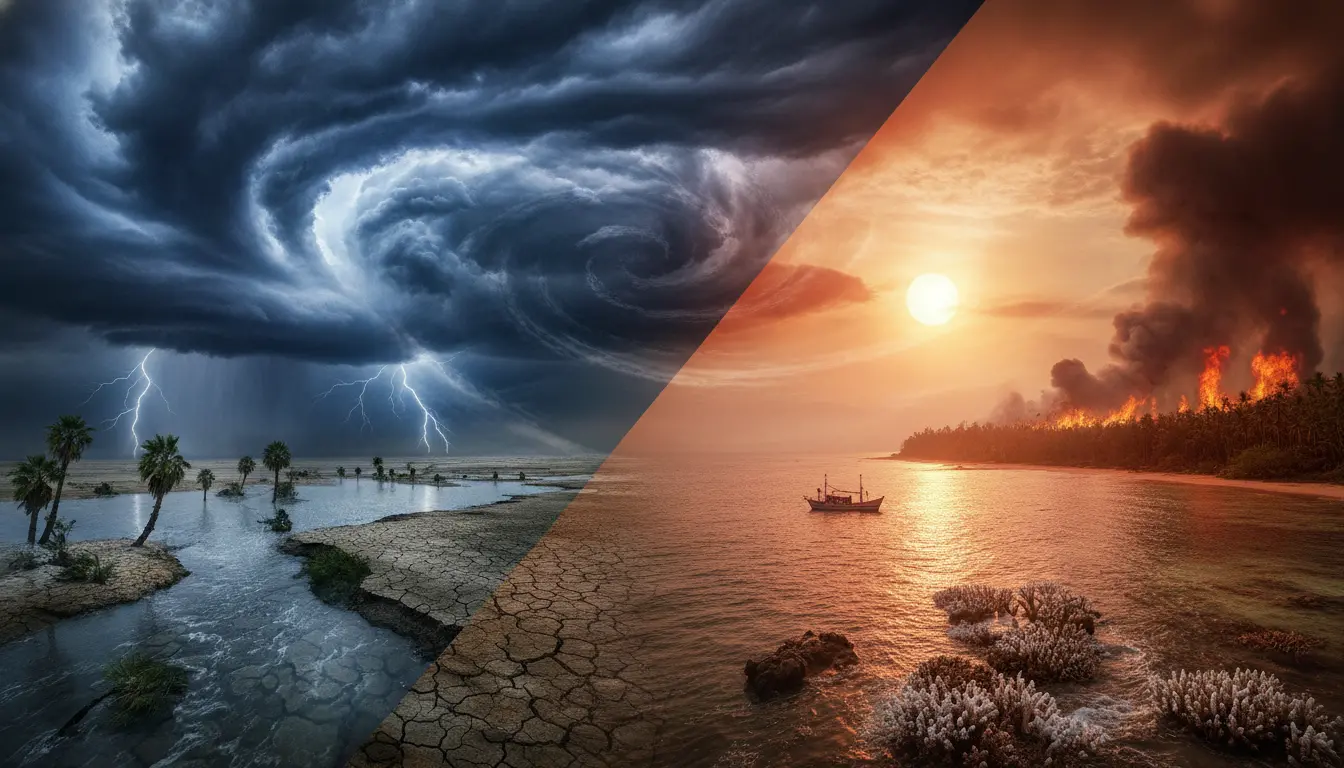
El Niño under way and threatens weather extremes, scientists say
The world stands on the cusp of a new chapter in climate dynamics as scientists from the United States formally declared the onset of an El Niño event. This highly anticipated, yet concerning, announcement from key meteorological agencies heightens fears of a cascade of extreme weather phenomena across the globe, alongside a projected rise in average temperatures. The cyclical warming of the Pacific Ocean’s surface waters, characteristic of El Niño, is now firmly established, setting the stage for a period of climatic disruption that could profoundly impact ecosystems, economies, and human societies worldwide.
El Niño, the warm phase of the El Niño-Southern Oscillation (ENSO), is a natural climate pattern that originates in the equatorial Pacific. It involves a substantial warming of sea surface temperatures in the central and eastern tropical Pacific, which in turn influences atmospheric circulation patterns across the planet. This shift in the global weather engine can lead to a wide array of consequences, from intensified rainfall in some regions to severe drought in others. Historically, strong El Niño events have been linked to significant global impacts, reshaping everything from agricultural yields to the prevalence of certain infectious diseases.
Past powerful El Niño events serve as stark reminders of the potential for widespread devastation. The 1997-98 event, for instance, triggered floods in California, severe droughts in Australia and Southeast Asia, and contributed to major forest fires. More recently, the 2015-16 El Niño, dubbed the “Godzilla El Niño” due to its immense strength, brought record-breaking temperatures, extensive coral bleaching, and exacerbated food insecurity in parts of Africa. Scientists are now closely monitoring the nascent El Niño, aware that its trajectory and intensity will largely determine the extent of its footprint, with particular concern for how it might interact with the already elevated global temperatures driven by anthropogenic climate change.
The immediate forecasts paint a picture of diverse and challenging conditions. Regions typically prone to El Niño-induced drought, such as Australia, parts of Southeast Asia, and southern Africa, are bracing for reduced rainfall and increased fire risk. Conversely, areas that historically experience heavier precipitation, like the southern United States and parts of South America, could face enhanced risks of flooding and landslides. Marine ecosystems are also highly vulnerable; warmer ocean temperatures exacerbate coral bleaching events and disrupt fish migration patterns, with significant economic implications for fishing communities globally. The agricultural sector, already under pressure from climate variability, is expected to face considerable challenges, impacting food security and commodity prices.
Monitoring El Niño is a monumental scientific undertaking, involving a network of ocean buoys, satellites, and sophisticated climate models. Agencies like the National Oceanic and Atmospheric Administration (NOAA) are at the forefront of this effort, providing critical data and forecasts that inform preparedness strategies worldwide. A key concern among researchers is how the ongoing backdrop of global warming might alter the typical behavior and intensity of El Niño. While El Niño is a natural phenomenon, a warmer baseline climate could mean that its warming effects are amplified, leading to unprecedented heat extremes or more intense rainfall events than seen in previous cycles. This interaction poses a complex challenge for climate scientists working to refine predictions and understand the full scope of future impacts.
As the El Niño event gathers strength, the emphasis shifts to preparedness and adaptation. Governments, aid organizations, and local communities are being urged to review and implement strategies to mitigate the anticipated impacts. This includes strengthening early warning systems, managing water resources more effectively, and bolstering public health infrastructure to cope with potential disease outbreaks. While the precise intensity and duration of this El Niño remain subject to ongoing scientific observation, the declaration serves as a crucial signal for the world to ready itself for a period of heightened climatic volatility and to accelerate efforts towards climate resilience in the face of an increasingly unpredictable global weather system.
The global community’s response to this developing El Niño will be a critical test of its capacity to navigate complex climate challenges. The scientific consensus is clear: the confluence of a powerful natural climate driver and a warming planet demands proactive, informed action to protect vulnerable populations and safeguard natural resources for the months and potentially years ahead.
Stay Informed. Act Smarter.
Get weekly highlights, major headlines, and expert insights — then put your knowledge to work in our live prediction markets.
Related News
US States Confront Escalating Heatwave Crisis, Potential for Emergency Declarations Looms

Extreme Heat Advisory Casts Shadow Over National Mall's Fourth of July Celebrations

Hawaii Braces for Potential Historic Direct Hit as Potent Hurricane Lala Approaches

Six ways to keep your home and yourself cool in hot weather

Escalating US-Iran Tensions Stoke Fears of Formal Conflict Declaration

Heightened US-Iran Tensions Fuel Fears of Formal Conflict Declaration

US Economy Navigates Heightened Recession Risks Amidst Shifting Monetary Policy and Global Headwinds
Australia Records First Mainland H5N1 Bird Flu Case Amid Global Pandemic Watch

Escalating US-Iran Tensions Threaten Global Oil Supply, Pushing Crude Prices Higher

US-China Economic Standoff Intensifies Amidst Calls for New Tariffs by 2026