

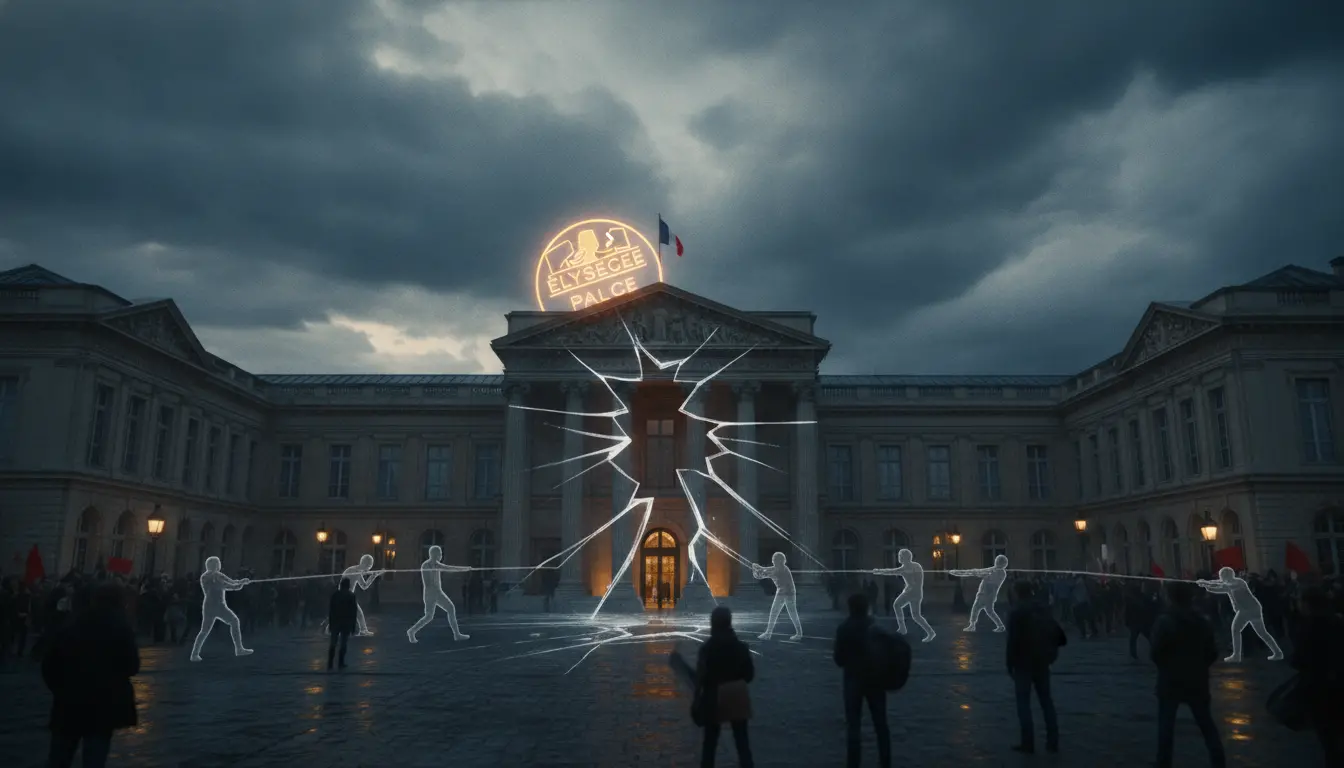
French Government Under Constant Threat of Collapse From Opposition No-Confidence Votes
The political landscape in France remains profoundly fractured, with President Emmanuel Macron's government facing persistent challenges to its stability from a deeply divided opposition. Since losing his absolute majority in the National Assembly in the 2022 legislative elections, Macron's centrist alliance, Ensemble, has been forced to navigate a precarious path, relying on ad-hoc alliances or the controversial use of constitutional mechanisms to advance its legislative agenda. This fragile equilibrium has led to numerous no-confidence motions from various opposition factions, keeping the executive under constant pressure and highlighting the deep ideological rifts within the country.
The genesis of this prolonged period of governmental vulnerability can be traced directly to the June 2022 parliamentary elections. While Macron secured a second presidential term with a comfortable majority, his alliance fell short of the 289 seats required for an absolute majority in the National Assembly. This outcome marked a significant shift from his first term, which benefited from a robust parliamentary majority. Governing in a minority configuration means that for every piece of legislation, the government must either secure cross-party support – often from the conservative Les Républicains – or resort to Article 49.3 of the Constitution, a tool that allows a bill to pass without a vote unless a no-confidence motion is subsequently filed and succeeds.
The repeated invocation of Article 49.3, particularly for contentious measures like the pension reform bill in 2023 or successive budget bills, has become a flashpoint for opposition parties. While legally permissible, its use is often perceived by critics as undemocratic and has consistently triggered no-confidence votes. These motions, though numerous, have thus far failed to garner the absolute majority required to oust the government, largely due to the inability of the disparate opposition blocs to unite behind a single alternative. The far-right National Rally (RN), the left-wing NUPES coalition, and the traditional right-wing Les Républicains, despite their shared desire to challenge Macron, often find themselves at ideological loggerheads, preventing the formation of a unified front capable of toppling the administration.
Key policy battles, such as the widely contested pension reform that raised the retirement age, have not only sparked mass street protests but have also intensified parliamentary skirmishes. The government’s determination to push through such reforms, despite public and parliamentary outcry, underscores its commitment to its agenda but also exacerbates political tensions. Each legislative push becomes a potential crisis point, with the specter of a no-confidence vote hanging over debates. The cumulative effect of these challenges risks not only delaying or derailing crucial reforms but also eroding public trust in democratic institutions, fostering a sense of perpetual political deadlock.
The stakes of this ongoing instability are considerable, both domestically and for France's standing on the international stage. Domestically, the government's ability to enact its remaining reform agenda, tackle pressing economic issues, and prepare for future challenges like climate change is hampered. A successful no-confidence vote would lead to the resignation of the Prime Minister and the entire government, potentially triggering snap legislative elections. While such an outcome is not definitively inevitable, the constant threat impacts morale, policy coherence, and governmental effectiveness. For Macron, maintaining stability is paramount to solidifying his legacy and ensuring France's continued influence within the European Union and globally.
The path forward for the Macron administration remains fraught with difficulty. While the likelihood of the fractured opposition successfully uniting to pass a no-confidence motion might appear low in the immediate term, the political environment is subject to rapid shifts. Any significant misstep by the government, a particularly unpopular policy, or a sudden realignment of opposition forces could alter the delicate balance. The political calculus also includes an eye on the 2027 presidential elections, with opposition parties eager to portray the current government as ineffective and illegitimate, using every opportunity to undermine its authority. This strategic posturing ensures that no-confidence motions, whether successful or not, will remain a recurring feature of French parliamentary life.
Ultimately, the persistent threat of a no-confidence vote is a defining characteristic of Macron’s second term, emblematic of a broader political fragmentation in France. The government's resilience will continue to be tested by its ability to secure parliamentary support, manage societal discontent, and effectively communicate its vision amidst a deeply polarized political landscape. The interplay between executive power and legislative scrutiny ensures that the question of governmental stability will remain a central theme in French politics for the foreseeable future.
Stay Informed. Act Smarter.
Get weekly highlights, major headlines, and expert insights — then put your knowledge to work in our live prediction markets.
Related News

Macron Government Navigates Instability Amid Persistent Early Election Speculation
G7 Leaders Face Intensifying Political Pressures, Raising Questions About Tenure Through 2026
G7 Leaders Face Intensifying Political Pressures and Electoral Challenges Through 2026
G7 Leaders Grapple with Widespread Political Volatility and Looming Electoral Challenges
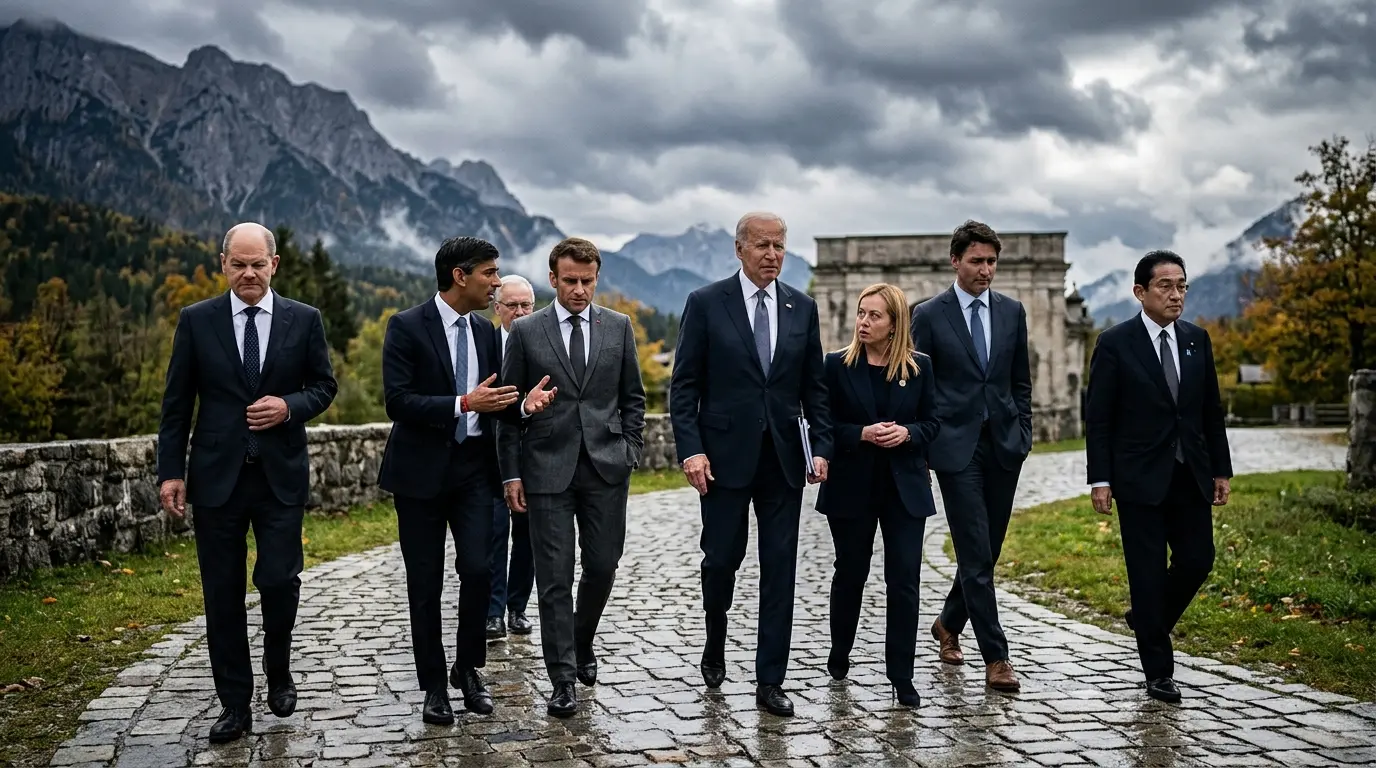
G7 Leaders Navigate Tumultuous Political Landscape Amidst Domestic Pressures and Upcoming Elections

Political Volatility Intensifies Scrutiny on G7 Leadership Stability Through 2026

G7 Nations Face Intensifying Scrutiny Over Leadership Stability Amid Domestic and Global Pressures

Paris Appeals Court Ruling Threatens Marine Le Pen's 2027 Presidential Candidacy
G7 Leaders Face Heightened Scrutiny Amid Turbulent Political Landscape Through 2026
Political Turmoil and Electoral Pressures Challenge G7 Leaders Ahead of 2026