

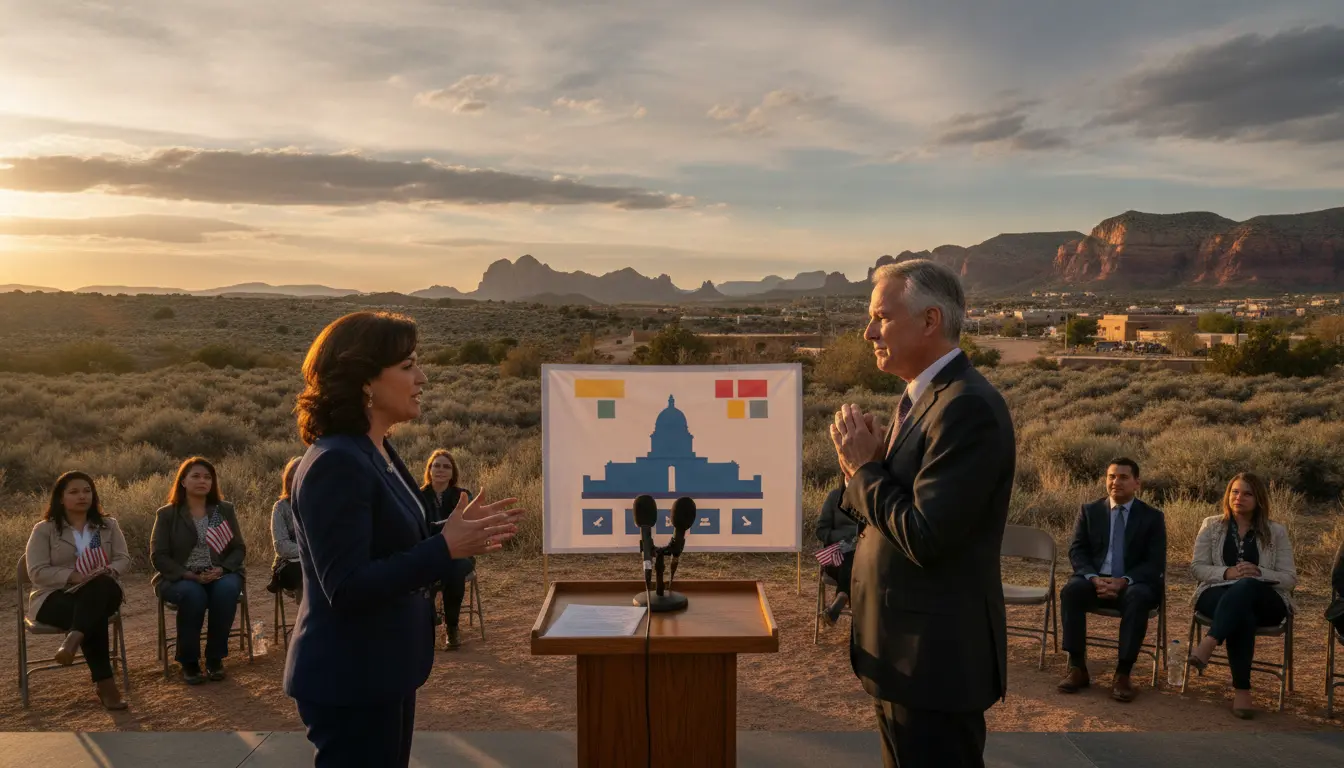
New Mexico's Senate District 33 Special Election Looms as Griffin, Wilson Vie for Seat
Voters in New Mexico's State Senate District 33 are poised to cast their ballots in a crucial special general election, which will determine the successor to a vacant seat and potentially influence the legislative landscape in Santa Fe. The contest pits Republican Rex Wilson against Democrat William Griffin, with both candidates campaigning vigorously to represent the sprawling, predominantly rural district encompassing portions of Lincoln, Otero, and Chaves counties. The election has drawn significant attention, not only from local constituents grappling with issues pertinent to their communities but also from state party strategists keen on maintaining or shifting the delicate balance of power within the New Mexico Senate.
This special election became necessary following the resignation of Republican Senator Clint Harden earlier this year, citing personal reasons. Harden, who had represented the district since 2021, left a vacancy that both parties swiftly moved to fill. District 33 is historically conservative, having consistently elected Republican representatives for decades. Its demographic makeup and economic drivers — largely agriculture, ranching, and some oil and gas interests — often lead to robust debates on issues like water rights, land use, and state regulations impacting rural industries. The special election, therefore, is not just about a single seat, but about affirming or challenging established political patterns in a part of the state where conservative values traditionally hold sway.
Republican candidate Rex Wilson enters the race with a platform centered on fiscal conservatism, economic development, and individual liberties. A longtime resident and active member of his community, Wilson has emphasized reducing government spending, lowering taxes, and supporting local businesses to stimulate job growth within the district. His campaign has also focused on issues like border security, parental rights in education, and protecting Second Amendment rights, resonating with a significant portion of the district’s electorate. Wilson’s message aims to continue the district's tradition of conservative representation, promising to be a strong voice for rural New Mexico against what he describes as overreach from the state capital.
On the Democratic side, William Griffin is campaigning on a platform that prioritizes public education, access to affordable healthcare, and responsible environmental stewardship. Griffin has highlighted the need for increased investment in rural infrastructure, expanding broadband access, and ensuring that local communities receive their fair share of state resources. He has also spoken about the importance of protecting New Mexico’s natural heritage and addressing the challenges posed by climate change, while also advocating for policies that support small farms and ranches. Griffin’s strategy involves appealing to moderate voters and emphasizing areas of common ground, while also mobilizing a smaller but dedicated base of Democratic and independent voters within the district.
The outcome of this election carries significant implications for the New Mexico State Senate. While Republicans currently hold a minority of seats, every race is critical in shaping the legislative agenda. A victory for Wilson would reinforce the GOP's presence and provide a strong conservative voice on key legislative battles, particularly regarding budget priorities and regulatory policies. Conversely, a victory for Griffin, though statistically challenging in this district, would be seen as a significant win for Democrats, potentially narrowing the Republican minority and offering an unexpected boost to the party's statewide influence. The dynamics of the upcoming legislative session, particularly on contentious issues such as energy policy, public safety, and educational reform, could be subtly yet meaningfully impacted by who ultimately represents District 33.
Both campaigns have invested heavily in ground operations, reaching out to voters through canvassing, local events, and targeted digital advertising. The district's vast geography means that candidates must cover considerable ground to connect with constituents. Voter turnout in special elections can be unpredictable, making every vote count and putting a premium on get-out-the-vote efforts. As the election day approaches, residents of District 33 are weighing their choices, understanding that their decision will not only fill a vacant seat but also contribute to the broader political direction of New Mexico for years to come.
The winner will face immediate legislative challenges upon taking office, needing to quickly acclimate to the complex processes of the State Senate and begin advocating for their constituents' needs. The representative will join a legislative body that often grapples with balancing the demands of a diverse state, from its bustling urban centers to its remote rural communities. The choice before District 33 voters is a clear one between two distinct visions for their community and the state, promising a closely watched outcome in the coming days.
Stay Informed. Act Smarter.
Get weekly highlights, major headlines, and expert insights — then put your knowledge to work in our live prediction markets.
Related News

South Carolina Republicans Gear Up for Special Primary to Fill Vacant Senate Seat

Strategic Battle Lines Drawn for Control of U.S. Senate Ahead of 2026 Elections
Colorado Prepares for Open Gubernatorial Race in 2026 as Polis Term Nears End

South Carolina Governor to Appoint Interim Senator Following Lindsey Graham's Death
Control of US Senate Hangs in Balance as 2026 Midterm Elections Loom
Democrats Face Uphill Battle to Maintain Senate Majority in 2026 Midterm Elections

Ideological Clash Looms in Michigan's 13th Congressional Democratic Primary

AI Industry Cash Deluges New York Congressional Primary, Testing Tech’s Political Clout

Democrat Hannah Pingree and MAGA ally Bobby Charles will face off for Maine governor
Supreme Court Vacancy Speculation Intensifies as 2026 Midterms Approach