

- News
- AI
- Robotaxi Rollouts Hint at Driverless Future, but True Level 5 Autonomy Faces Technical and Regulatory Hurdles
Robotaxi Rollouts Hint at Driverless Future, but True Level 5 Autonomy Faces Technical and Regulatory Hurdles
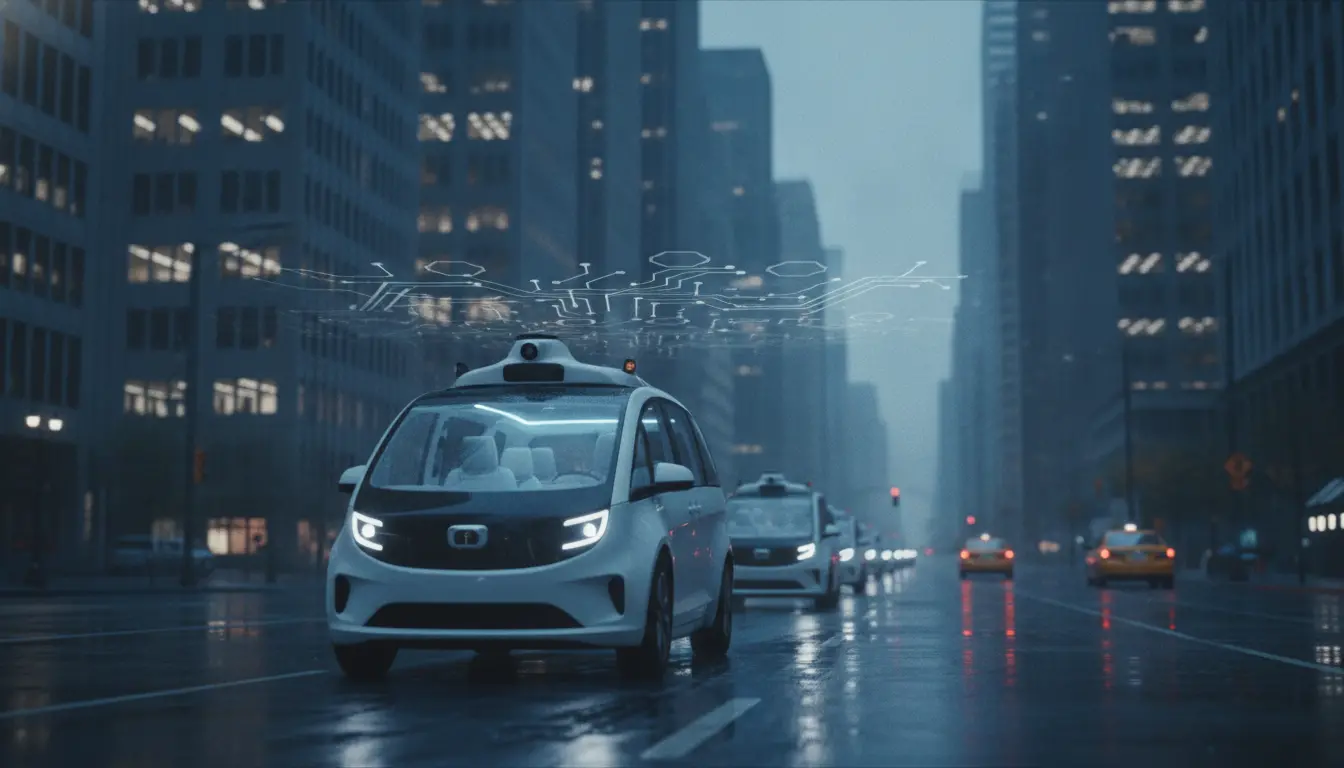
In cities like Phoenix and San Francisco, the future of transportation is already quietly navigating the streets. Fleets of autonomous vehicles, operated by companies like Waymo and, until recently, Cruise, offer a glimpse into a world without human drivers. This tangible progress, with cars successfully handling complex urban environments, has fueled excitement about the industry's ultimate goal: achieving Level 5 autonomy. Yet, despite billions invested and decades of research, the chasm between today's advanced, geofenced robotaxis and a car that can truly drive itself anywhere, anytime, in any condition, remains profoundly wide, making the prospect of reaching this milestone by 2026 a formidable, if not insurmountable, challenge.
The industry defines vehicle autonomy on a scale from 0 to 5, established by the Society of Automotive Engineers (SAE). Today's most advanced commercial systems, like Waymo's, operate at Level 4. These vehicles can perform all driving tasks without human intervention, but only within a specific, well-mapped geographical area (a “geofence”) and typically under favorable weather conditions. The jump to Level 5 is not merely an incremental step; it represents a paradigm shift. A Level 5 vehicle would require no geofencing, no weather limitations, and no possibility of a human ever needing to take control. It would need to navigate a snowy backroad in rural Montana with the same proficiency as a sun-drenched Los Angeles freeway, a feat that requires a form of generalized artificial intelligence far beyond current capabilities.
The race to solve this puzzle is being run by a mix of tech giants, legacy automakers, and specialized startups. Alphabet’s Waymo is widely considered the leader, having adopted a slow, methodical approach focused on accumulating vast amounts of real-world and simulated driving data. General Motors' Cruise pursued a more aggressive expansion strategy, which came to an abrupt halt after a serious accident in San Francisco led to the suspension of its license and a major corporate restructuring. Meanwhile, Tesla has taken a different path, marketing its “Full Self-Driving” feature, which controversially remains a Level 2 driver-assist system that requires constant human supervision. Other significant players, including China's Baidu with its Apollo platform and startups like Zoox and Motional, are also making significant strides, but all currently operate within the constraints of Level 4 technology.
The technical obstacles to achieving Level 5 are immense and multifaceted. The primary challenge is conquering the “long tail” of edge cases—the near-infinite number of unpredictable and rare events that occur on the road. While an AI can be trained on millions of miles of data to handle common scenarios, it can be stumped by something it has never encountered, such as unusual road debris, complex hand gestures from a traffic officer, or the erratic behavior of a distressed animal. Weather remains a formidable foe; heavy rain, snow, and fog can blind the lidar and camera sensors that act as the vehicles' eyes. Overcoming these issues requires breakthroughs in sensor technology, processing power, and, most importantly, the AI's ability to reason and adapt like a human, rather than just recognizing patterns.
Beyond the code and hardware, a complex web of regulatory and social hurdles stands in the way. There is currently no federal framework in the United States for deploying fully autonomous vehicles, leaving a patchwork of state-level regulations. Critical questions of liability—who is at fault when a driverless car crashes?—are still largely unresolved. Public trust, a crucial component for widespread adoption, is fragile and easily damaged by high-profile accidents. Before a Level 5 vehicle can become a reality, society must agree on a standardized method for validating its safety, a process that experts believe will require proving the systems are orders of magnitude safer than the average human driver.
As the 2026 horizon approaches, the industry's narrative is shifting from bold predictions of imminent full autonomy to a more pragmatic focus on expanding the operational domains of Level 4 systems. The immediate future will likely see more robotaxi services launching in more cities, operating in wider areas, and gradually learning to handle more adverse weather. While this incremental progress is a significant achievement, the dream of a car that can be summoned to drive from Miami to Seattle through any storm, with no human at the wheel, remains firmly in the realm of science fiction for the foreseeable future. The journey is well underway, but the final destination is much further down the road.
Stay Informed. Act Smarter.
Get weekly highlights, major headlines, and expert insights — then put your knowledge to work in our live prediction markets.
Related News
Race for Level 5 Autonomy Intensifies as Waymo, Cruise, and Tesla Navigate Technological and Regulatory Roadblocks
Tesla Sets Aggressive 2026 Target for Driverless Robotaxi Fleet Amid Regulatory and Technical Hurdles

Autonomous Multi-Step AI Agents Emerge as Next Major Frontier in Artificial Intelligence Development
OpenAI's Ambitious AGI Quest Intensifies as Industry Eyes Potential Pre-2027 Breakthrough

OpenAI Pushes for Human-Equivalent Multi-Modal AI Agents by 2026
Major AI Companies Poised to Launch Advanced LLMs by End of 2026
US Congress Intensifies Efforts to Forge Comprehensive Federal AI Regulation

Leading AI Firms Intensify Push for Flagship LLM Releases by 2026
Leading AI Firms Intensify Pursuit of Breakthroughs in Reasoning and Multimodal Capabilities
The Race for AI Supremacy: Tech Giants Accelerate Timelines for Next-Generation Language Models