


OpenAI Pushes for Human-Equivalent Multi-Modal AI Agents by 2026
OpenAI, a leading force in artificial intelligence research and deployment, is reportedly intensifying its efforts to develop and release a multi-modal agentic AI system by the end of 2026. This ambitious undertaking aims to create an AI capable of performing complex digital tasks with proficiency equivalent to that of a human, marking a significant leap in the quest for advanced autonomous systems. The initiative underscores the company's long-term vision and commitment to pushing the boundaries of what AI can achieve, potentially revolutionizing numerous industries and fundamentally altering the landscape of digital work.
At its core, a multi-modal agentic AI represents a convergence of several cutting-edge AI capabilities. "Multi-modal" refers to the system's ability to process and understand information from various data types simultaneously—such as text, images, audio, and video—much like humans interpret the world through multiple senses. This contrasts with earlier AI models that typically specialize in a single data format. The "agentic" aspect is even more transformative; it implies that the AI can not only understand but also autonomously plan, execute, and monitor a series of intricate steps to achieve a high-level goal, adapting to feedback and unexpected challenges along the way. Such a system would be able to interpret a complex request, break it down into sub-tasks, interact with various digital tools and interfaces, and ultimately deliver a comprehensive solution without constant human intervention.
OpenAI, known for its groundbreaking Large Language Models like the GPT series and image generation tools such as DALL-E, has consistently articulated its mission to build safe and beneficial Artificial General Intelligence (AGI). The development of a human-equivalent multi-modal agentic AI is seen as a critical stepping stone towards this ultimate goal. Sam Altman, OpenAI's CEO, and other leaders have frequently spoken about the need for AI to become more capable, reliable, and able to handle broader, more abstract problems. This current push is likely the culmination of years of research into advanced reasoning, reinforcement learning, and more robust contextual understanding, moving beyond mere pattern recognition to genuine problem-solving.
Achieving human-level performance in complex digital tasks by 2026 presents formidable technical and ethical challenges. Engineers face hurdles in ensuring robust error recovery, handling ambiguity, maintaining long-term memory across extended workflows, and integrating seamlessly with diverse software environments. Furthermore, significant work is required to embed strong safety protocols and alignment mechanisms to ensure these highly autonomous agents operate within desired parameters and align with human values. The potential for misuse or unintended consequences scales with the capabilities of such powerful AI, making responsible development a paramount concern for OpenAI and the wider AI community.
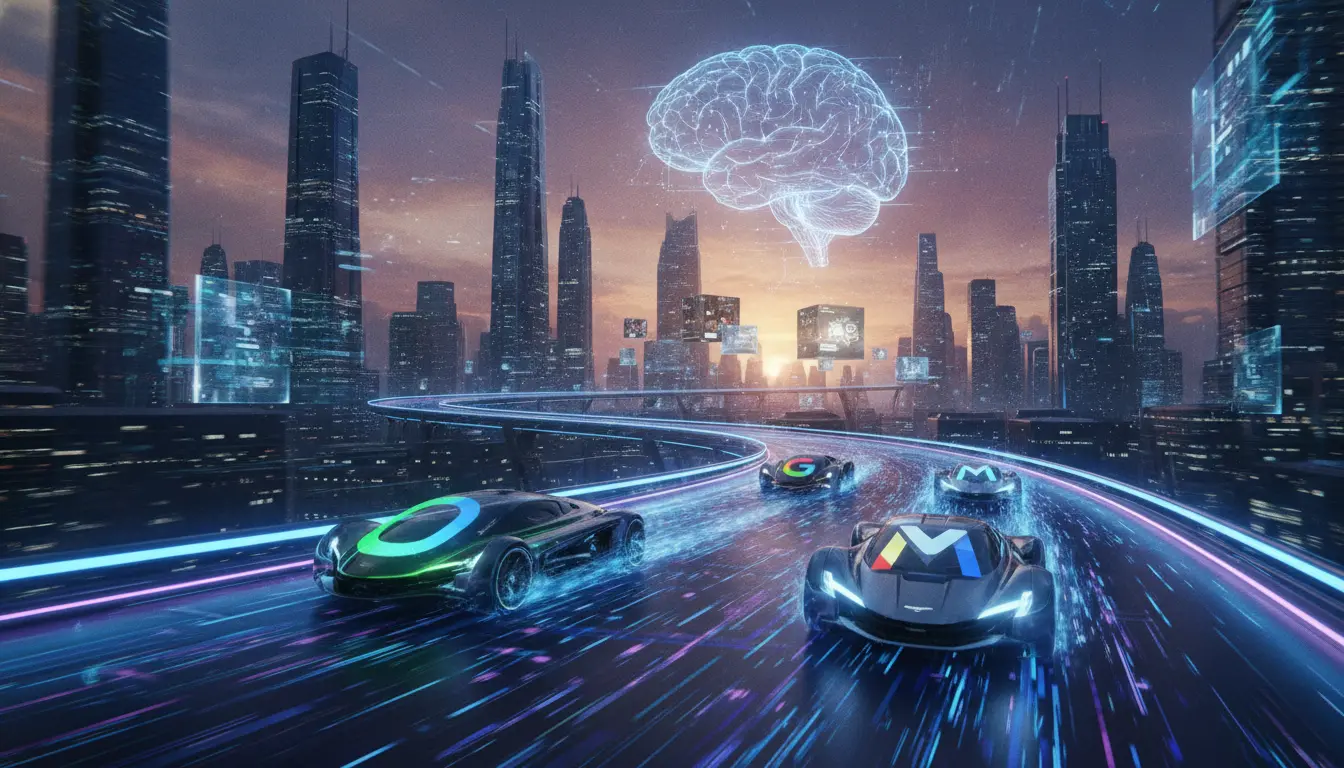
Other major players in the AI ecosystem, including Google DeepMind, Anthropic, and Meta, are also heavily investing in agentic and multi-modal AI research, creating a fiercely competitive environment. The race to develop more autonomous and versatile AI systems could unlock unprecedented levels of automation in fields ranging from software development and scientific research to customer service and creative industries. The ability of AI to independently navigate and perform intricate digital workflows could drastically alter productivity paradigms, leading to profound economic and societal shifts. This potential transformation places immense pressure on developers to not only innovate rapidly but also to prioritize the ethical implications and societal preparedness for such advanced technologies.
The implications of a human-equivalent multi-modal agentic AI are vast and multifaceted. On one hand, it promises to augment human capabilities, automate mundane or complex tasks, and accelerate scientific discovery. On the other, it raises serious questions about the future of work, the need for new regulatory frameworks, and the definition of intelligence itself. The year 2026 is an ambitious target, but if OpenAI or its peers succeed in this endeavor, it would undoubtedly mark a watershed moment in the history of artificial intelligence, heralding an era where AI agents become truly indispensable partners in the digital realm.
Stay Informed. Act Smarter.
Get weekly highlights, major headlines, and expert insights — then put your knowledge to work in our live prediction markets.
Related News
OpenAI's Ambitious AGI Quest Intensifies as Industry Eyes Potential Pre-2027 Breakthrough

Autonomous Multi-Step AI Agents Emerge as Next Major Frontier in Artificial Intelligence Development

Leading AI Firms Intensify Pursuit of Breakthroughs in Reasoning and Multimodal Capabilities

Major AI Companies Poised to Launch Advanced LLMs by End of 2026
Leading AI Firms Intensify Push for Flagship LLM Releases by 2026

AI Race Accelerates as Tech Giants Push for Next-Generation Flagship Models
AI Giants Intensify Race to Unveil Next-Generation Flagship Large Language Models by 2026
AI Giants Accelerate Race for Next-Generation Flagship Large Language Models

Major AI Companies Intensify Race to Unveil Next-Generation Flagship Language Models
The Race for AI Supremacy: Tech Giants Accelerate Timelines for Next-Generation Language Models