

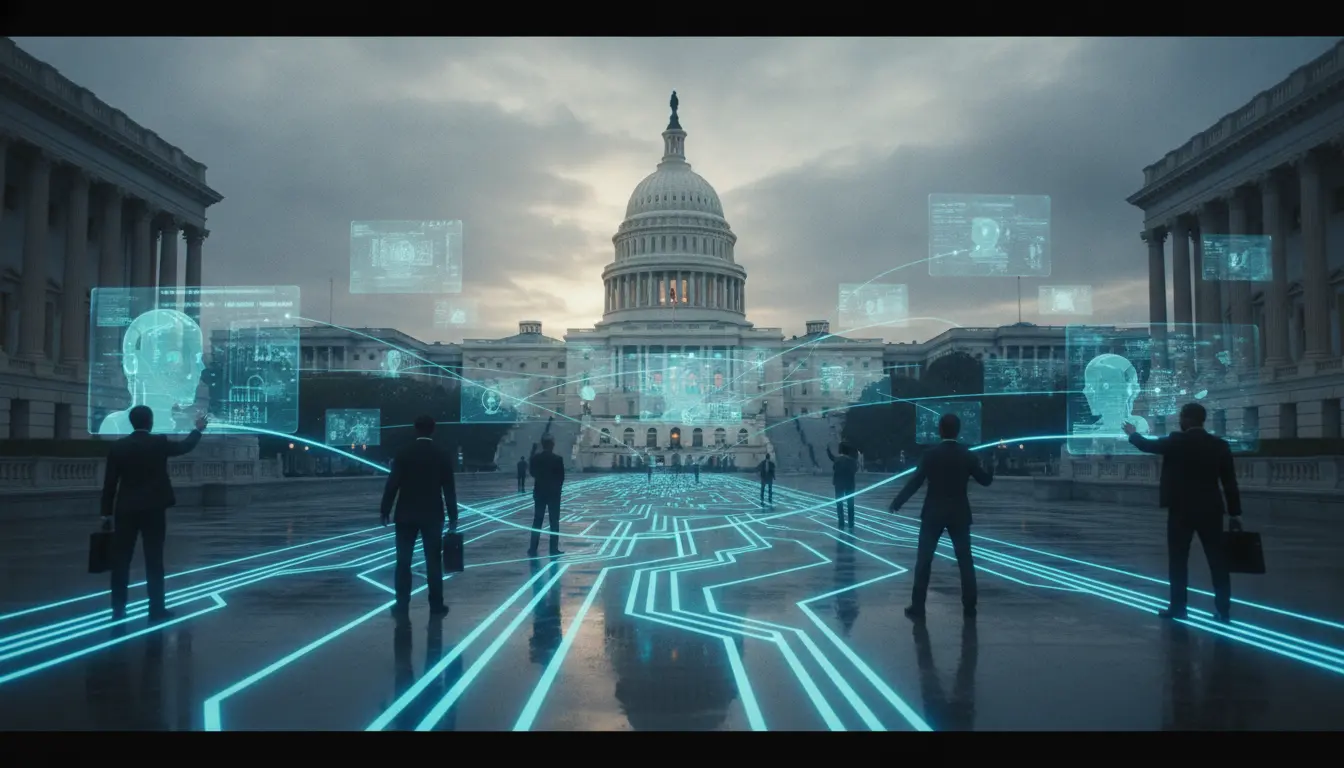
US Congress Intensifies Efforts to Forge Comprehensive Federal AI Regulation
Washington D.C. is witnessing a concerted, albeit challenging, push from lawmakers to establish a comprehensive federal framework for artificial intelligence. With the rapid advancement and pervasive integration of AI technologies across nearly every sector of society, members of both chambers of Congress are wrestling with the complexities of drafting legislation that can both harness innovation and mitigate potential risks. The urgency stems from a growing recognition that without clear federal guidelines, the United States risks falling behind global counterparts in governance, while simultaneously exposing its citizens and critical infrastructure to unforeseen dangers.
This legislative momentum is not entirely new; calls for AI regulation have mounted steadily over the past few years, accelerated by the public debut of sophisticated generative AI models. These tools have sparked widespread fascination and concern, prompting immediate questions about data privacy, intellectual property, bias, misinformation, and national security. The Biden administration has already taken executive action, issuing an extensive order in October 2023 that set out broad directives for federal agencies to ensure the safe, secure, and trustworthy development and deployment of AI. While a significant step, an executive order alone lacks the permanence and broad enforcement powers of federal law, underscoring the necessity for congressional action.
Key players in the Senate, including Majority Leader Chuck Schumer, have spearheaded initiatives to bridge the knowledge gap between lawmakers and leading experts in the field. Schumer’s "AI Insight Forums," a series of closed-door sessions involving tech CEOs, civil society leaders, and academics, have aimed to educate senators on the nuances of AI and explore potential legislative avenues. These forums have helped crystallize areas of bipartisan consensus, such as the need for transparency in AI models, addressing algorithmic bias, and establishing clear accountability for AI-generated content. However, fundamental disagreements persist on the scope of regulation, the creation of new federal agencies, and the extent to which government intervention might stifle innovation within the competitive tech landscape.
The path to a comprehensive federal AI bill remains fraught with significant hurdles. One of the primary challenges lies in defining what constitutes AI, a technology that is constantly evolving, making it difficult to craft future-proof legislation. There are also deep divisions regarding the appropriate balance between federal oversight and the role of existing state-level regulations. Industry lobbying efforts are substantial, with tech giants advocating for regulatory approaches that balance safety with their desire to innovate without undue burden. Furthermore, the sheer breadth of AI applications – from healthcare to defense – means that any single piece of legislation must navigate a complex web of existing laws and regulatory bodies, creating potential for overlap or conflict.
As the legislative clock ticks towards 2027, the political calendar adds another layer of complexity. The upcoming election cycle, including presidential and congressional races, could divert attention and resources from ambitious legislative undertakings. Passing a bill of this magnitude requires significant bipartisan cooperation, a rare commodity in today's polarized political climate. The stakes are immense: failure to legislate effectively could leave the US vulnerable to the unchecked proliferation of harmful AI applications, cede global leadership in AI governance to other nations with differing values, and undermine public trust in these transformative technologies. Conversely, a well-crafted bill could set a global standard for responsible AI development, fostering innovation while protecting democratic values and human rights.
Despite the formidable obstacles, proponents of federal AI regulation emphasize that the cost of inaction far outweighs the difficulty of crafting a solution. The debate continues to evolve, with various proposals circulating that touch upon everything from mandatory AI risk assessments and liability frameworks to the establishment of an independent AI oversight body. Whether Congress can consolidate these disparate ideas into a singular, impactful piece of legislation before the close of 2026 will largely depend on its ability to forge lasting bipartisan consensus amidst competing interests and the relentless pace of technological change.
Stay Informed. Act Smarter.
Get weekly highlights, major headlines, and expert insights — then put your knowledge to work in our live prediction markets.
Related News

G7 Intensifies Push for Global AI Rules, But Path to Unified Framework Remains Complex
US Deepens AI Export Scrutiny, Sparking Fears of a New Tech Cold War

OpenAI's Ambitious AGI Quest Intensifies as Industry Eyes Potential Pre-2027 Breakthrough

Major AI Companies Intensify Race to Unveil Next-Generation Flagship Language Models

Leading AI Firms Intensify Pursuit of Breakthroughs in Reasoning and Multimodal Capabilities

Leading AI Firms Intensify Push for Flagship LLM Releases by 2026

Major AI Companies Poised to Launch Advanced LLMs by End of 2026

AI Giants Intensify Race to Unveil Next-Generation Flagship Large Language Models by 2026

OpenAI Pushes for Human-Equivalent Multi-Modal AI Agents by 2026

AI Race Accelerates as Tech Giants Push for Next-Generation Flagship Models