

- News
- Science
- NASA's VIPER Rover Mission Aims for September 2026 Lunar South Pole Landing in Hunt for Water Ice
NASA's VIPER Rover Mission Aims for September 2026 Lunar South Pole Landing in Hunt for Water Ice
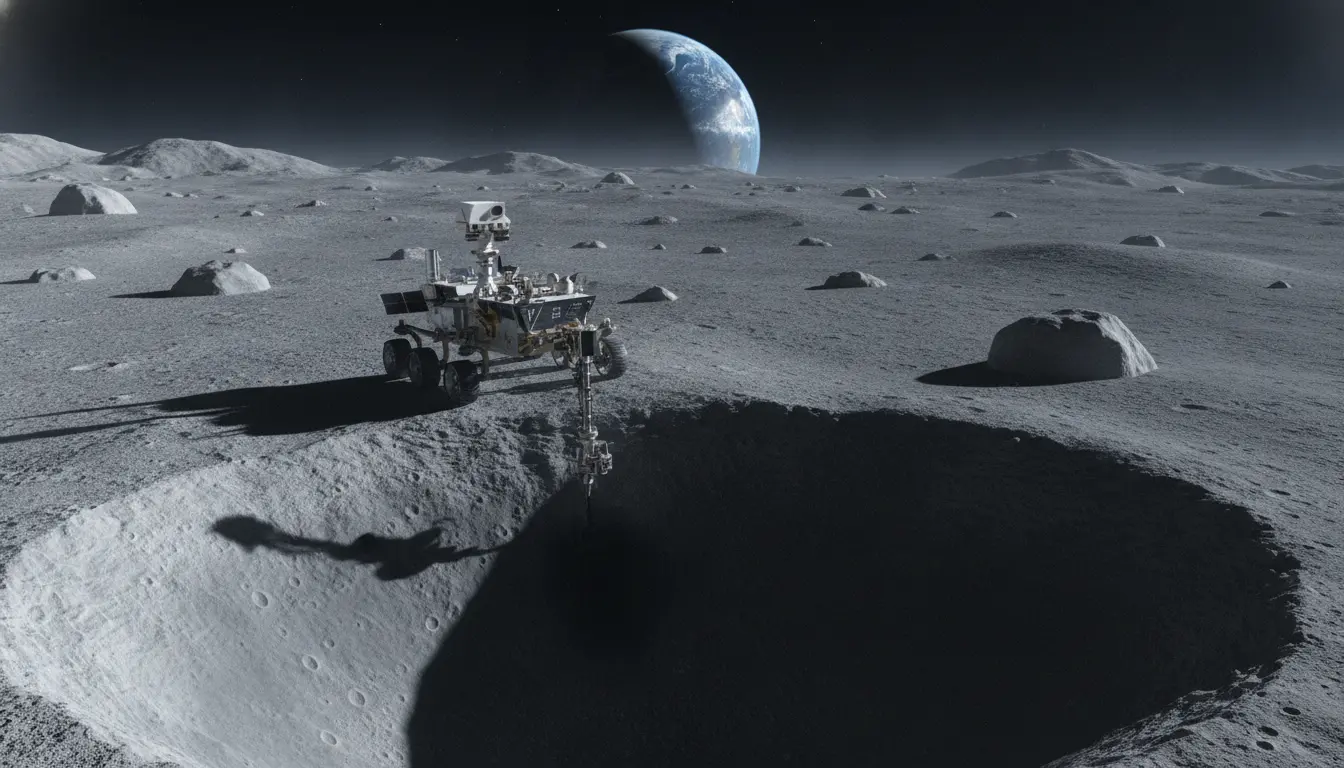
NASA’s ambitious Volatiles Investigating Polar Exploration Rover (VIPER) is now targeting a September 2026 landing at the Moon's mysterious south pole, a crucial mission designed to scour the lunar surface for evidence of water ice. This robotic explorer represents a pivotal step in humanity's return to the Moon, acting as a scout for future human expeditions under the Artemis program. A successful touchdown and subsequent operation would not only confirm theories about lunar water reservoirs but also unlock possibilities for sustainable human presence far beyond Earth, fundamentally reshaping the future of space exploration.
The search for water on the Moon has transformed from a scientific curiosity into a strategic imperative. Water ice is invaluable because it can be converted into breathable oxygen for astronauts, potable drinking water, and perhaps most significantly, rocket fuel. This ability to extract and utilize resources directly from the Moon – known as in-situ resource utilization (ISRU) – is seen as the cornerstone of long-duration lunar missions and even as a stepping stone for journeys to Mars. The Moon's south pole, with its permanently shadowed regions, is believed to harbor significant quantities of water ice, protected from the sun's harsh radiation for billions of years, making it an ideal, albeit challenging, target for VIPER.
VIPER itself is a unique and robust rover, roughly the size of a golf cart, engineered to navigate the extreme environment of the lunar pole. Equipped with a suite of sophisticated instruments, including a drill capable of penetrating up to three feet beneath the surface, VIPER will analyze soil samples for various volatile compounds, focusing intensely on water molecules. Its design incorporates special wheels and suspension to traverse rugged terrain, craters, and slopes, while its innovative thermal system is built to withstand temperatures ranging from scorching sunlight to the frigid depths of permanently shadowed craters. The rover is designed to operate for approximately 100 Earth days, systematically mapping the distribution and concentration of lunar water ice.
The mission relies on a commercial partnership, with Astrobotic Technology’s Griffin-1 lander carrying VIPER to its destination. The Griffin-1, a heavy-lift lunar lander, will provide the critical delivery system to precision-land VIPER near the Nobile crater, a scientifically compelling site at the lunar south pole. The launch vehicle for this monumental journey is expected to be a SpaceX Falcon Heavy rocket, highlighting the increasing role of private aerospace companies in NASA’s lunar ambitions. The demanding nature of lunar polar landings, characterized by tricky terrain, extreme temperature differentials, and intermittent communication windows due to the Earth-Moon geometry, underscores the technical prowess required for this endeavor. The mission has seen schedule adjustments, having originally aimed for a 2023 launch, then 2024, as the development of the Griffin lander and associated systems underwent rigorous testing and refinement to ensure mission success.
VIPER’s findings could have profound implications for the Artemis program, NASA's initiative to return humans to the Moon. Confirming substantial lunar water ice would solidify plans for a permanent lunar base, providing a sustainable outpost for astronauts to live and work. This potential resource could drastically reduce the cost and complexity of future space missions by eliminating the need to launch all supplies from Earth. Furthermore, the data collected by VIPER will inform not only future robotic missions but also the specific locations and operational strategies for human explorers who will follow in its tracks, potentially even setting up processing facilities to convert lunar ice into usable commodities.
A successful landing and operational period for VIPER would mark a monumental achievement in lunar exploration and a significant leap forward in humanity's quest for off-world habitation. The mission is more than just a scientific expedition; it is a pathfinder, a critical precursor to establishing a lasting human presence on the Moon and leveraging its resources for the benefit of sustained space exploration. The world watches keenly as NASA and its partners prepare for this ambitious undertaking, understanding that the knowledge gained could unlock new frontiers for generations to come.
Stay Informed. Act Smarter.
Get weekly highlights, major headlines, and expert insights — then put your knowledge to work in our live prediction markets.
Related News
NASA's VIPER Rover Targets Lunar South Pole in Search for Water Ice

NASA Aims for Human Mars Landing Confirmation by 2035 Amidst Accelerated Private Sector Partnerships

Outpoll Weekly Recap: Science (August 24 – 30, 2026)

Outpoll Weekly Recap: Science (August 10 – 16, 2026)

Outpoll Weekly Recap: Science (July 6 – 12, 2026)

2026 MTV Video Music Awards Set for Intense Competition for Coveted Moon Person Trophies

Apple Readies Foldable iPhone for Potential 2026 Unveiling Amid Industry Scrutiny

Google Poised to Expand Pixel Portfolio with New Foldable Device in 2026
Apple Explores Ultra-Premium iPhone Tier for 2026 Launch

Google Prepares to Unveil Pixel 11 Series with Anticipated Camera Innovations in August 2026