

Outpoll Weekly Recap: Science (July 6 – 12, 2026)
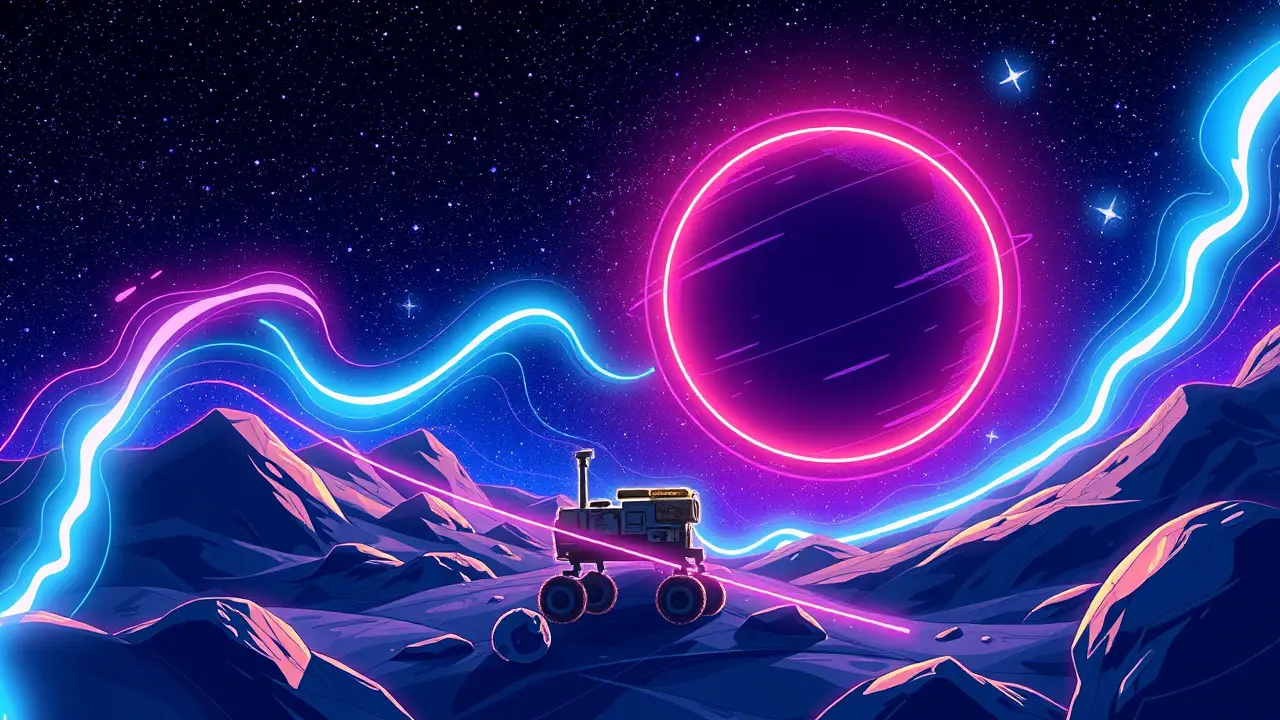
This week in science felt like opening a drawer full of ticking clocks—each one marking a breakthrough or a countdown. Headlining the news, the Perseverance rover finally sealed its first sample tube containing what NASA cautiously called 'high-priority sedimentary material' from the Jezero Crater delta, a cache that could hold fossilized traces of ancient microbial life. On prediction markets, the probability of a confirmed Martian biosignature announcement before 2030 jumped to 41%, up from 32% last month, as astrobiologists debated whether the layered clay minerals in the sample could preserve organic compounds. Back on Earth, the European Space Agency’s Euclid mission released its first deep-field survey of dark matter distribution, mapping over 100 million galaxies and revealing filamentary structures that align eerily with simulations of cosmic web formation—sending shockwaves through cosmology circles and driving Polymarket odds of a Nobel Prize for dark matter research above 50% for the first time. Meanwhile, the biotech sector had a volatile week: Crispr Therapeutics announced a phase 3 trial success for an in-vivo sickle cell treatment, sparking a 14% rally in gene-editing stocks, but on Manifold Markets, the question of whether the FDA would approve the first human germline editing trial by 2027 saw its 'yes' share drop from 28% to 19% after an ethics committee in China issued a surprise moratorium on heritable edits. The climate front brought a sobering milestone: the National Oceanic and Atmospheric Administration confirmed that the global average temperature for the week ending July 5 was the highest ever recorded for that period, with predictions on PredictIt that the Paris Agreement's 1.5°C threshold would be breached within two years rising to 67%. In the world of physics, a team at CERN presented preliminary results from the LHC's high-luminosity upgrade, showing a potential anomaly in B-meson decay that could hint at physics beyond the Standard Model—though with a p-value of 0.003, it's not quite the champagne-popping evidence many had hoped for. Forecasters on Azuro are now pricing in a 12% chance that a new fundamental particle will be confirmed by 2028, up from 8%. Thomas Green would point out that this is exactly the kind of cosmic tension that makes science feel like watching a rocket launch: you know the math, but your heart still races. The week ended with a reminder of our fragile perch—a close approach of asteroid 2026 FL3, a 40-meter rock that whizzed by at just 120,000 kilometers, within the moon’s orbit, prompting a flurry of bets on the timing of NASA’s next planetary defense mission. As I like to say, the universe isn’t just stranger than we imagine—it’s stranger than we can imagine, and this week, it proved it twice over.
Stay Informed. Act Smarter.
Get weekly highlights, major headlines, and expert insights — then put your knowledge to work in our live prediction markets.
Related News
Outpoll Weekly Recap: Science (August 10 – 16, 2026)
Outpoll Weekly Recap: Science (August 24 – 30, 2026)

Outpoll Weekly Recap: Sport (July 6 – 12, 2026)

Outpoll Weekly Recap: Entertainment (July 6 – 12, 2026)

Outpoll Weekly Recap: Entertainment (July 13 – 19, 2026)

Outpoll Weekly Recap: June 29 – July 5, 2026

Outpoll Weekly Recap: Crypto (July 13 – 19, 2026)

Outpoll Weekly Recap: Crypto (June 22 – 28, 2026)

Outpoll Weekly Recap: Entertainment (August 24 – 30, 2026)

Outpoll Weekly Recap: Entertainment (August 17 – 23, 2026)