

NASA's VIPER Rover Targets Lunar South Pole in Search for Water Ice
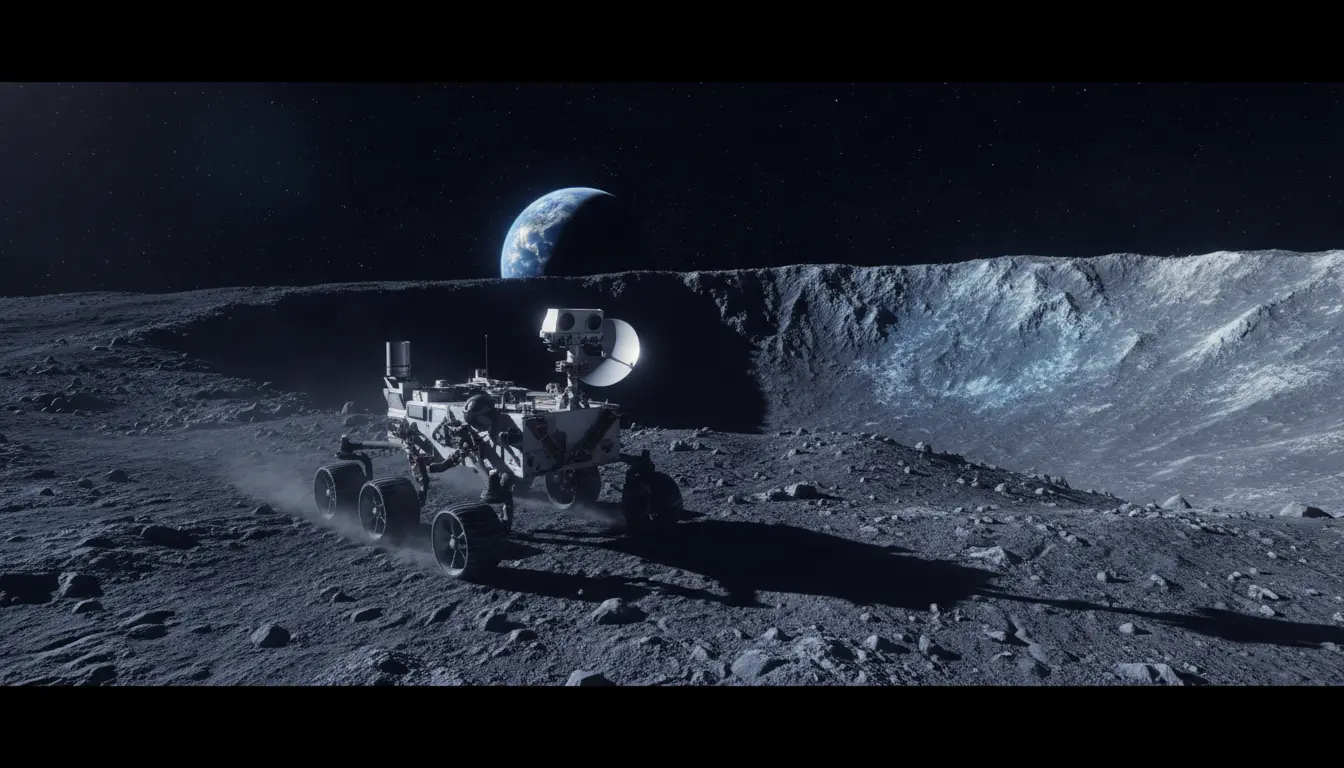
NASA is intensifying its pursuit of lunar resources with the highly anticipated Volatiles Investigating Polar Exploration Rover (VIPER) mission, slated for a critical landing near the Moon's south pole by the end of 2026. This robotic explorer is designed to meticulously map and investigate the distribution of water ice and other volatiles in a region believed to hold key ingredients for future human outposts. The mission represents a pivotal step in humanity's return to the Moon, transitioning from short-duration visits to a long-term, sustainable presence.
The search for water ice on the Moon has transformed from a scientific curiosity into a strategic imperative. Confirmation of significant quantities of water ice in permanently shadowed regions near the lunar poles has profound implications for space exploration. Such ice could be processed into drinking water for astronauts, oxygen for breathing, and, critically, hydrogen and oxygen propellants for rockets, enabling deep-space missions directly from the Moon. This capability would drastically reduce the cost and complexity of space travel by eliminating the need to launch all necessary resources from Earth. VIPER's findings will be instrumental in identifying optimal locations for future Artemis missions, including potential sites for human habitats and resource extraction facilities.
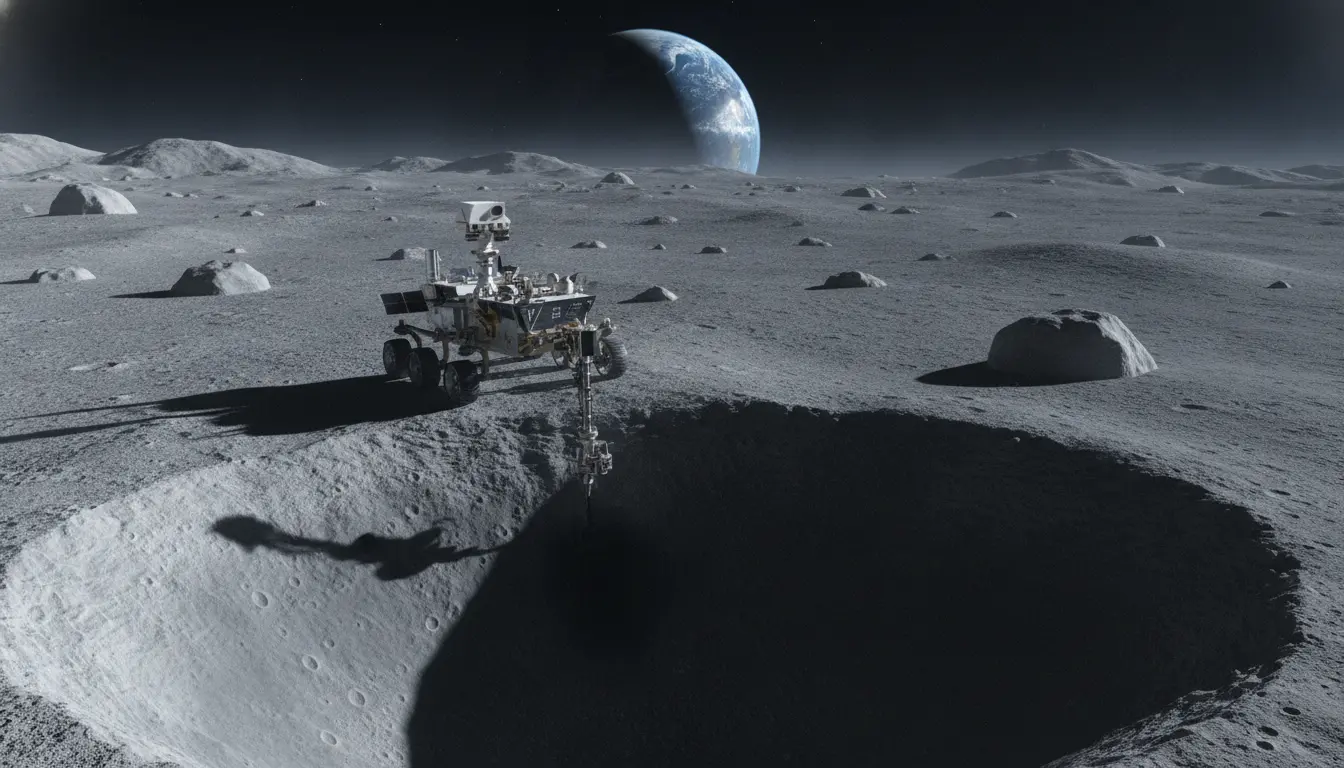
VIPER is an advanced, golf cart-sized rover, equipped with four sophisticated instruments to achieve its scientific objectives. These include the Mass Spectrometer Observing Lunar Operations (MSOLO) to detect tiny amounts of volatiles, the Near-InfraRed Volatile Spectrometer System (NIRVSS) to identify surface and subsurface water ice, the Neutron Spectrometer System (NSS) to detect hydrogen, and the TrutH Acquisition for Lunar Science (TRUTH) drill, capable of boring up to three feet into the lunar surface to collect samples. This suite of tools will provide an unprecedented three-dimensional view of volatile distribution, allowing scientists to understand the origin and evolution of water on the Moon. The rover is designed to navigate the rugged, extreme environment of the lunar south pole, including challenging lighting conditions and temperature variations.
The mission relies on a crucial launch aboard a United Launch Alliance (ULA) Vulcan Centaur rocket, currently scheduled for September 30, 2026. This launch vehicle will deploy Astrobotic Technology's Griffin lunar lander, which will then transport VIPER to its designated landing site near the Nobile crater, one of the coldest spots in the solar system. The successful delivery and deployment of VIPER will mark a significant achievement for both NASA and its commercial partners, demonstrating the capabilities of public-private collaborations in advancing space exploration goals. The landing phase itself is fraught with challenges, given the precision required and the unforgiving lunar environment.
Operating in the lunar south pole presents unique engineering hurdles. The Sun hovers low above the horizon, casting long, dynamic shadows that can plunge areas into perpetual darkness while others experience constant illumination. VIPER is designed with robust thermal systems and solar panels to endure these drastic thermal cycles and maintain power. Its specialized wheels and mobility system are tailored to traverse varied terrains, from soft regolith to rocky outcrops. The mission's operational window is expected to last approximately 100 Earth days, during which the rover will meticulously explore several miles of lunar surface, providing a wealth of data critical for future lunar endeavors.
Beyond its immediate scientific goals, the VIPER mission is a cornerstone of NASA's broader Artemis program, which aims to establish a long-term human presence on the Moon and use it as a springboard for missions to Mars. The data collected by VIPER will directly inform site selection for Artemis III, the mission projected to land humans on the Moon for the first time since the Apollo era. The insights gained regarding lunar resource availability are not only vital for NASA but also hold interest for other spacefaring nations and private companies increasingly looking towards the Moon as a strategic asset. The success of VIPER could usher in a new era of lunar industrialization and sustained human activity beyond Earth.
As the launch date approaches, the international space community watches with keen interest. VIPER's journey represents not just a robotic mission, but a bold step forward in humanity's quest to unlock the Moon's secrets and leverage its resources for the benefit of future space exploration. The data it uncovers will undoubtedly shape the trajectory of lunar science and resource utilization for decades to come, bringing us closer to a permanent human foothold among the stars.
Stay Informed. Act Smarter.
Get weekly highlights, major headlines, and expert insights — then put your knowledge to work in our live prediction markets.
Related News
NASA's VIPER Rover Mission Aims for September 2026 Lunar South Pole Landing in Hunt for Water Ice

NASA Aims for Human Mars Landing Confirmation by 2035 Amidst Accelerated Private Sector Partnerships

Outpoll Weekly Recap: Science (August 24 – 30, 2026)
Outpoll Weekly Recap: Science (August 10 – 16, 2026)

2026 MTV Video Music Awards Set for Intense Competition for Coveted Moon Person Trophies

Outpoll Weekly Recap: Science (July 6 – 12, 2026)

Google Poised to Expand Pixel Portfolio with New Foldable Device in 2026

Apple Readies Foldable iPhone for Potential 2026 Unveiling Amid Industry Scrutiny

Google Prepares to Unveil Pixel 11 Series with Anticipated Camera Innovations in August 2026
Apple Explores Ultra-Premium iPhone Tier for 2026 Launch