

- News
- Science
- Intuitive Machines and NASA Target Mysterious Lunar Swirl with Rover-Deploying IM-3 Mission
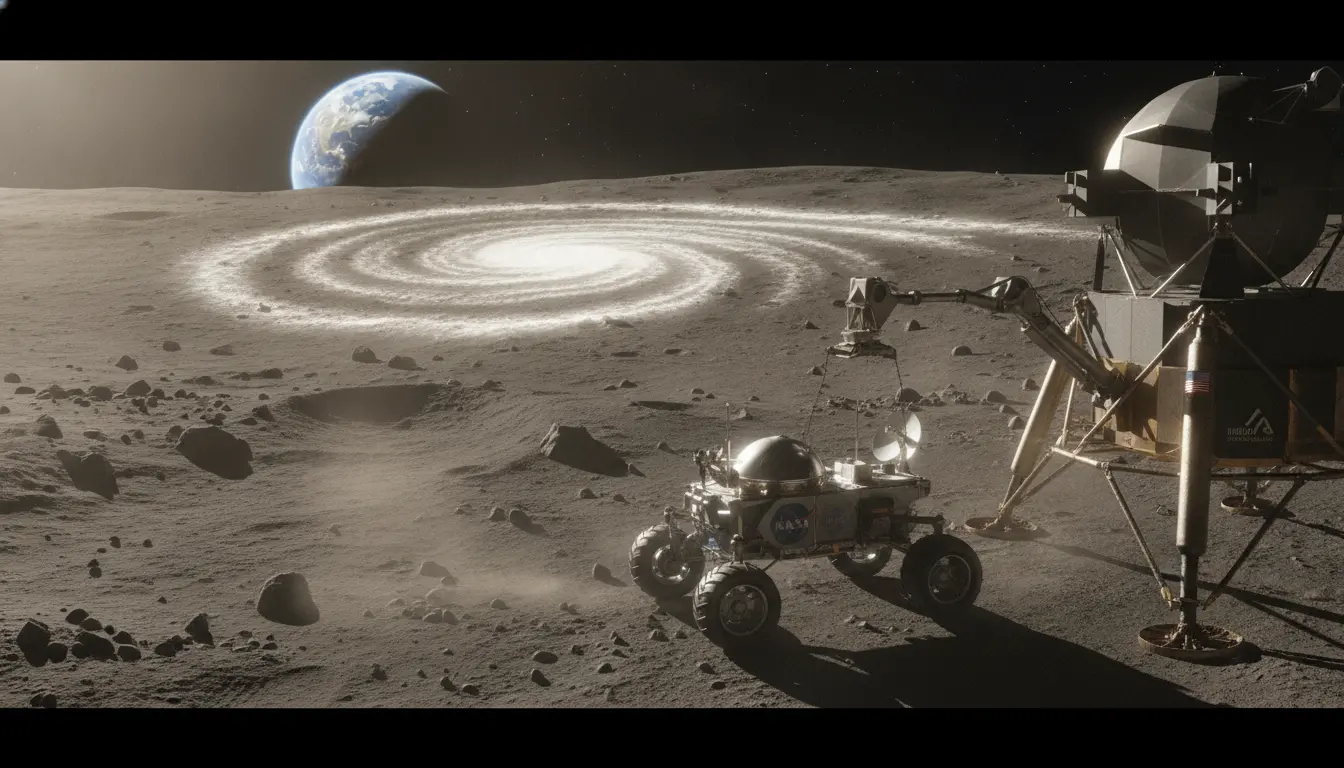
Intuitive Machines and NASA Target Mysterious Lunar Swirl with Rover-Deploying IM-3 Mission
Building on the historic, albeit tilted, landing of its Odysseus spacecraft earlier this year, Houston-based Intuitive Machines is pressing forward with its next ambitious lunar venture. The company, a key partner in NASA's commercial lunar delivery program, is preparing for its third mission, IM-3, which will attempt a precision landing at one of the Moon’s most enigmatic and visually striking features: Reiner Gamma. Dubbed the 'Trinity' mission, this flight aims not only to demonstrate a fully controlled touchdown but also to deploy a fleet of small, autonomous rovers to study the strange lunar swirl up close, a critical step in both science and the validation of a new era of commercial space exploration.
The IM-3 mission represents a significant escalation in complexity and scientific objective compared to its predecessors. While the IM-1 mission in February successfully made Intuitive Machines the first private company to soft-land on the Moon, a last-minute navigation issue led to a hard landing that tipped the Odysseus lander on its side, limiting its operational capacity. IM-3 will leverage the invaluable data and lessons from that experience. It operates under the umbrella of NASA's Commercial Lunar Payload Services (CLPS) initiative, a program designed to foster a commercial marketplace for lunar deliveries, enabling the agency to send scientific instruments to the Moon more frequently and at a lower cost than with traditional government-led missions. This symbiotic relationship allows NASA to advance its Artemis program goals while providing companies like Intuitive Machines with anchor tenancy and funding to develop a sustainable lunar enterprise.
At the heart of the Trinity mission is its destination. Reiner Gamma is not a crater or a mountain, but a vast, bright surface marking that has puzzled astronomers for centuries. It is one of the most prominent "lunar swirls," which are associated with localized magnetic fields that dot the Moon's crust. The leading theory suggests these magnetic anomalies act as a sort of shield, deflecting the solar wind and preventing the lunar soil, or regolith, from weathering and darkening over eons, thus preserving its brighter appearance. IM-3’s Nova-C lander will carry a suite of instruments to investigate this phenomenon, including a magnetometer and a camera to study the swirl’s composition and interaction with charged particles. A successful landing and data return could provide definitive answers about the formation of these features and the Moon's complex geological and magnetic history.
Perhaps the most compelling aspect of the IM-3 mission is the deployment of the Cooperative Autonomous Distributed Robotic Exploration (CADRE) project. Developed at NASA's Jet Propulsion Laboratory, CADRE consists of three shoebox-sized rovers designed to work as an autonomous team. After being deployed from the lander, they will cooperatively map the 3D terrain of the landing site, a technological demonstration with profound implications for future exploration. By sharing data and coordinating their movements without direct, real-time input from mission control, the rovers will test systems that could one day be used to explore hazardous or complex environments on the Moon, Mars, and beyond. This mission will be a crucial real-world test of multi-agent robotic autonomy in an unstructured, extraterrestrial setting.
The mission will once again rely on the workhorse of the modern space age, a SpaceX Falcon 9 rocket, to propel the Nova-C lander on its multi-day journey to the Moon. For Intuitive Machines, the stakes are high. A second successful landing, and a fully operational one at that, would cement its status as a reliable provider of lunar access and significantly boost confidence in the commercial space sector’s ability to execute complex deep-space missions. It would also further validate NASA's CLPS strategy, proving that outsourcing transportation can accelerate the pace of scientific discovery in preparation for sending astronauts back to the lunar surface under the Artemis program.
As preparations continue, the space community watches with keen interest. The IM-3 'Trinity' mission is more than just a repeat attempt; it's a sophisticated scientific expedition that pushes the boundaries of robotic exploration and public-private partnership. Its success would not only unlock secrets of the Moon's past held within the pale dust of Reiner Gamma but would also pave the way for a more dynamic and economically viable future of human and robotic activity on our celestial neighbor.
Stay Informed. Act Smarter.
Get weekly highlights, major headlines, and expert insights — then put your knowledge to work in our live prediction markets.
Related News
Astrobotic's Griffin-1 Lander Targets Lunar South Pole for 2026 Mission
NASA Aims for Crewed Artemis II Lunar Flyby by End of 2026

US Manufacturing Sector Eyes Sustained Expansion Amidst Evolving Economic Landscape

AMD Expected to Unveil Next-Generation MI500 AI GPUs at 'Advancing AI 2026' Event

Disney Explores Free Ad-Supported Streaming Tier as Strategic Growth Lever

North American Trade Pact Faces Uncertain Future as 2026 Review Looms

US Durable Goods Orders for July 2026 Under Scrutiny as Economic Health Indicator

July 2026 US Retail Sales Report Nears, Offering Crucial Insight into Consumer Spending

US Retail Sales Data for July 2026 Poised to Inform Economic Outlook

Disney's D23 Entertainment Showcase Anticipated to Unveil Major Marvel Cinematic Universe Plans