

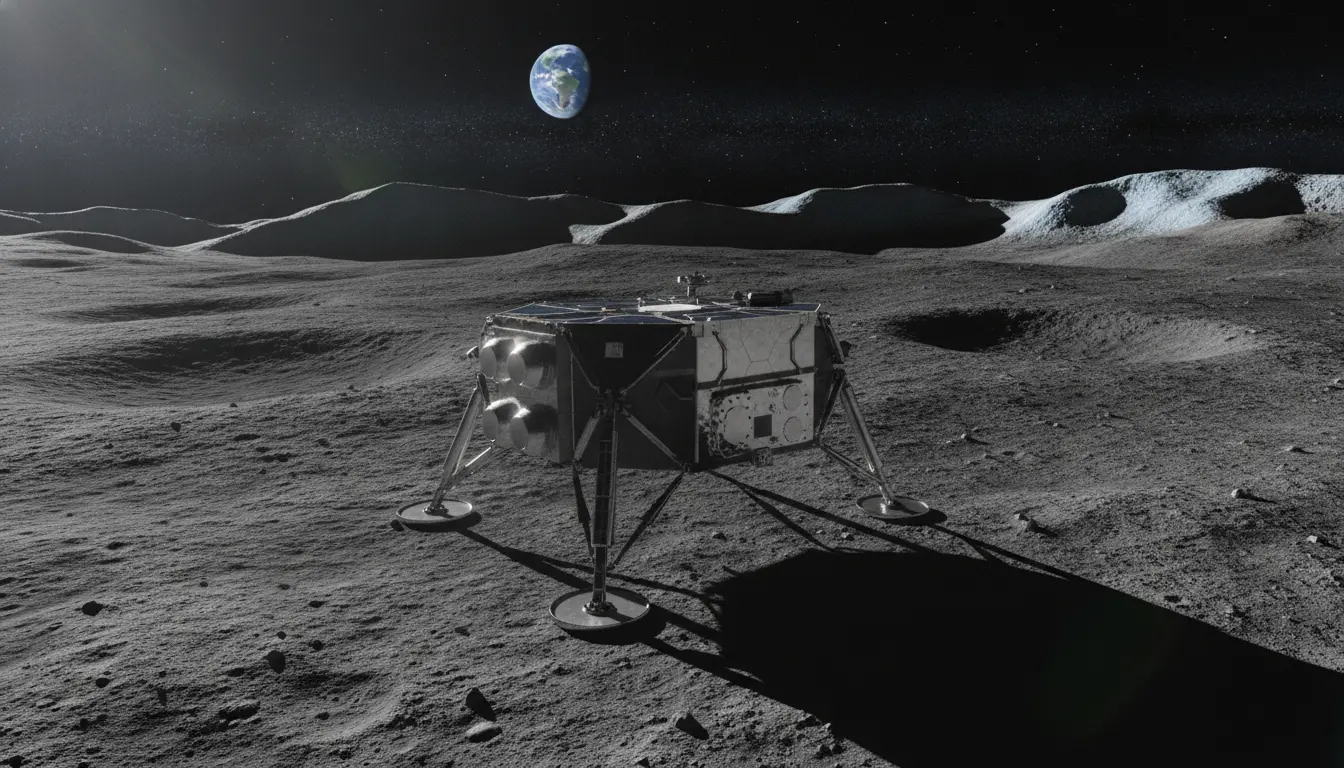
Astrobotic's Griffin-1 Lander Targets Lunar South Pole for 2026 Mission
Pittsburgh-based space robotics company Astrobotic is gearing up for a pivotal mission to the lunar south pole, with its Griffin-1 lander scheduled for launch on July 25, 2026. This ambitious endeavor is a cornerstone of NASA’s Commercial Lunar Payload Services (CLPS) initiative, designed to leverage private industry for delivering scientific instruments and technology demonstrations to the Moon. The mission's primary objective is to transport NASA's Volatiles Investigating Polar Exploration Rover (VIPER) to a region believed to harbor significant reserves of water ice, a critical resource for future human exploration and sustainable lunar outposts.
The Griffin-1 lander represents a substantial step forward in Astrobotic's capabilities, following the Peregrine Mission One, which launched in January 2024 but encountered a propulsion anomaly, preventing a soft landing. Learning from that experience, Astrobotic is applying rigorous lessons to ensure the success of Griffin-1. The lander itself is a larger, more robust platform designed to handle the heavier payload requirements of missions like VIPER. Its advanced navigation and hazard avoidance systems are crucial for navigating the challenging and permanently shadowed craters of the lunar south pole, a terrain far more complex than the equatorial landing sites of early Apollo missions.
NASA’s CLPS program is a strategic component of its broader Artemis program, which aims to return humans to the Moon by the end of the decade and establish a long-term presence. By contracting with commercial providers like Astrobotic, NASA seeks to reduce costs, accelerate development timelines, and foster a vibrant lunar economy. These private missions are tasked with delivering payloads that range from scientific instruments designed to study lunar geology and resources to technology demonstrations that test new navigation systems, power generation, and resource extraction methods essential for sustained human operations. The success of missions like Griffin-1 is therefore not just about a single landing, but about proving a viable model for future lunar access.
The lunar south pole is of immense scientific interest due to the presence of permanently shadowed regions within its craters. These areas have not seen direct sunlight for billions of years, allowing water ice and other volatiles delivered by comets and asteroids to accumulate without sublimating away. The VIPER rover, which Griffin-1 is designed to deliver, will be equipped with specialized drills and spectrometers to map and analyze these frozen deposits. Confirming the quantity, distribution, and accessibility of water ice is paramount, as it could be processed into drinking water, breathable oxygen, and rocket fuel, drastically reducing the cost and complexity of future human missions.
The journey to the Moon remains fraught with technical challenges, as evidenced by the high failure rate of lunar landing attempts throughout history. The vacuum of space, extreme temperature fluctuations, solar radiation, and the precise orbital mechanics required for a controlled descent demand engineering excellence and meticulous planning. Astrobotic's reliance on a robust lander design, coupled with continuous refinement of its operational protocols, underscores the high stakes involved. A successful landing by Griffin-1 would not only validate Astrobotic's technical prowess but also significantly bolster confidence in the CLPS model and accelerate the timeline for critical scientific and exploratory endeavors.
Beyond VIPER, the Griffin-1 mission could potentially carry additional commercial or international payloads, further diversifying the scientific and technological benefits. The data gathered from the lunar south pole will inform future Artemis landing sites for astronauts and provide invaluable insights into the Moon's geological history and resource potential. As the 2026 launch window approaches, the space community will be closely watching Astrobotic’s progress, recognizing that each successful step by commercial partners brings humanity closer to a sustained presence beyond Earth.
Ultimately, the Astrobotic Griffin-1 mission transcends a mere payload delivery; it is a critical test of the emerging lunar economy and an essential precursor to human deep-space exploration. The collaboration between NASA and private industry through programs like CLPS is reshaping the landscape of space exploration, opening new frontiers and demonstrating that the Moon is not just a distant dream, but an accessible, resource-rich destination within humanity’s grasp.
Stay Informed. Act Smarter.
Get weekly highlights, major headlines, and expert insights — then put your knowledge to work in our live prediction markets.
Related News
Intuitive Machines and NASA Target Mysterious Lunar Swirl with Rover-Deploying IM-3 Mission
NASA Aims for Crewed Artemis II Lunar Flyby by End of 2026

US Manufacturing Sector Eyes Sustained Expansion Amidst Evolving Economic Landscape

US Economy Awaits Critical Q2 2026 GDP Revision Amid Growth Scrutiny

US Durable Goods Orders for July 2026 Under Scrutiny as Economic Health Indicator

ECB to Weigh Main Refinancing Rate Adjustment in July 2026

July 2026 US Retail Sales Report Nears, Offering Crucial Insight into Consumer Spending

Q2 2026 US GDP Second Estimate Looms, Upward Revision in Focus

Federal Reserve Prepares for Key Interest Rate Review at July 2026 Meeting

US Retail Sales Data for July 2026 Poised to Inform Economic Outlook