

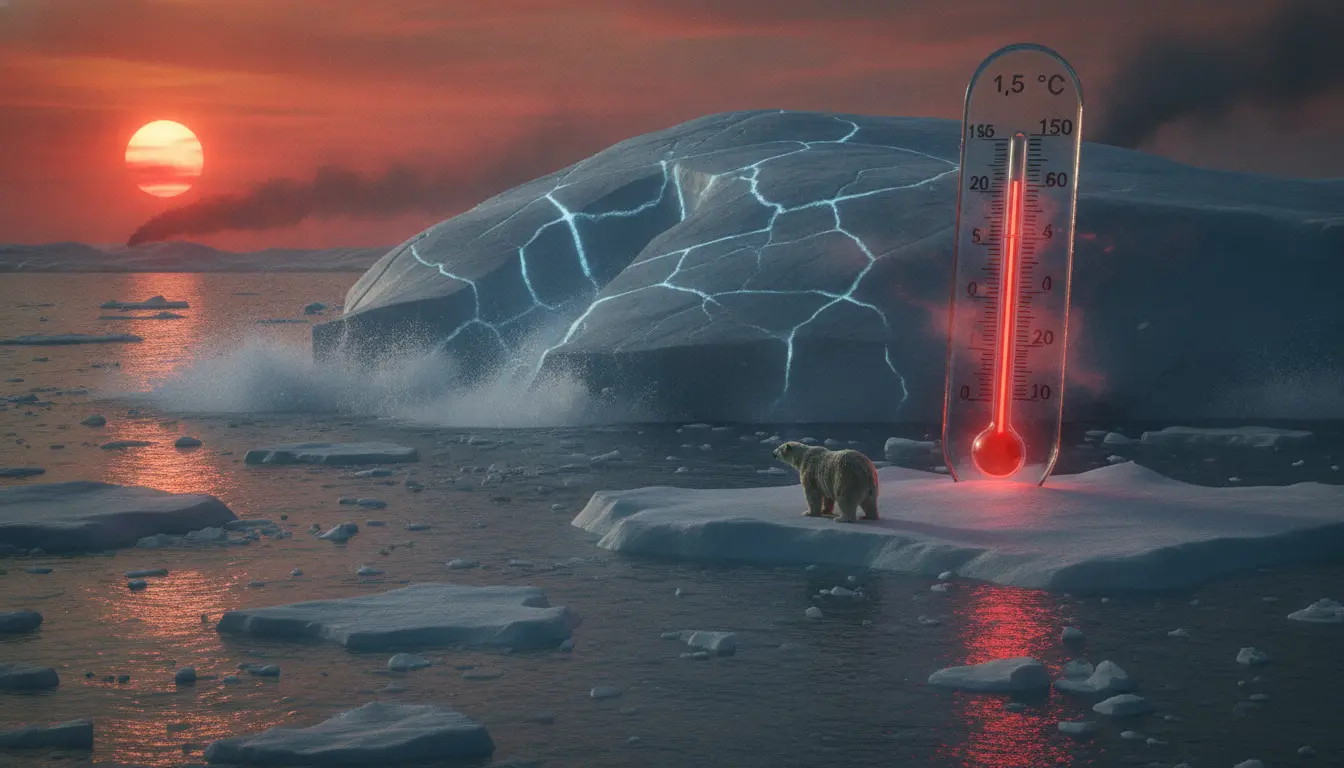
Global Temperatures Poised to Exceed Critical 1.5°C Warming Threshold by 2026
Global average temperatures are projected to breach the critical 1.5°C warming limit above pre-industrial levels within the next few years, a threshold widely recognized as a benchmark for severe climate consequences. This sobering forecast, derived from the latest scientific models and observations, underscores the accelerating pace of climate change and the urgent need for more aggressive global action. The 1.5°C target, enshrined in the Paris Agreement, represents humanity's ambition to avoid the most catastrophic impacts of a changing climate, and its potential imminent surpass is sending renewed alarms through scientific and policy circles worldwide.
Since the industrial revolution, human activities, primarily the burning of fossil fuels, have released vast quantities of greenhouse gases into the atmosphere, trapping heat and steadily raising global temperatures. The Paris Agreement, adopted in 2015, committed nearly every nation to limit global warming to well below 2°C, preferably to 1.5°C, compared to pre-industrial levels. This more ambitious 1.5°C goal was based on extensive scientific evidence demonstrating that even half a degree of additional warming beyond this point would significantly exacerbate risks for human societies and natural ecosystems. The pre-industrial baseline is typically considered to be the average global temperature between 1850 and 1900, a period before significant industrial emissions began to reshape the climate.
Recent decades have seen a relentless upward trend in global temperatures, with the past ten years being the warmest on record. Scientists from various international bodies, including the World Meteorological Organization (WMO) and the Intergovernmental Panel on Climate Change (IPCC), have consistently reported on the escalating rate of warming. Factors contributing to the acceleration include not only continued greenhouse gas emissions but also natural climate variability, such as the recent El Niño phenomenon, which adds a temporary warming boost to the long-term human-induced trend. This confluence of anthropogenic forcing and natural cycles is pushing the planet closer to the precipice, making the 1.5°C target appear increasingly difficult to maintain.
The implications of exceeding 1.5°C are profound and far-reaching. Scientists warn that even a temporary overshoot of this threshold could trigger irreversible tipping points in Earth's climate system. We can anticipate more frequent and intense extreme weather events, including devastating heatwaves, prolonged droughts, torrential rainfall leading to severe floods, and more powerful tropical storms. Fragile ecosystems, such as coral reefs and polar ice caps, face existential threats, leading to widespread biodiversity loss. Coastal communities will contend with accelerated sea-level rise, increasing displacement and threatening infrastructure, while food and water security for millions could be compromised, fueling humanitarian crises and geopolitical instability.
The international community has made commitments to curb emissions, yet current pledges and policies fall short of what is required to limit warming to 1.5°C. The IPCC has repeatedly emphasized the need for rapid, deep, and sustained greenhouse gas emission reductions across all sectors. This involves a wholesale transition from fossil fuels to renewable energy sources, significant improvements in energy efficiency, sustainable land use practices, and the deployment of carbon capture technologies. The window for effective action is rapidly closing, and the coming years will be critical in determining whether the world can alter its trajectory and mitigate the worst impacts of climate change, even as the 1.5°C threshold looms.
Governments, industries, and individuals face an unprecedented challenge. While the scientific consensus is clear on the causes and consequences of global warming, political will and collective action remain the primary determinants of humanity's ability to adapt and build a more resilient future. The potential breach of the 1.5°C limit serves as a stark reminder that the time for incremental change has passed; transformative shifts are now imperative to avert escalating climatic disaster and safeguard the planet for future generations.
Stay Informed. Act Smarter.
Get weekly highlights, major headlines, and expert insights — then put your knowledge to work in our live prediction markets.
Related News
Outpoll Weekly Recap: Science (August 10 – 16, 2026)

Hollywood Tentpoles Target Elusive $1.5 Billion Global Box Office in 2026

NASA Aims for Human Mars Landing Confirmation by 2035 Amidst Accelerated Private Sector Partnerships

Outpoll Weekly Recap: Science (July 6 – 12, 2026)

Haiti Grapples with Electoral Future Amid Deepening Security Crisis Ahead of 2026 Vote

Apple Gears Up for Major AI Integration with iPhone 18 Series Launch in 2026

European Commission Intensifies Scrutiny of Google's Android and AI Practices, New Compliance Measures Expected by July 2026

Global Semiconductor Market Forecast to Surpass $1 Trillion in Annual Sales by 2026 Amid AI-Driven Demand

EU AI Act Mandates Sweeping Transparency for AI Systems Starting August 2026

Tech Giants Push for 2026 Launch of Consumer-Ready AI Smart Glasses