

- News
- Science
- China Advances Lunar Ambitions with Chang'e 7 Mission Targeting South Pole Water Ice by 2026
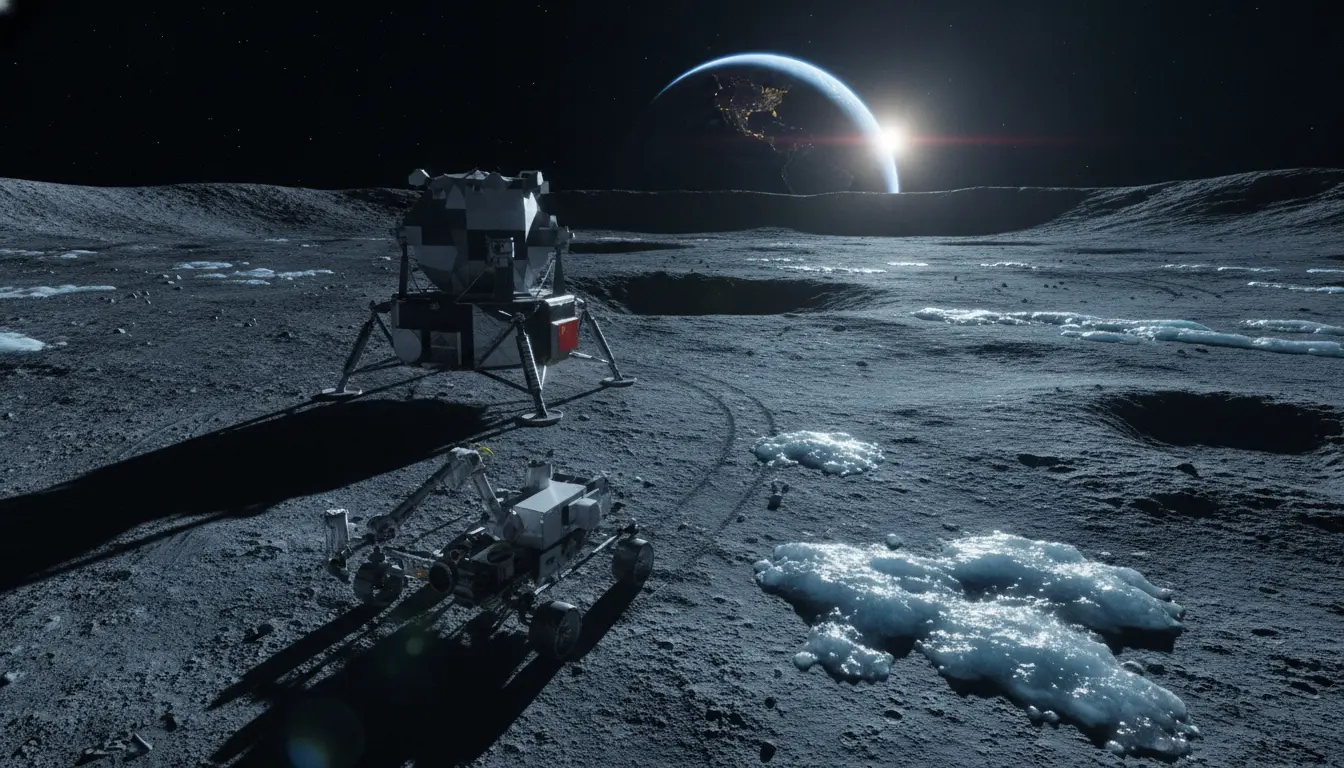
China Advances Lunar Ambitions with Chang'e 7 Mission Targeting South Pole Water Ice by 2026
China is set to significantly escalate its lunar exploration efforts with the planned launch of the Chang'e 7 mission by August 2026. This ambitious undertaking, part of the nation's comprehensive Lunar Exploration Program (CLEP), aims for the Moon's scientifically intriguing and strategically vital south pole. The mission is designed to deploy an array of sophisticated instruments, including an orbiter, a lander, a rover, and a pioneering mini-flying probe, all dedicated to a detailed investigation of the polar region’s environment and potential resources, particularly the elusive water ice crucial for future long-duration human presence.
This mission represents a crucial next step in China's steadily progressing space agenda, building upon a series of increasingly complex and successful lunar endeavors. China has already made history with the Chang'e 4 mission, which achieved the first-ever soft landing on the far side of the Moon, and the Chang'e 5 mission, which successfully returned lunar samples to Earth. These achievements underscore a rapid ascent in space technology and capabilities, positioning China as a major contender in the unfolding international race for lunar dominance. The Chang'e 7 mission is specifically tailored to lay foundational groundwork for the proposed International Lunar Research Station (ILRS), a collaborative project spearheaded by China and Russia with aspirations for a permanent human presence on the Moon by the 2030s, offering a clear counterpoint to NASA’s Artemis program.
The Chang'e 7 spacecraft itself is a complex integrated system, each component designed for a specific investigative role. The orbiter will conduct remote sensing observations of the south pole, mapping its topography and composition, while also serving as a critical communication relay. The lander, once safely on the surface, will deploy the rover to explore a wider area around the landing site, equipped with instruments to analyze the lunar regolith and subsurface for volatile compounds. Perhaps most innovative is the mini-flying probe, a small, autonomous vehicle intended to descend into permanently shadowed craters, where water ice is most likely to persist, offering unprecedented close-up views and data from these perpetually dark and cold environments.
The lunar south pole has become a focal point for global space agencies due to strong evidence suggesting the presence of significant reserves of water ice within its permanently shadowed craters. This water ice is not merely of scientific interest; it holds immense strategic value as a potential source of drinking water, breathable oxygen, and rocket propellant, which could dramatically reduce the cost and complexity of future human missions to the Moon and beyond. However, operating in this region presents formidable challenges, including extreme temperature differentials, long periods of darkness, and rugged terrain, demanding advanced engineering and robust autonomy from the mission's various components.
From a geopolitical perspective, the Chang'e 7 mission underscores China's burgeoning ambition to cement its status as a leading space power. Its successful execution would not only yield invaluable scientific data but also strengthen China's position in setting future norms and standards for lunar resource utilization. The mission's progress is being closely watched by international observers, as it could shape the trajectory of global space collaboration and competition for decades to come, particularly regarding access to and development of the Moon's critical resources.
Looking ahead, the Chang'e 7 mission is envisioned as a vital precursor to Chang'e 8, which is planned to test technologies for resource utilization and 3D printing on the lunar surface, further paving the way for the establishment of the ILRS. China’s steadfast commitment to its long-term lunar strategy signals a future where the Moon is not just a destination for scientific inquiry but a potential outpost for sustained human activity and a springboard for deep-space exploration. The successful launch and operation of Chang'e 7 will be a testament to China's formidable technological prowess and its unwavering dedication to expanding humanity's reach into the cosmos.
Stay Informed. Act Smarter.
Get weekly highlights, major headlines, and expert insights — then put your knowledge to work in our live prediction markets.
Related News

Google Targets Major AI Leap with Gemini 2.0 Ultra Development by 2026

Google Readies Potential Foldable Pixel 11 Pro Fold Debut for August 2026 Event
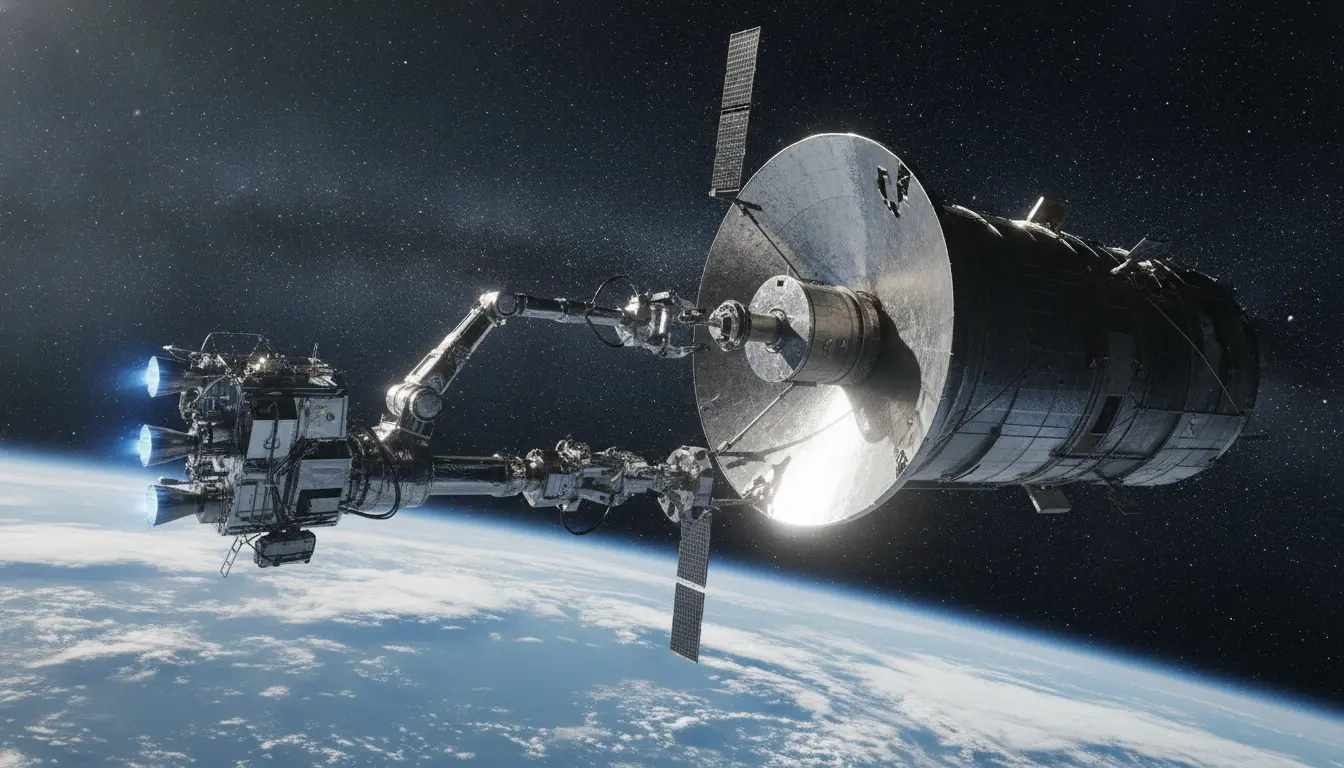
NASA Deploys Robotic Mission to Avert Uncontrolled Telescope Re-entry

Brazil Braces for Contentious 2026 Presidential Election as Lula Eyes Re-election Bid

New Zealand's Political Landscape Gears Up for Highly Contested 2026 General Election

OpenAI Targets GPT-6 Release by 2026 as AI Race Intensifies

OpenAI's GPT-5 Launch Expected by 2026, Poised to Reshape AI Landscape

AI Race Intensifies as Major Companies Target 2026 for Next-Generation Language Models

Global Temperatures Point to Potential Record-Breaking Summer by 2026 Amid Worsening Climate Trends

Meta Aims for Late 2026 Launch of Next-Generation Llama AI Model