

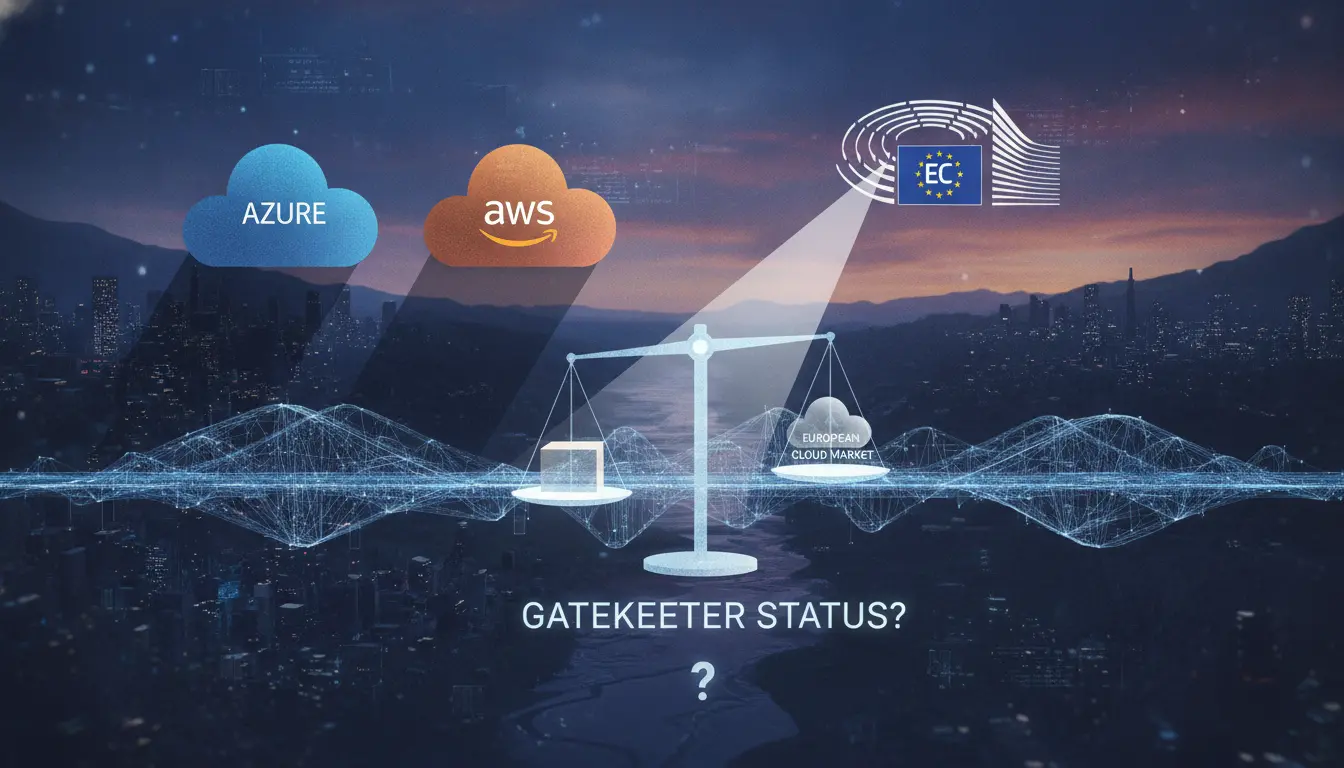
European Commission Weighs Gatekeeper Status for Cloud Giants AWS and Azure
The European Commission has initiated a market investigation to determine whether Amazon Web Services (AWS) and Microsoft Azure, the world's two largest cloud infrastructure providers, should be designated as “gatekeepers” under the Digital Markets Act (DMA). This critical evaluation could impose a stringent set of new regulatory obligations on these tech giants, fundamentally reshaping how they operate within the European Union and potentially impacting the global cloud computing landscape.
The DMA, which came into full effect in May 2023, is the EU’s flagship legislation designed to curb the market power of large online platforms, foster fairer competition, and enhance user choice. Companies designated as gatekeepers are those with a significant impact on the internal market, providing a core platform service that serves as an important gateway for business users to reach end users, and enjoying an entrenched and durable position. Previous designations have targeted behemoths like Apple, Google, Meta, and Amazon’s marketplace, primarily for services such as operating systems, search engines, social media, and online retail.
The current scrutiny of AWS and Azure stems from their undisputed dominance in the Infrastructure-as-a-Service (IaaS) and Platform-as-a-Service (PaaS) sectors. Together, these two companies command a substantial majority of the global cloud market, providing essential digital infrastructure for countless businesses, from startups to multinational corporations, and underpinning a vast array of online services. Their pervasive presence makes them critical arteries of the digital economy, raising concerns within the EU about potential abuses of their market power, including self-preferencing their own services or creating barriers for rivals.
Should AWS and Azure be formally designated as gatekeepers, they would face a comprehensive list of obligations and prohibitions under the DMA. These could include mandates for increased interoperability with competing services, allowing business users more flexibility to switch providers, and prohibitions against tying their cloud services to other offerings. Data portability would likely become a key focus, empowering users to move their data more easily between cloud providers. Furthermore, the legislation aims to prevent gatekeepers from using data gained from their platform to unfairly compete with business users on their own services. Non-compliance with these rules can result in substantial fines, potentially up to 10% of a company’s global annual turnover, or even 20% for repeat infringements.
The implications of such a designation are far-reaching. For AWS and Azure, it would necessitate significant operational and strategic adjustments, potentially affecting their product development, pricing models, and how they engage with customers and partners in the EU. For European businesses, particularly smaller cloud providers and tech innovators, the DMA could level the playing field, fostering a more competitive environment and reducing dependency on a few dominant players. The move is also a clear signal of the EU’s continued commitment to digital sovereignty and its assertive stance on regulating powerful technology firms, pushing for open and fair digital markets within its borders.
While the exact timeline for a final decision remains subject to the Commission's ongoing investigation, the initiation of formal proceedings indicates a strong intent to apply the DMA to these foundational cloud services. The assessment will consider market share, revenue thresholds, and the number of active users, alongside qualitative factors regarding their role as gateways. The outcome will not only redefine the regulatory landscape for cloud computing in Europe but also send ripples across the global tech industry, influencing how other jurisdictions approach the regulation of critical digital infrastructure providers. This move underscores the European Union's pioneering role in global tech governance, setting precedents that other nations may eventually follow. It represents a pivotal moment in the ongoing efforts to balance innovation with competition and consumer protection in an increasingly digital world.
Stay Informed. Act Smarter.
Get weekly highlights, major headlines, and expert insights — then put your knowledge to work in our live prediction markets.
Related News

EU AI Act Gears Up for Crucial High-Risk System Obligations by August 2026

EU AI Act's Transparency Mandates Face Uphill Battle Towards Full 2026 Implementation

Tech Industry Braces for Sweeping Changes as EU's Cyber Resilience Act Nears Implementation

Nvidia Surpasses $3 Trillion Valuation as AI Demand Drives Unprecedented Growth

Europe Confronts Escalating Climate Risks as Record Heatwaves Push Temperatures Towards Unprecedented Levels

Soaring Demand Forces Chinese ChatGPT Rival Kimi to Halt New User Registrations

OpenAI's GPT-5.6 Sol Enters Fierce Competition Against Google's Gemini 3.1 Pro Preview for MMLU-Pro Benchmark Dominance

Southern Europe Grapples with Escalating Wildfire Crisis Amidst Climate Change Intensification

As Europe Sizzles, Climatologists Warn It's a Matter of When, Not If, All-Time Heat Record Falls

FDA Sets August 2026 Decision Date for Merck's Keytruda-Padcev Combination in Muscle-Invasive Bladder Cancer