

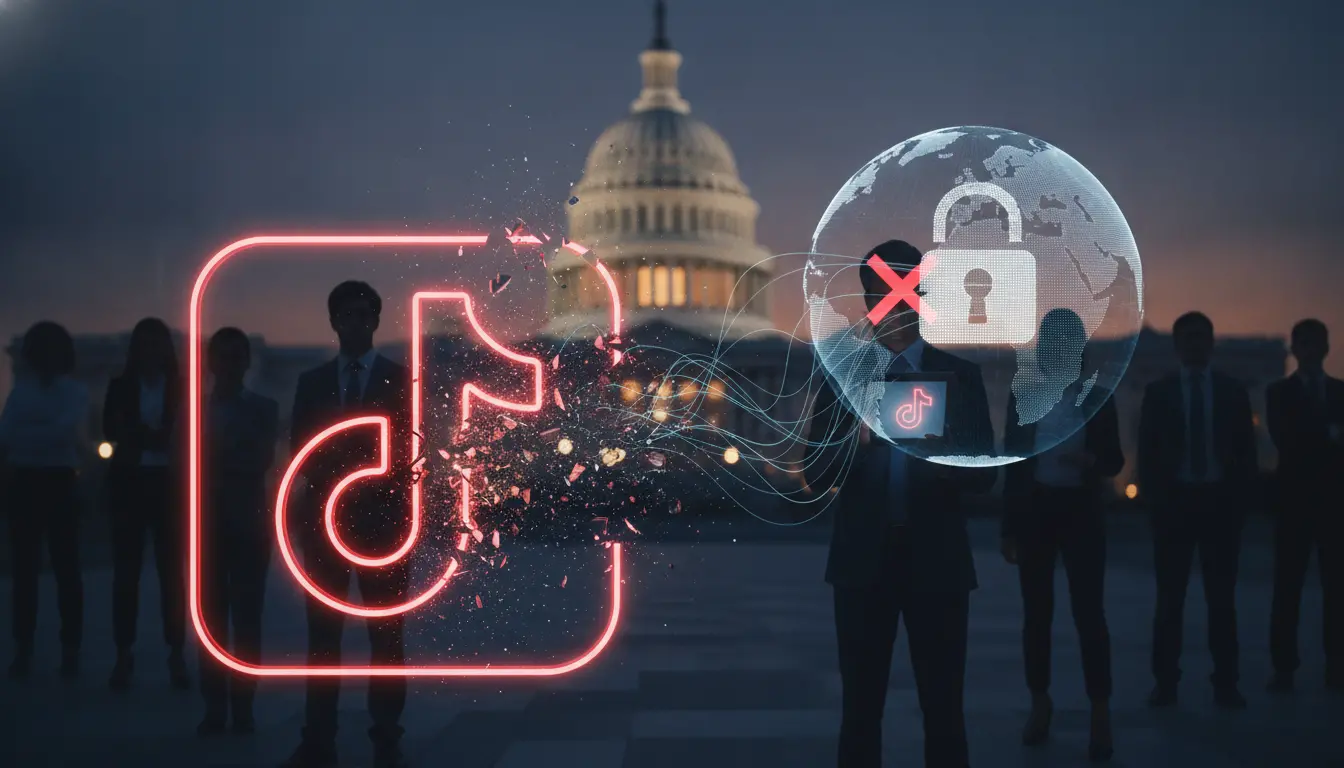
Congressional Push to Ban TikTok Gains Momentum Amid Data Security Concerns
A bipartisan group of lawmakers is advancing legislation that would ban TikTok in the United States unless its Chinese parent company, ByteDance, divests the popular short-video app. The proposed bill, introduced in both chambers of Congress, cites national security risks associated with the platform's data collection practices and its potential susceptibility to Chinese government influence. The move follows a landmark settlement between Meta Platforms and the Federal Trade Commission over privacy violations, which has intensified scrutiny of social media companies' handling of user data.
The bill, titled the "TikTok Data Protection Act," would give ByteDance a 12-month window to sell TikTok's U.S. operations to a qualified buyer. If no sale occurs, the app would be banned from U.S. app stores and internet service providers would be required to block access. The legislation has gained traction in both the House and Senate, with key committee chairs expressing support. "This is not about free speech; it's about protecting Americans' personal information from foreign adversaries," said Senator Mark Warner, a Democrat from Virginia and a leading voice on tech policy. Republican Senator Marco Rubio echoed the sentiment, calling TikTok "a Trojan horse" that poses an unacceptable risk to U.S. national security.
The bill's introduction comes on the heels of a $1.2 billion settlement between Meta and the FTC, which resolved allegations that the company mishandled user data in connection with the Cambridge Analytica scandal. That settlement has emboldened lawmakers to take a harder line on data privacy, with several proposing broader digital privacy legislation. However, the TikTok-specific bill has drawn criticism from civil liberties groups, who argue that a ban would set a dangerous precedent for government control over digital platforms. "We should not be banning apps based on unproven allegations," said Kate Ruane, director of free expression at the American Civil Liberties Union. "Doing so would undermine the open internet and could be used to justify censorship of other platforms."
TikTok has vigorously opposed the bill, launching an aggressive lobbying campaign that includes television ads, grassroots outreach, and meetings with lawmakers. The company has also announced Project Texas, a $1.5 billion initiative to store U.S. user data on American soil and subject it to independent oversight. "We are committed to working with Congress to address their concerns, but a ban would be devastating for the 150 million Americans who use TikTok to create, learn, and connect," said a TikTok spokesperson. The company has also threatened legal action, arguing that a ban would violate the First Amendment rights of its users.
The bill's prospects remain uncertain. While it has bipartisan support, it faces opposition from some lawmakers who worry about the economic impact on small businesses and creators who rely on TikTok for their livelihoods. Others question the feasibility of a divestiture, noting that ByteDance has repeatedly stated it has no intention of selling. The Chinese government has also signaled that it would retaliate against U.S. companies if the ban proceeds, potentially escalating trade tensions between the world's two largest economies.
If the bill passes, it would mark the first time the U.S. government has banned a major social media platform. Legal experts say the move would likely face a lengthy court battle, with TikTok arguing that the ban violates the First Amendment and the Commerce Clause. The Supreme Court has historically been skeptical of content-based restrictions, but national security concerns could tip the balance in favor of the government. "This is uncharted territory," said Anupam Chander, a law professor at Georgetown University. "The courts will have to weigh the government's interest in protecting national security against the public's right to access information and express themselves."
The push to ban TikTok is part of a broader trend of escalating U.S.-China tech rivalry. In recent years, the U.S. has restricted Huawei's access to American technology, added dozens of Chinese companies to its Entity List, and considered new export controls on semiconductor technology. China, in turn, has blocked U.S. platforms like Google and Facebook, and has tightened its own data security laws. The outcome of the TikTok debate could set a precedent for how other Chinese-owned apps, such as WeChat and AliExpress, are treated in the U.S.
As the legislative process unfolds, all eyes are on the upcoming committee hearings and floor votes. Lawmakers are expected to introduce amendments that could soften the bill's provisions, such as extending the divestiture deadline or creating a more flexible review process. Meanwhile, TikTok continues to mobilize its user base, encouraging them to contact their representatives. The company has also floated the idea of a partial sale, which would give U.S. investors a controlling stake while allowing ByteDance to retain some ownership. Whether such a compromise can satisfy both sides remains to be seen, but the clock is ticking: the bill's sponsors have vowed to bring it to a vote before the end of the year.
Stay Informed. Act Smarter.
Get weekly highlights, major headlines, and expert insights — then put your knowledge to work in our live prediction markets.
Related News
DOJ Nears $400 Million Settlement with TikTok Over Children's Privacy Violations
US Congressional Measure Seeks to Block Federal Reserve From Issuing Digital Currency
US Senate Pushes Forward with Kids Online Safety Act to Strengthen Protections for Young Users
Senate Passes Bipartisan Housing Bill With Four-Year Ban on Federal Reserve Digital Currency
US Federal Ban on Central Bank Digital Currency Development Becomes Law
Trump-Backed Venezuela Oil Agreement Faces Stiff Congressional Resistance

US and China Navigate Complex Trade Impasse as Pressure Mounts for New Comprehensive Agreement by 2026
US 'SAVE Act' Housing Bill Navigates Path to Law Amidst Presidential Opposition and CBDC Ban Debate
Rep. Ro Khanna Set to Unveil 'Data Center Bill of Rights' Addressing AI's Energy Footprint
High-Stakes Antitrust Battle: Justice Department and Apple Explore Early Settlement Path