

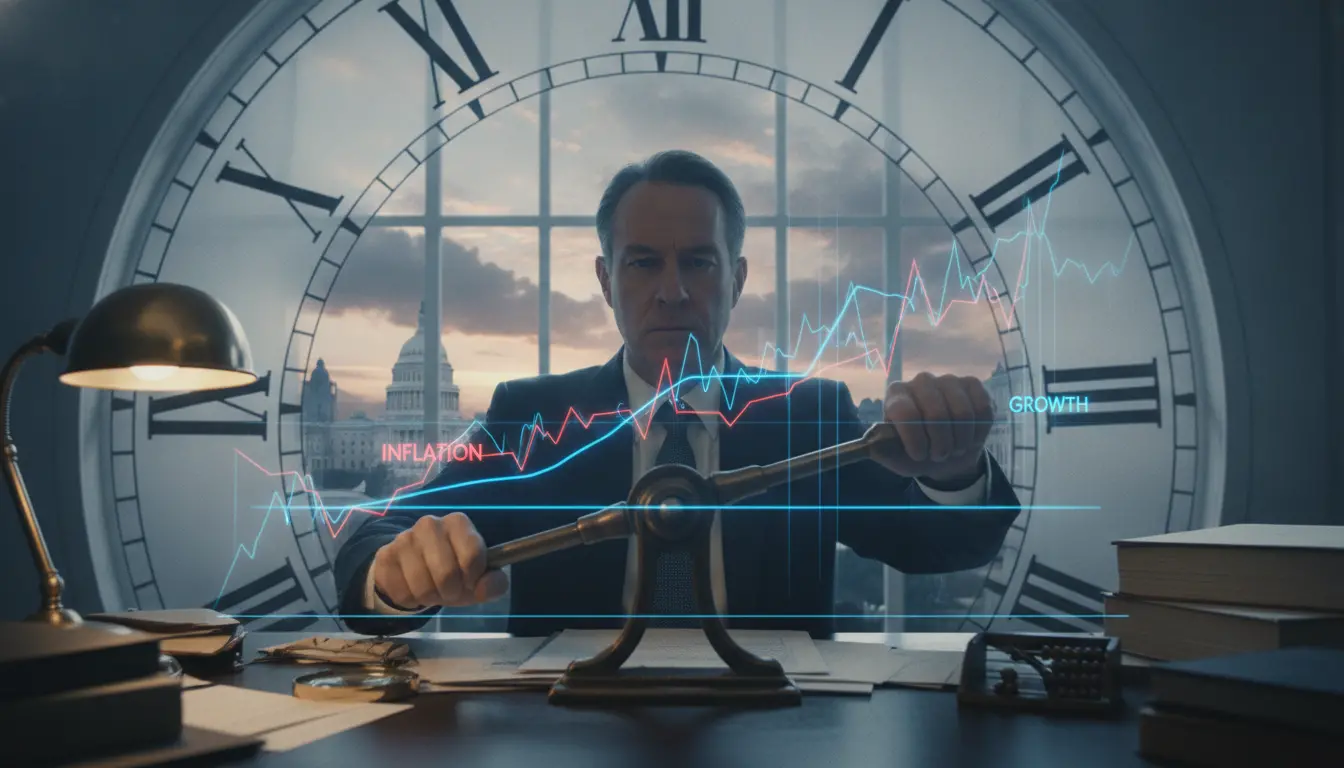
US Federal Reserve's Long-Term Interest Rate Path Under Intense Scrutiny
The United States Federal Reserve finds itself at a pivotal juncture, grappling with the complex challenge of steering the nation's economy through a period of persistent inflation while carefully considering the future trajectory of interest rates. While recent policy discussions have largely centered on the timing and pace of potential rate cuts, a deeper and more fundamental debate is unfolding among policymakers, economists, and market analysts regarding the possibility of further rate hikes extending through 2026, signaling a potentially more hawkish long-term stance than currently anticipated by many.
The central bank's aggressive tightening cycle, which began in March 2022, saw the federal funds rate surge from near-zero to a range of 5.25%-5.50%. This unprecedented series of increases was a direct response to inflation soaring to four-decade highs, driven by pandemic-era supply chain disruptions, robust consumer demand, and geopolitical tensions. The Fed's dual mandate of achieving maximum employment and price stability has proven particularly challenging, as the economy has shown remarkable resilience, with strong job growth and consumer spending defying predictions of a swift downturn. This resilience, while positive in many respects, also fuels concerns that inflationary pressures could remain stickier than desired, potentially necessitating a reconsideration of the terminal rate.
Key figures within the Federal Open Market Committee (FOMC) have expressed varying perspectives on the future of monetary policy. While some members cautiously eye potential rate cuts as inflation moderates, others, often referred to as hawks, maintain a vigilant stance, emphasizing the need for robust evidence that inflation is sustainably moving towards the Fed's 2% target. Federal Reserve Chair Jerome Powell has consistently reiterated the central bank's data-dependent approach, stressing that decisions will be guided by incoming economic indicators, including inflation readings, employment reports, and consumer sentiment. The concept of a higher 'neutral rate' of interest – a theoretical rate that neither stimulates nor constrains economic growth – has also gained traction in discussions, suggesting that the long-term equilibrium for interest rates might be higher than in previous decades.
The stakes for such policy shifts are profound, impacting everything from mortgage rates and corporate borrowing costs to the strength of the dollar and global capital flows. A decision to implement additional rate hikes, even if modest, by late 2026 would signal the Fed's unwavering commitment to stamping out inflation, even at the risk of slower economic growth. It would also challenge the prevailing market narrative that the tightening cycle is definitively over, introducing a new layer of uncertainty for businesses and consumers planning for the medium term. Conversely, failing to address resurging inflation could erode purchasing power and destabilize financial markets, underscoring the delicate balance the Fed must maintain.
Several factors could compel the Fed to consider further tightening. A persistent reacceleration of inflation, perhaps triggered by new supply-side shocks, elevated commodity prices, or continued wage pressures outstripping productivity gains, would be a primary driver. Additionally, if the US economy continues to demonstrate unexpected strength, with demand remaining robust despite current borrowing costs, policymakers might conclude that monetary policy is not sufficiently restrictive to achieve price stability. Geopolitical events, such as escalating conflicts or significant trade disruptions, could also inject inflationary impulses that demand a hawkish response. The global economic landscape, including the policies of other major central banks, also plays a role in the Fed's calculations.
Looking ahead, the path for US interest rates through 2026 remains highly contingent on evolving economic data. While the consensus currently leans towards a holding pattern or gradual easing, the possibility of additional tightening cannot be entirely discounted. The Federal Reserve's commitment to its inflation target is absolute, and if future data suggests that target is at risk, policymakers have demonstrated a willingness to take decisive action. Investors, businesses, and households will be closely monitoring every inflation print, employment report, and FOMC statement, as the central bank navigates this intricate economic environment with significant implications for the long-term financial health of the nation.
Stay Informed. Act Smarter.
Get weekly highlights, major headlines, and expert insights — then put your knowledge to work in our live prediction markets.
Related News
Fed Grapples With Long-Term Rate Outlook as 'Higher for Longer' Mantra Tested by Economic Data

Federal Reserve's Long-Term Strategy Under Scrutiny as Analysts Project Path to 2026 Rate Decisions
Federal Reserve's Rate Cut Prospects by 2026 Hinge on Evolving Inflation and Growth Data

Federal Reserve Prepares for Critical July 2026 Rate Decision Amid Evolving Economic Landscape
Federal Reserve Signals Potential 2026 Rate Hike Amidst Growing AI-Driven Inflation Concerns

Federal Reserve Eyes Steady Rates for September 2026 FOMC Meeting Amid Evolving Economic Data

Economists Intensify Debate on US Recession Risk Through 2026 Amid Fed's Inflation Fight
Federal Reserve's Long-Term Inflation Battle Intensifies Ahead of July 2026 Core PCE Report

Analysts Eye Potential Rise in US Unemployment Rate as Federal Reserve Navigates Economic Crossroads
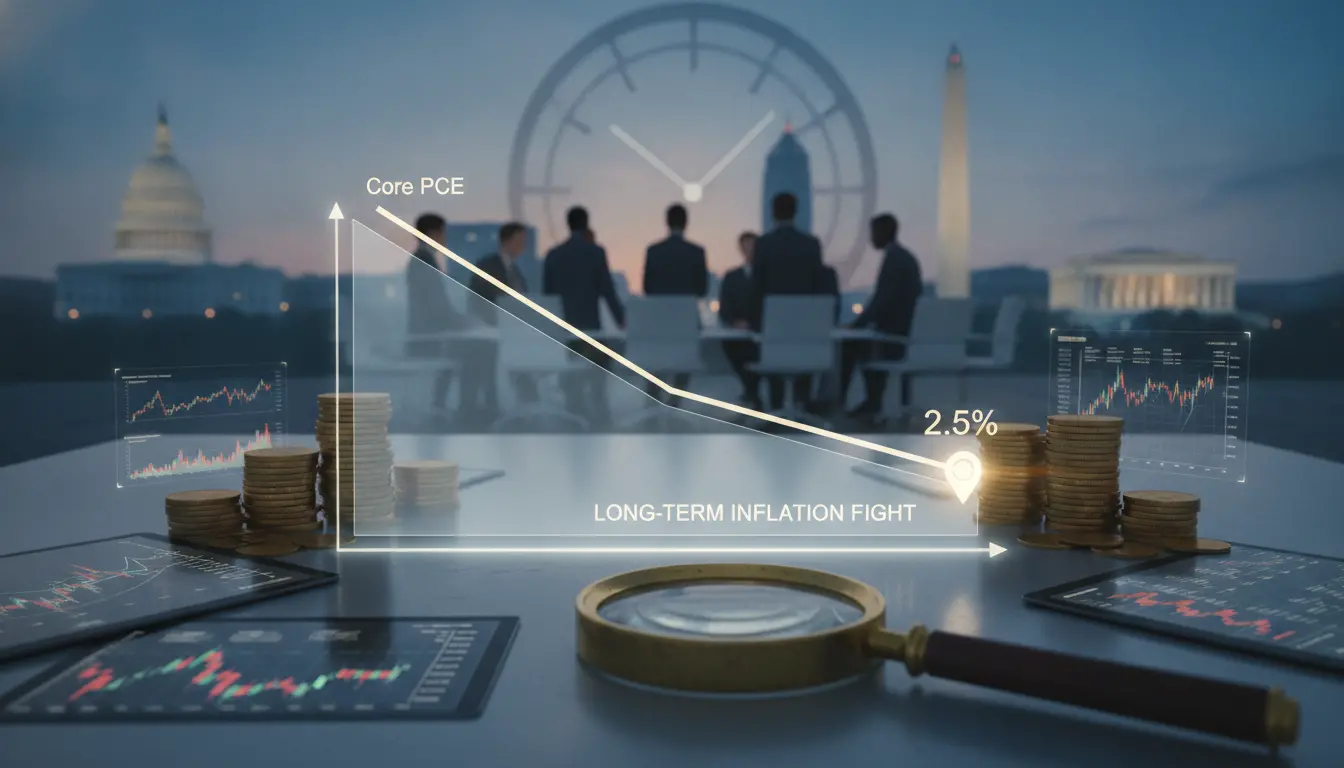
Fed’s Long-Term Inflation Fight Eyes 2.5 Percent Core PCE as Key Milestone