

- News
- Finance
- Analysts Eye Potential Rise in US Unemployment Rate as Federal Reserve Navigates Economic Crossroads
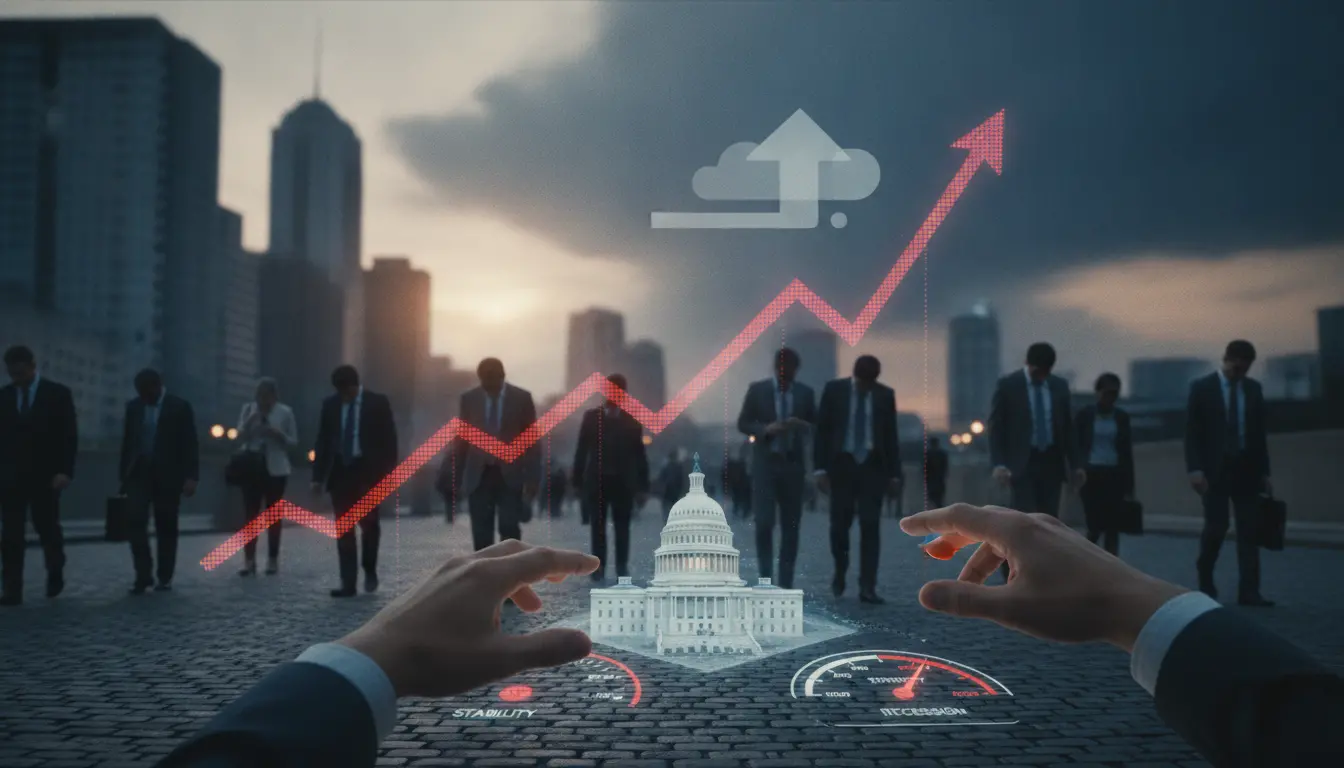
Analysts Eye Potential Rise in US Unemployment Rate as Federal Reserve Navigates Economic Crossroads
The future trajectory of the U.S. labor market, particularly the unemployment rate, is emerging as a pivotal factor in the Federal Reserve's ongoing efforts to stabilize the economy. While recent data has shown resilience, economists and policymakers are increasingly turning their gaze towards longer-term projections, with the prospect of the jobless rate potentially exceeding 4.5% by the latter half of 2026 becoming a significant point of discussion. This scenario underscores the delicate balance the central bank must strike between combating persistent inflation and maintaining robust employment levels, as the cumulative impact of its monetary policy unfolds.
The journey of the U.S. labor market since the pandemic's upheaval has been remarkable, characterized by a rapid rebound in employment that saw unemployment dip to multi-decade lows. However, the Federal Reserve's aggressive campaign of interest rate hikes, initiated in early 2022 to rein in persistent inflation, has gradually begun to cool what was once an overheated jobs market. While monthly jobs reports continue to show job creation, the pace has undeniably moderated, and other indicators such as job openings and wage growth are exhibiting signs of deceleration. This intentional slowing is a direct consequence of the Fed’s strategy, aiming to reduce aggregate demand and bring inflation under control without triggering a severe economic downturn.
For the Federal Reserve, the unemployment rate is a core component of its dual mandate, alongside achieving price stability. A rate above 4.5% could signal a significant shift from the tighter labor market conditions observed in recent years. Historically, this level has often coincided with periods of economic softening or recessionary pressures, though the specific economic context is always crucial for interpretation. A sustained move to this threshold by August 2026 would suggest that the cumulative impact of higher borrowing costs, coupled with other potential macroeconomic headwinds like global slowdowns or constrained consumer spending, has substantially dampened labor demand across various sectors. The central bank's challenge lies in distinguishing between a healthy rebalancing of the labor market—where demand and supply are better aligned—and an undesirable contraction that could undermine overall economic stability and lead to widespread job losses.
Several factors could contribute to an elevated unemployment rate. Sustained high interest rates can depress business investment and expansion plans, leading to reduced hiring or even layoffs as companies optimize their workforces. Furthermore, ongoing inflationary pressures, even if moderating, could continue to erode consumer purchasing power, thereby dampening demand for goods and services across the economy. A slowdown in key industries, the accelerating adoption of automation and artificial intelligence impacting job roles, or shifts in global supply chains could also play a part in reshaping the employment landscape. Should the unemployment rate reach or surpass 4.5%, it would likely lead to a further loosening of labor market conditions, potentially easing wage pressures that policymakers have been closely monitoring. For ordinary Americans, a higher unemployment rate translates to increased job insecurity and a more competitive environment for job seekers.
Economic projections from various institutions and the Federal Reserve itself reflect a diverse range of outcomes, highlighting the inherent uncertainties in forecasting over a multi-year horizon. While some models anticipate a “soft landing” scenario where inflation recedes without a substantial rise in unemployment, others foresee a more pronounced cooling of the labor market as a necessary outcome of bringing inflation back to the Fed's 2% target. The central bank's own Summary of Economic Projections (SEP) provides insights into policymakers' median expectations for the unemployment rate, which typically show a gradual, modest increase over the coming years as monetary policy takes full effect. These forecasts are dynamic, however, subject to continuous revision based on incoming economic data, geopolitical events, and shifts in fiscal policy.
The period leading up to August 2026 will therefore be marked by intense scrutiny of labor market data, inflation metrics, and broader economic indicators. The Federal Reserve's response to these evolving conditions will be critical in shaping not only the trajectory of unemployment but also the overall health of the U.S. economy. Policymakers face the delicate task of navigating these complex forces to achieve sustainable price stability while preserving as much of the hard-won employment gains as possible. The potential for the unemployment rate to cross the 4.5% threshold represents a key benchmark in this ongoing economic balancing act, signaling a potentially more challenging phase for the U.S. labor market and demanding astute policy adjustments.
Stay Informed. Act Smarter.
Get weekly highlights, major headlines, and expert insights — then put your knowledge to work in our live prediction markets.
Related News
US Unemployment Rate Poised for Scrutiny Ahead of Mid-2026 Data Release
US Federal Reserve's Long-Term Interest Rate Path Under Intense Scrutiny
Economists Intensify Debate on US Recession Risk Through 2026 Amid Fed's Inflation Fight

Federal Reserve's Long-Term Strategy Under Scrutiny as Analysts Project Path to 2026 Rate Decisions
Federal Reserve's Long-Term Inflation Battle Intensifies Ahead of July 2026 Core PCE Report
US Economic Outlook for 2026 Hinges on Inflation Control and Productivity Revival
Analysts Eye US 10-Year Treasury Yield for Potential Breach of 5% Threshold
Fed Grapples With Long-Term Rate Outlook as 'Higher for Longer' Mantra Tested by Economic Data
Federal Reserve Prepares for Critical July 2026 Rate Decision Amid Evolving Economic Landscape
Federal Reserve Signals Potential 2026 Rate Hike Amidst Growing AI-Driven Inflation Concerns