

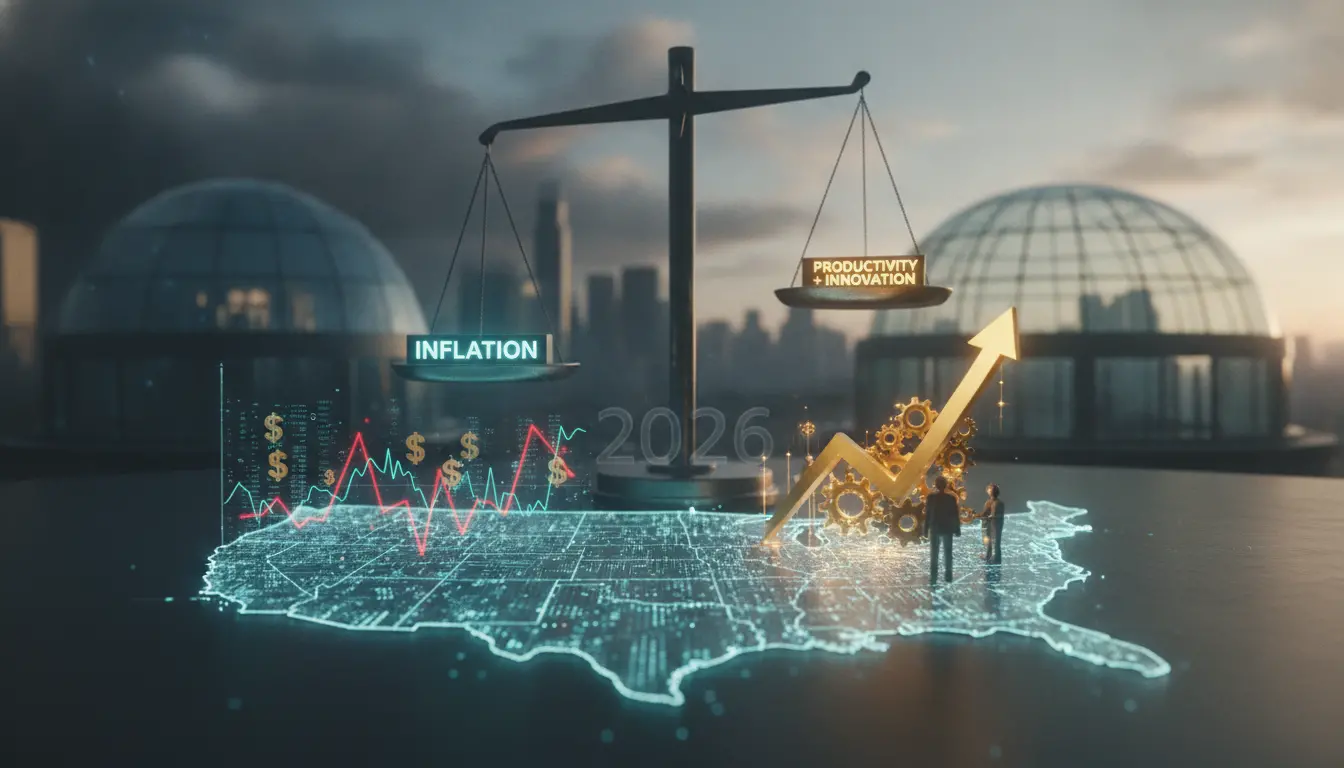
US Economic Outlook for 2026 Hinges on Inflation Control and Productivity Revival
As the United States navigates the complex aftermath of post-pandemic stimulus and a historic battle against inflation, economists and policymakers are increasingly turning their attention to the nation's long-term growth trajectory. The central question looming over the next two years is whether the economy can settle into a pattern of sustainable expansion, with many analysts viewing a 2.0% year-over-year growth rate as a crucial benchmark for health and stability. Achieving this goal by mid-2026 will depend on a delicate interplay of monetary policy, technological advancement, and geopolitical stability, creating a landscape of both significant opportunity and considerable risk.
The most immediate factor shaping the path to 2026 is the Federal Reserve's ongoing campaign to tame inflation without triggering a deep recession. After a series of aggressive interest rate hikes, the central bank is now in a delicate holding pattern, assessing whether economic activity has cooled sufficiently to bring price pressures back to its 2% target. The decisions made in the coming months will have long-lasting repercussions. If the Fed maintains its restrictive stance for too long, it risks stifling investment and consumer spending, potentially pushing growth well below the desired threshold. Conversely, cutting rates prematurely could reignite inflationary fires, forcing a more painful economic correction down the line. This balancing act remains the primary variable in nearly every major economic forecast for the medium term.
Beyond the Fed's immediate actions, the potential for a productivity boom represents the most significant upside potential for the U.S. economy. For years, productivity growth has been lackluster, acting as a drag on overall economic potential. However, a wave of innovation, particularly in artificial intelligence and automation, has spurred optimism that this trend could be reversing. Proponents argue that these technologies are on the cusp of being widely integrated across sectors, from logistics and manufacturing to healthcare and professional services, leading to substantial efficiency gains. If this AI-driven productivity revival materializes, it could enable the economy to grow faster without generating excess inflation, providing a powerful tailwind that could easily push GDP growth above 2%.
However, this optimistic outlook is tempered by formidable headwinds, including a complex fiscal and geopolitical environment. The level of U.S. government debt remains a long-term concern, and the political will to address it through either spending cuts or tax increases is limited. The outcome of upcoming elections could further shift fiscal priorities, introducing another layer of uncertainty for businesses and investors. On the global stage, persistent trade tensions, particularly with China, and the ongoing conflicts in Europe and the Middle East threaten to disrupt supply chains and commodity markets. A stable global backdrop is a key ingredient for sustained domestic growth, and its absence could easily derail the best-laid plans of central bankers and corporate strategists.
The resilience of the American consumer will also be a critical factor. Having weathered high inflation by drawing down on savings and increasing credit card debt, household balance sheets are now more stretched. The strength of the labor market, which has remained surprisingly robust, has been the primary pillar supporting consumer spending. Continued wage growth that outpaces inflation will be essential for maintaining this momentum. Any significant weakening in the job market would have a direct and immediate impact on consumption, which accounts for roughly 70% of U.S. economic activity, making it a pivotal indicator to watch.
Ultimately, the economic picture in mid-2026, which will be officially captured by the Bureau of Economic Analysis's advance GDP estimate, is being shaped today. The path to achieving sustained, healthy growth is not preordained. It requires a masterful navigation of monetary policy by the Federal Reserve, the successful translation of technological promise into tangible productivity gains, and a degree of stability on both the domestic political and international stages. While the potential for a robust expansion exists, the journey is fraught with challenges that will test the resilience of the world's largest economy.
Stay Informed. Act Smarter.
Get weekly highlights, major headlines, and expert insights — then put your knowledge to work in our live prediction markets.
Related News
Economists Intensify Debate on US Recession Risk Through 2026 Amid Fed's Inflation Fight

Federal Reserve's Long-Term Inflation Battle Intensifies Ahead of July 2026 Core PCE Report

Federal Reserve's Long-Term Strategy Under Scrutiny as Analysts Project Path to 2026 Rate Decisions
US Federal Reserve's Long-Term Interest Rate Path Under Intense Scrutiny

China's Economic Trajectory Under Scrutiny as 2026 Growth Target Looms
Fed Grapples With Long-Term Rate Outlook as 'Higher for Longer' Mantra Tested by Economic Data
Federal Reserve's Rate Cut Prospects by 2026 Hinge on Evolving Inflation and Growth Data

US Economy Navigates Heightened Recession Risks Amidst Shifting Monetary Policy and Global Headwinds
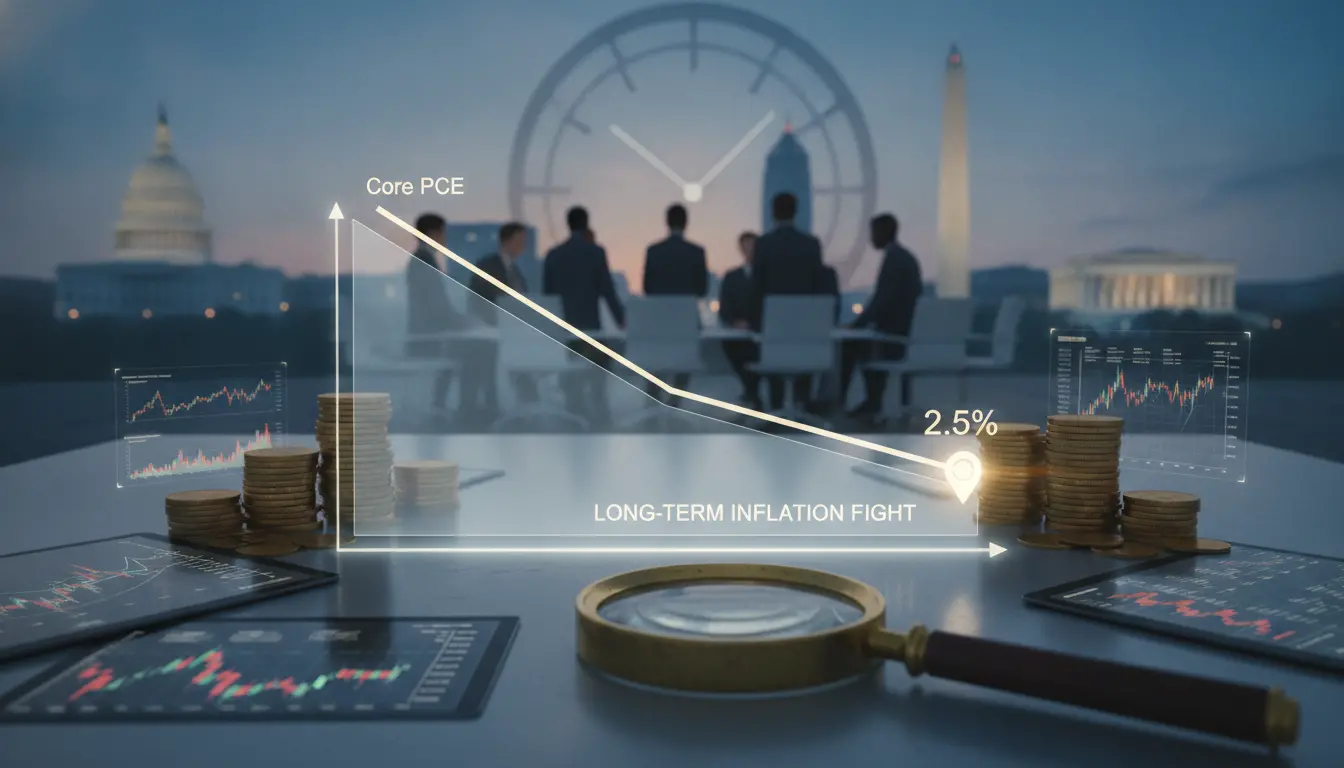
Fed’s Long-Term Inflation Fight Eyes 2.5 Percent Core PCE as Key Milestone

Analysts Eye Potential Rise in US Unemployment Rate as Federal Reserve Navigates Economic Crossroads