

- News
- Finance
- Fed Grapples With Long-Term Rate Outlook as 'Higher for Longer' Mantra Tested by Economic Data
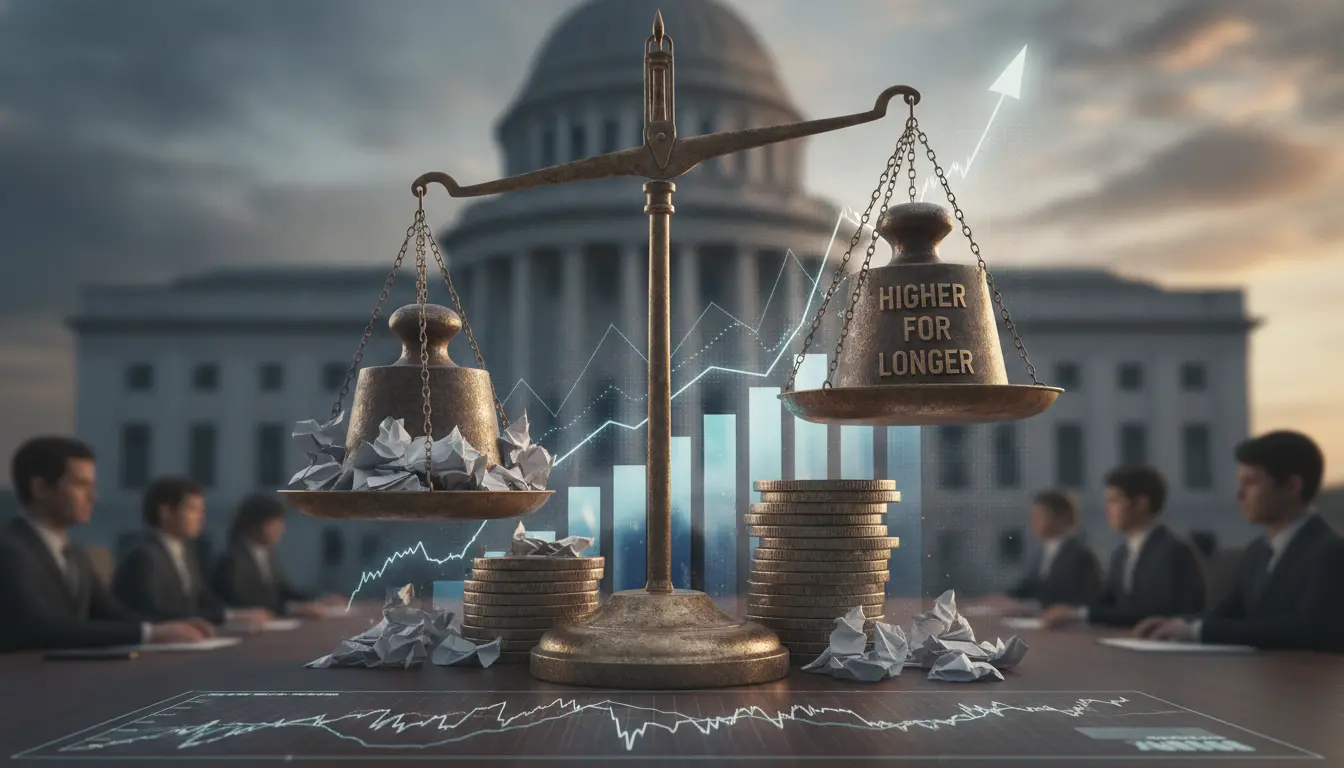
Fed Grapples With Long-Term Rate Outlook as 'Higher for Longer' Mantra Tested by Economic Data
WASHINGTON, D.C. – As the Federal Reserve maintains its restrictive monetary policy to tame persistent inflation, a new and more complex debate is capturing the attention of economists, investors, and policymakers: the long-term destination for interest rates. While the timing of the next rate cut dominates near-term headlines, the more consequential question is where the federal funds rate will ultimately settle in the years to come, with growing uncertainty over whether the pre-pandemic era of ultra-low rates will ever return.
The central bank’s aggressive campaign, which lifted its benchmark rate by more than five percentage points between 2022 and 2023, was a direct response to the highest inflation in four decades. Now, with the rate holding steady in a range of 5.25% to 5.50%, the conversation is shifting from the immediate battle to the long-term strategy. The core of the debate revolves around the so-called neutral rate of interest, or “r-star”—the theoretical rate that neither stimulates nor restricts economic growth. For years, this rate was believed to be declining, but a resilient U.S. economy in the face of high borrowing costs has prompted a major reassessment.
Federal Reserve officials themselves appear divided on the long-term outlook. The Fed's own Summary of Economic Projections, often referred to as the “dot plot,” reveals a wide dispersion of views for where rates will be in 2026 and beyond. While the median projection has trended slightly higher, a significant camp still foresees a return to a policy rate well below 3.5%, implying a belief that the underlying economic fundamentals have not permanently shifted. Others, however, are penciling in a future where rates remain structurally higher, arguing that factors like increased government spending, deglobalization, and the clean energy transition are inherently inflationary and require a more restrictive baseline policy to maintain price stability.
This divergence is a reflection of the conflicting economic signals confronting policymakers. On one hand, inflation has cooled considerably from its peak, suggesting the Fed's aggressive medicine is working. Proponents of a lower long-term rate point to this trend, arguing that as inflation normalizes toward the 2% target, the need for punishingly high rates will dissipate, allowing the Fed to guide policy back toward a more historically normal, and lower, setting. They contend that the economy’s surprising strength is a temporary phenomenon fueled by pandemic-era savings, which will eventually fade.
On the other hand, the persistent strength of the labor market and robust consumer spending tell a different story. The economy has thus far shrugged off borrowing costs that would have crippled it in previous cycles. This resilience has led a growing chorus of analysts to argue that the neutral rate has indeed risen. In this view, the economy can now sustain higher interest rates without tipping into a recession. If they are correct, the Fed’s efforts to cut rates too deeply or too quickly could risk reigniting inflation, forcing an embarrassing and economically damaging policy reversal. For these analysts, a federal funds rate remaining north of 3.5% by the end of 2026 isn't a pessimistic outlook, but a realistic reflection of a new economic paradigm.
Several key factors will determine which path the economy takes. The trajectory of productivity growth is paramount; a surge, potentially driven by advancements in artificial intelligence, could allow for stronger economic growth without stoking inflation, giving the Fed more leeway to lower rates. Conversely, continued fiscal deficits, which add to aggregate demand, and persistent supply chain vulnerabilities could exert upward pressure on prices, forcing the Fed's hand to keep policy tighter for longer. Chairman Jerome Powell and the Federal Open Market Committee have stressed a data-dependent approach, signaling that they are not pre-committing to any specific long-term path. This leaves the future of U.S. monetary policy in a state of profound uncertainty, with the path to 2026 paved with critical data points that will shape the financial landscape for years to come.
Stay Informed. Act Smarter.
Get weekly highlights, major headlines, and expert insights — then put your knowledge to work in our live prediction markets.
Related News
US Federal Reserve's Long-Term Interest Rate Path Under Intense Scrutiny

Federal Reserve's Long-Term Strategy Under Scrutiny as Analysts Project Path to 2026 Rate Decisions
Federal Reserve's Rate Cut Prospects by 2026 Hinge on Evolving Inflation and Growth Data
Economists Intensify Debate on US Recession Risk Through 2026 Amid Fed's Inflation Fight
Federal Reserve Prepares for Critical July 2026 Rate Decision Amid Evolving Economic Landscape
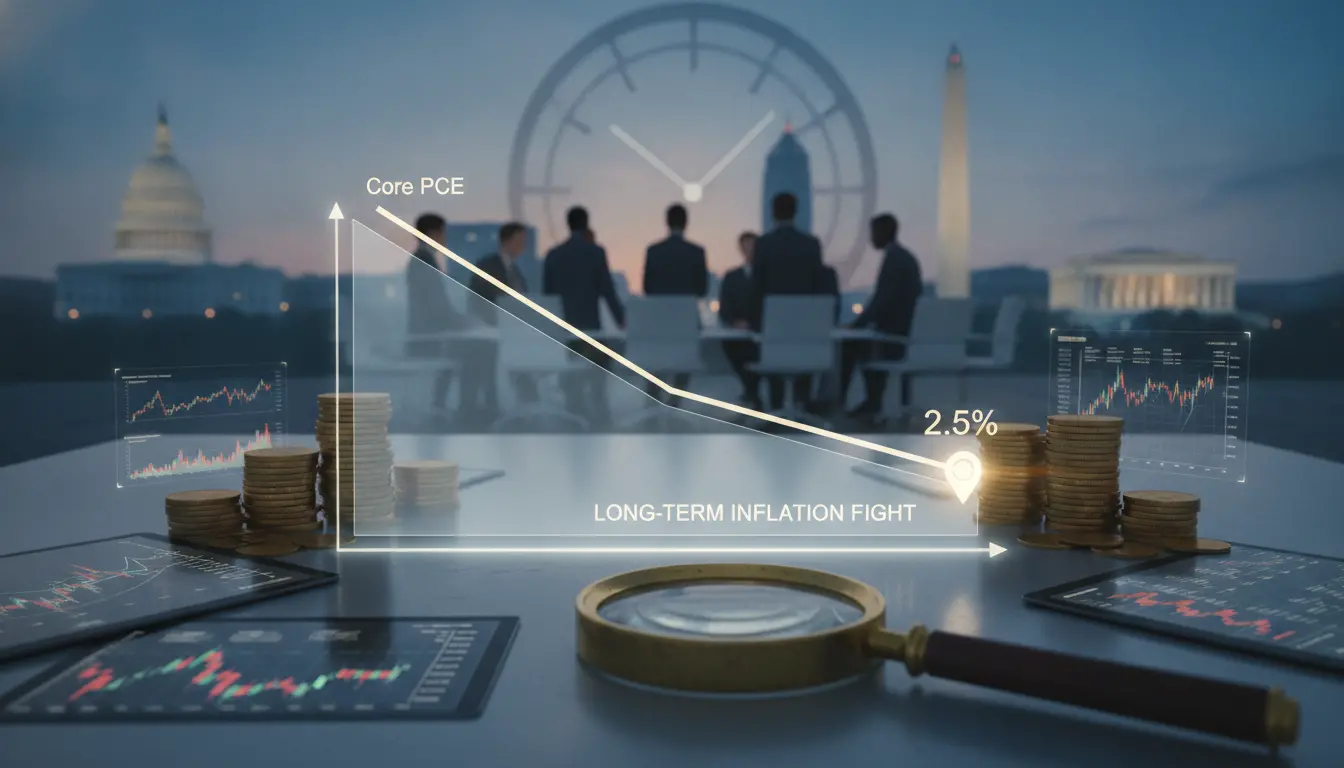
Fed’s Long-Term Inflation Fight Eyes 2.5 Percent Core PCE as Key Milestone
Federal Reserve's Long-Term Inflation Battle Intensifies Ahead of July 2026 Core PCE Report
Federal Reserve Eyes Steady Rates for September 2026 FOMC Meeting Amid Evolving Economic Data
Federal Reserve Signals Potential 2026 Rate Hike Amidst Growing AI-Driven Inflation Concerns
US Economic Outlook for 2026 Hinges on Inflation Control and Productivity Revival