

- News
- Finance
- Federal Reserve's Long-Term Inflation Battle Intensifies Ahead of July 2026 Core PCE Report

Federal Reserve's Long-Term Inflation Battle Intensifies Ahead of July 2026 Core PCE Report
The United States economy is bracing for a pivotal moment in its ongoing fight against inflation as the July 2026 Personal Consumption Expenditures (PCE) report, particularly its core deflator, approaches its scheduled release on August 26, 2026. This data point is not merely another statistic; it represents the Federal Reserve’s preferred gauge for measuring underlying inflation and will be a critical indicator of the efficacy of its aggressive monetary tightening policies over the preceding years. With the Fed committed to a long-term inflation target of 2%, the trajectory of the core PCE deflator in mid-2026 will profoundly influence future interest rate decisions, economic forecasts, and the nation’s overall financial stability.
Since the surge in inflation began in 2021 and peaked in 2022, the Federal Reserve has embarked on a series of historic interest rate hikes, aiming to cool demand and bring price stability back to the economy. The core PCE deflator, which excludes volatile food and energy prices, is favored by central bankers because it provides a clearer picture of sustained price pressures arising from core economic activity. While headline inflation has shown signs of moderation, the persistence of core inflation has been a more stubborn challenge, reflecting the deeply entrenched nature of price increases across various sectors. The 2026 report will thus offer a crucial mid-term assessment of whether these policies have successfully steered the economy towards the elusive 2% target, or if inflationary pressures remain more entrenched than anticipated.
The period leading up to July 2026 is expected to be marked by a complex interplay of domestic and international factors shaping the economic landscape. Domestically, labor market dynamics, including wage growth and employment levels, will continue to be a significant determinant of inflationary pressures. Strong wage growth, while beneficial for households, can fuel consumer spending and contribute to persistent inflation if productivity gains do not keep pace. Furthermore, the lingering effects of supply chain adjustments, geopolitical developments influencing commodity prices, and the impact of past and future fiscal policies could all play a role in shaping the inflation outlook. Analysts will be scrutinizing these interconnected variables to project the potential outcome of the July 2026 PCE data, understanding that any sustained deviation from the Fed’s target could necessitate further policy adjustments.
What is at stake for the US economy is considerable. If the core PCE deflator in July 2026 indicates that inflation remains significantly above the 2% target, it could signal the need for the Federal Reserve to maintain a tighter monetary policy for longer, or even consider further rate hikes. Such a scenario would have ramifications across financial markets, potentially impacting borrowing costs for consumers and businesses, stock market performance, and the overall pace of economic growth. Conversely, if the data shows a clear and sustained deceleration towards or below the target, it could open the door for the Fed to consider easing its monetary stance, offering relief to borrowers and potentially stimulating investment and job creation. The delicate balance between controlling inflation and avoiding a recession remains a paramount concern for policymakers.
Economists and market participants will be meticulously analyzing every detail of the Bureau of Economic Analysis's report. Beyond the headline number, attention will be paid to the underlying components contributing to the change, identifying specific sectors where inflationary pressures are easing or intensifying. The Fed's credibility hinges on its ability to guide the economy back to price stability without triggering undue economic hardship. As such, the July 2026 core PCE deflator is more than just a measurement of past price changes; it is a forward-looking indicator that will help shape expectations for future monetary policy, influencing everything from mortgage rates to investment decisions and the daily cost of living for millions of Americans. The path ahead remains challenging, and this specific data release will be a key checkpoint in the nation’s long economic journey.
Stay Informed. Act Smarter.
Get weekly highlights, major headlines, and expert insights — then put your knowledge to work in our live prediction markets.
Related News
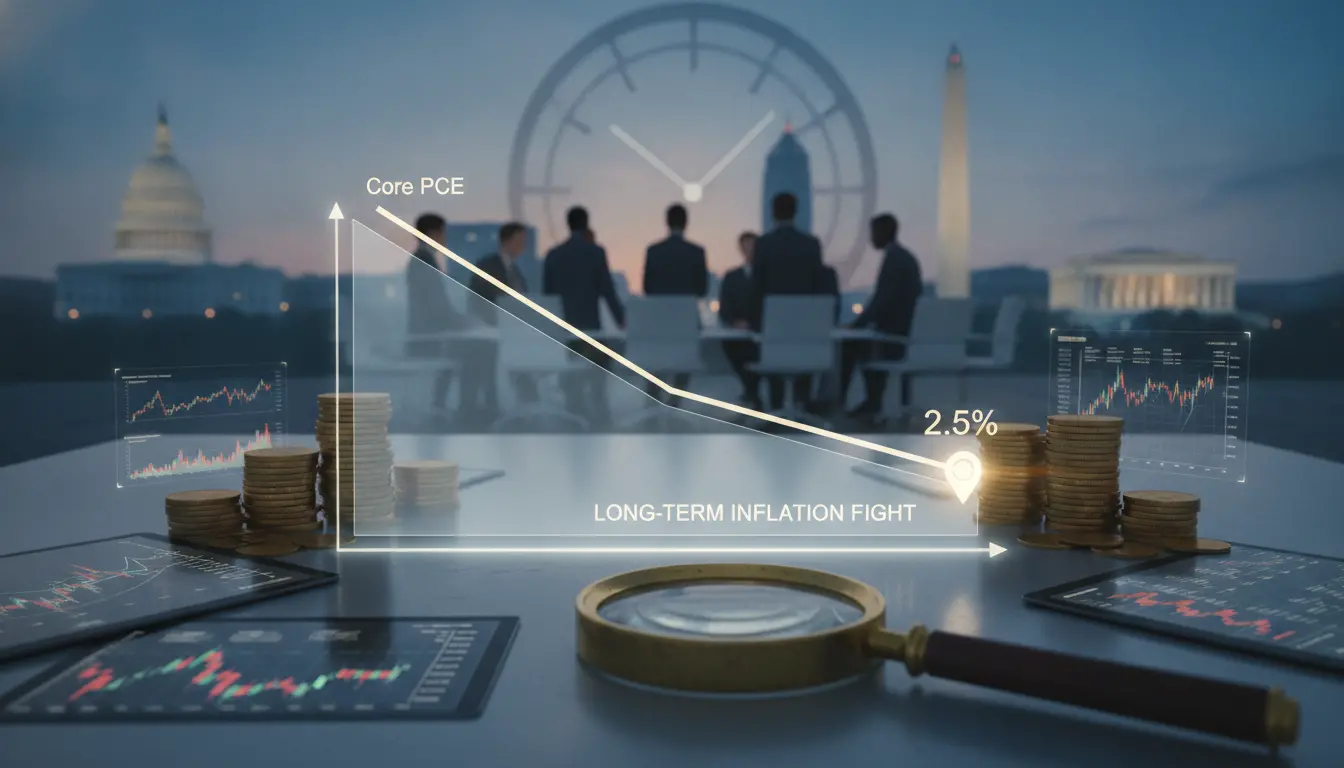
Fed’s Long-Term Inflation Fight Eyes 2.5 Percent Core PCE as Key Milestone

US Core PCE Inflation Accelerates to 3.4% in May, Heightening Federal Reserve Policy Concerns

Federal Reserve's Long-Term Strategy Under Scrutiny as Analysts Project Path to 2026 Rate Decisions

Federal Reserve Prepares for Critical July 2026 Rate Decision Amid Evolving Economic Landscape
US Federal Reserve's Long-Term Interest Rate Path Under Intense Scrutiny

Economists Intensify Debate on US Recession Risk Through 2026 Amid Fed's Inflation Fight

Eurozone Awaits Crucial August 2026 CPI Flash Estimate Amid Persistent Inflation Concerns
US Economic Outlook for 2026 Hinges on Inflation Control and Productivity Revival

US Unemployment Rate Poised for Scrutiny Ahead of Mid-2026 Data Release
Fed Grapples With Long-Term Rate Outlook as 'Higher for Longer' Mantra Tested by Economic Data