

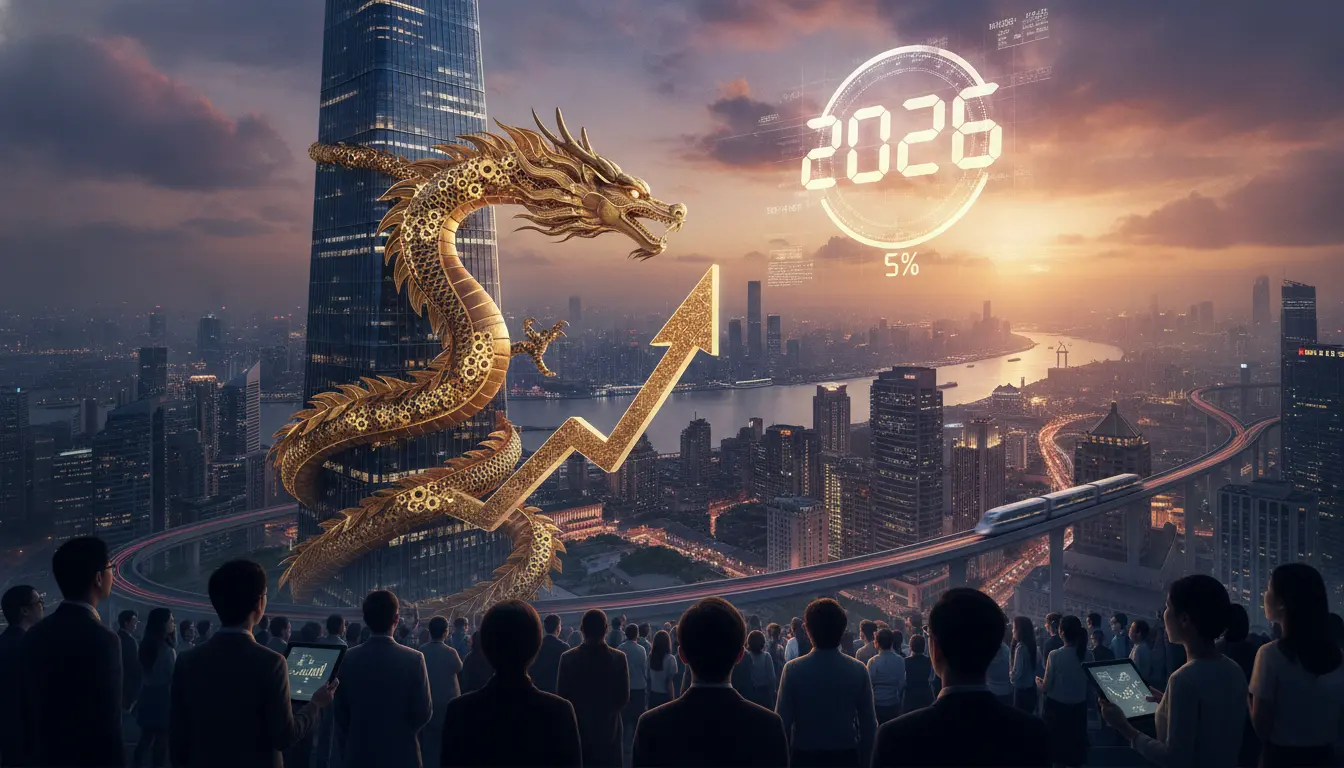
China's Economic Trajectory Under Scrutiny as 2026 Growth Target Looms
Beijing faces a complex economic balancing act as the nation looks towards its ambitious growth targets for 2026, with an approximate 5% annual real GDP expansion widely anticipated to be the benchmark. The challenge comes amid significant structural headwinds, ranging from a prolonged property sector downturn to subdued domestic consumption and global trade uncertainties. Analysts and policymakers alike are closely monitoring the confluence of these factors, understanding that China’s economic health is not merely a domestic concern but a critical determinant for the stability and dynamism of the global economy.
For decades, China maintained an astonishing pace of economic development, often registering double-digit growth rates that lifted millions out of poverty and reshaped global supply chains. However, the era of hyper-growth fueled by investment and exports is gradually giving way to a more mature, consumption-driven model. This transition, while necessary for sustainable development, has introduced its own set of complexities. The government's consistent articulation of an 'around 5%' target for the coming years, including 2026, signals a desire to maintain a robust, albeit more moderate, expansion that ensures employment stability and progress towards national development goals.
However, the path to achieving this target is fraught with obstacles. The real estate market, once a powerful engine of growth and a significant store of household wealth, remains mired in crisis. Major developers grapple with immense debt, project completions lag, and buyer confidence is fragile, creating ripple effects across related industries and local government finances. Alongside this, domestic consumption has not rebounded with the vigor many expected post-pandemic, hindered by job market anxieties, cautious household spending, and a shift in consumer preferences. Geopolitical tensions and slowing global demand further complicate the picture, weighing on China’s export-oriented manufacturing sector, while demographic shifts, including a shrinking working-age population, present long-term structural challenges.
In response, Beijing has deployed a range of policy tools to counteract these pressures. Monetary policy has seen targeted easing, with cuts to interest rates and reserve requirements aimed at stimulating lending and investment. On the fiscal front, significant infrastructure spending has continued, coupled with efforts to boost household incomes and stimulate consumption through various incentives. Crucially, industrial policy has become a central pillar, with massive investments poured into advanced manufacturing, green technologies, and strategic emerging industries, aiming to foster new growth drivers and enhance China's self-reliance in critical sectors. These efforts are designed not just to meet short-term targets but to lay the groundwork for a more innovative and resilient economy.
The stakes for China, and indeed the world, are remarkably high. Successfully navigating these challenges and meeting the 2026 growth target would underscore the resilience of the Chinese economy and the efficacy of its policy responses, potentially reinvigorating global trade and investment flows. Conversely, a significant shortfall could exacerbate global economic anxieties, impact commodity markets, and further cool sentiment towards one of the world's largest consumer bases and manufacturing hubs. International organizations like the IMF and World Bank routinely revise their projections for China, reflecting the fluidity of its economic landscape and the ongoing debate among economists regarding its true growth potential in the medium term.
Looking ahead to 2026, the effectiveness of Beijing's stimulus measures, the stabilization of the property sector, and the revival of consumer confidence will be paramount. The government's ability to balance short-term growth imperatives with long-term structural reforms, including addressing local government debt and fostering a more equitable distribution of wealth, will ultimately determine whether the targeted growth rate is achievable. The narrative of China’s economic future is still being written, with 2026 emerging as a critical inflection point that will gauge the success of its strategic adjustments in an increasingly complex global environment.
Stay Informed. Act Smarter.
Get weekly highlights, major headlines, and expert insights — then put your knowledge to work in our live prediction markets.
Related News

US Economic Outlook for 2026 Hinges on Inflation Control and Productivity Revival

US and China Navigate Complex Trade Impasse as Pressure Mounts for New Comprehensive Agreement by 2026

US-China Economic Standoff Intensifies Amidst Calls for New Tariffs by 2026

US Considers Imposing Fresh Tariffs on Chinese Goods Amid Persistent Trade Frictions

Eurozone Economic Outlook and Persistent Inflation Set Stage for ECB's Mid-2026 Monetary Policy Review

Economists Intensify Debate on US Recession Risk Through 2026 Amid Fed's Inflation Fight

Federal Reserve's Long-Term Inflation Battle Intensifies Ahead of July 2026 Core PCE Report

G20 Finance Ministers Set for August 2026 Summit on Global Economic Stability

Federal Reserve's Rate Cut Prospects by 2026 Hinge on Evolving Inflation and Growth Data

ECB Under Mounting Pressure to Ease Policy Amid Persistent Eurozone Economic Headwinds