

- News
- Finance
- Eurozone Economic Outlook and Persistent Inflation Set Stage for ECB's Mid-2026 Monetary Policy Review

Eurozone Economic Outlook and Persistent Inflation Set Stage for ECB's Mid-2026 Monetary Policy Review
As the European Central Bank's (ECB) Governing Council prepares for its crucial monetary policy meeting on July 23, 2026, the Eurozone economy stands at a pivotal juncture. The decision regarding interest rates will be profoundly shaped by the prevailing economic conditions, particularly the trajectory of inflation, the robustness of economic growth, and the broader global financial landscape. Analysts and policymakers alike are keenly observing various indicators to gauge whether the conditions will necessitate a further tightening of monetary policy or if the region will have successfully navigated its inflationary challenges.
Over the past few years, the ECB has undertaken an unprecedented cycle of interest rate hikes, moving aggressively to counter the surge in inflation that followed the post-pandemic recovery and the energy crisis exacerbated by geopolitical tensions. These measures were designed to anchor inflation expectations and bring price growth back towards the ECB's symmetric 2% medium-term target. While headline inflation has shown signs of moderation, often reflecting a decline in energy prices, underlying core inflation has proven stickier, fueled by factors such as wage growth pressures and services sector resilience. The coming two years will be critical in determining if these persistent inflationary forces fully recede, allowing the ECB to maintain a more accommodative stance, or if a resurgence demands further intervention.
Several key economic drivers will heavily influence the Governing Council's decision-making by mid-2026. On the inflation front, the sustained pace of wage negotiations across the Eurozone will be paramount. Strong wage growth, if not offset by productivity gains, can create a wage-price spiral, making it harder for inflation to return to target. Furthermore, global supply chain dynamics, commodity price movements, and the impact of climate-related events on food prices will continue to pose upside risks. On the growth side, the Eurozone has faced headwinds, including subdued consumer demand, a struggling industrial sector in some major economies like Germany, and the ongoing ramifications of global trade tensions. A material acceleration in economic activity, potentially driven by stronger exports or a rebound in domestic investment, could provide the necessary buffer for the ECB to consider rate adjustments.
The ECB's mandate prioritizes price stability, distinguishing it from central banks with dual mandates that also explicitly target full employment. This singular focus means that even if economic growth remains tepid, persistent inflation pressures could compel the Governing Council to act. The data-dependent approach championed by President Christine Lagarde and her colleagues emphasizes a continuous evaluation of incoming economic figures, rather than pre-committing to a specific path. By July 2026, the cumulative effects of previous rate hikes will have had ample time to permeate the economy, impacting borrowing costs for households and businesses, and influencing investment and consumption patterns.
Looking ahead, various scenarios could unfold. If the Eurozone achieves its 2% inflation target sustainably by early 2026, coupled with moderate but steady economic growth, the ECB might find itself in a position to either maintain current rates or even consider cuts to stimulate the economy further. However, a scenario where core inflation remains stubbornly above target, perhaps alongside an unexpected rebound in energy prices or a surge in global demand, would significantly increase the probability of a rate hike. Geopolitical stability, or the lack thereof, will also cast a long shadow, as conflicts can disrupt supply chains and commodity markets, exerting fresh inflationary pressures.
Ultimately, the July 2026 meeting will be a testament to the ECB's ongoing commitment to price stability amidst evolving economic realities. The decision will not only shape the financial landscape for Eurozone citizens and businesses but also carry significant implications for the global economy, influencing currency markets, international investment flows, and the broader trajectory of monetary policy across major economies. The intricate balance between taming inflation and fostering sustainable growth will remain the central challenge for the Governing Council in the lead-up to this pivotal moment.
Stay Informed. Act Smarter.
Get weekly highlights, major headlines, and expert insights — then put your knowledge to work in our live prediction markets.
Related News

ECB Under Mounting Pressure to Ease Policy Amid Persistent Eurozone Economic Headwinds

ECB Eyes Potential Further Rate Hikes Amid Persistent Eurozone Inflation Concerns
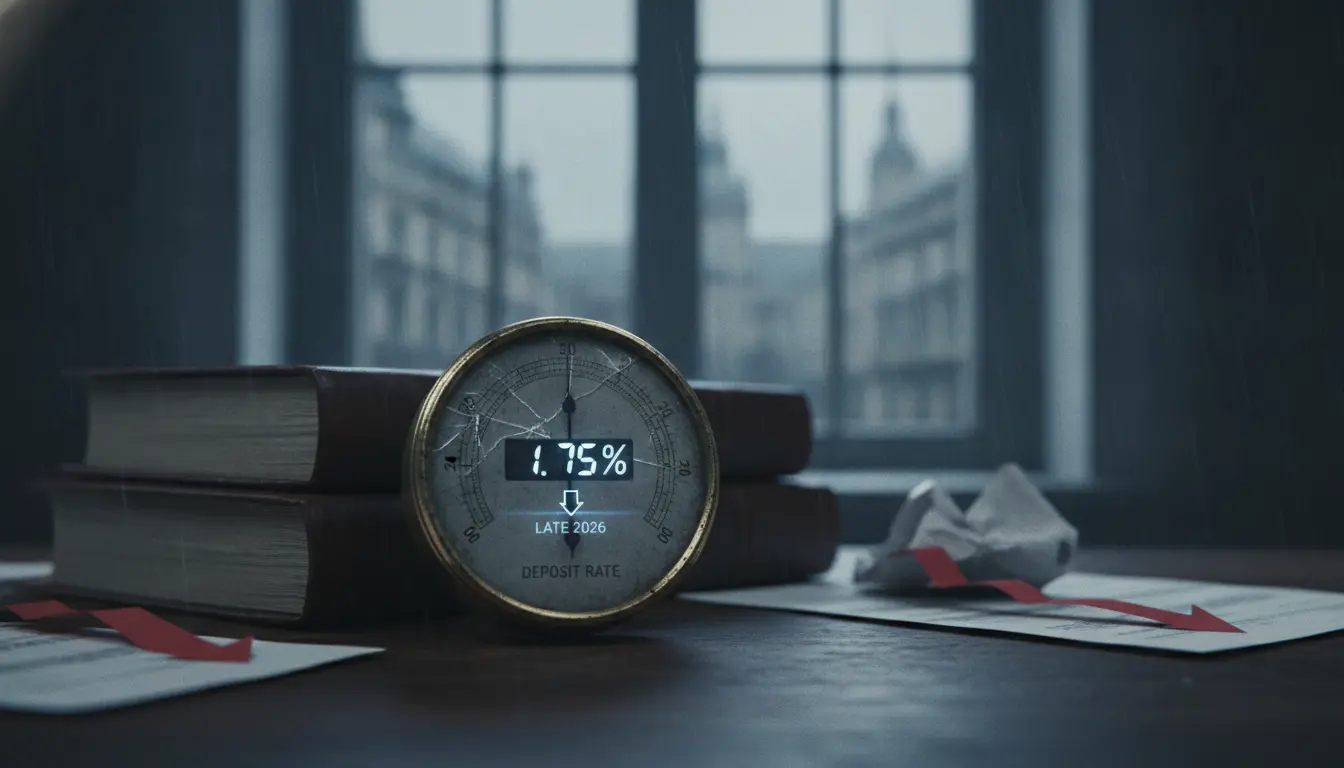
Analysts Project European Central Bank Deposit Rate Below 2% by Late 2026 Amid Persistent Economic Pressures

Eurozone Awaits Crucial August 2026 CPI Flash Estimate Amid Persistent Inflation Concerns

Federal Reserve Prepares for Critical July 2026 Rate Decision Amid Evolving Economic Landscape

Federal Reserve's Long-Term Inflation Battle Intensifies Ahead of July 2026 Core PCE Report

Federal Reserve's Long-Term Strategy Under Scrutiny as Analysts Project Path to 2026 Rate Decisions

Federal Reserve Eyes Steady Rates for September 2026 FOMC Meeting Amid Evolving Economic Data

US Economic Outlook for 2026 Hinges on Inflation Control and Productivity Revival

Bank of England Poised to Consider Future Rate Increases Amid Persistent Inflationary Pressures