

- News
- Finance
- Analysts Project European Central Bank Deposit Rate Below 2% by Late 2026 Amid Persistent Economic Pressures
Analysts Project European Central Bank Deposit Rate Below 2% by Late 2026 Amid Persistent Economic Pressures
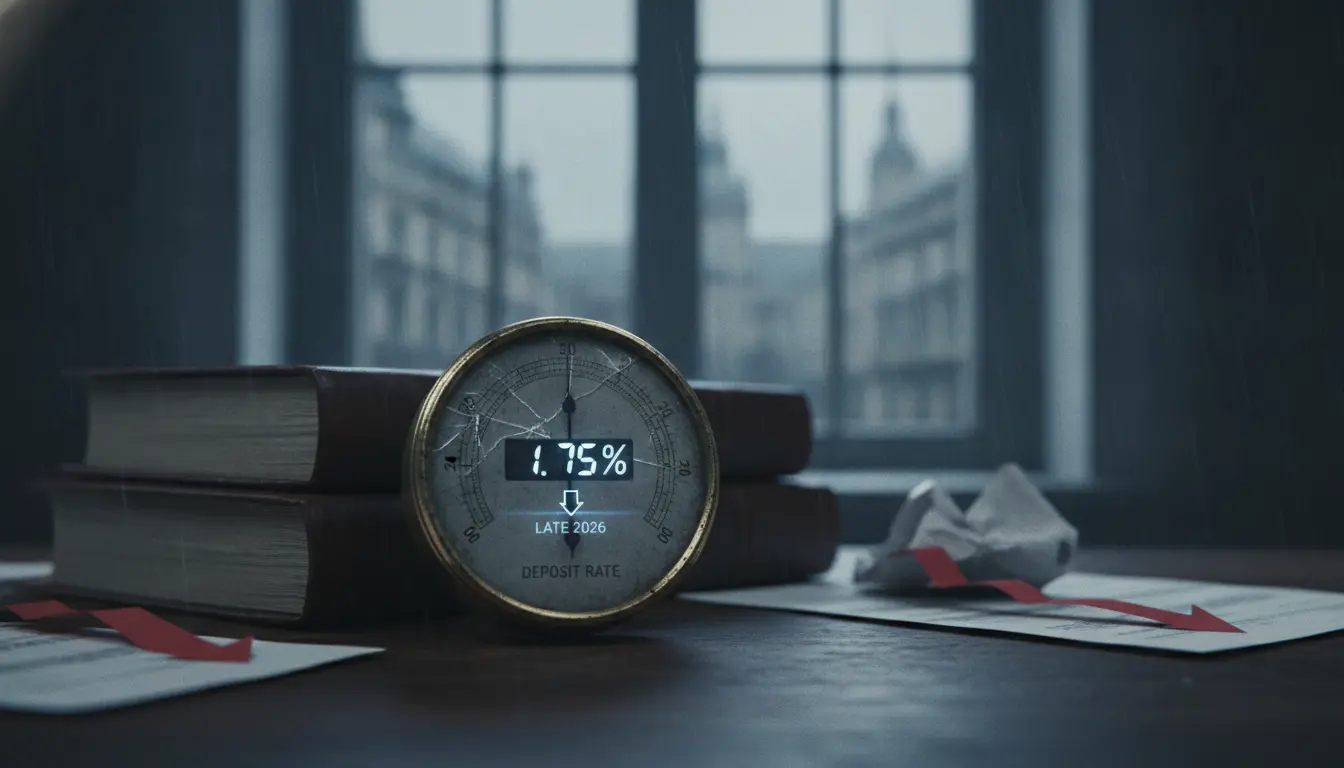
The European Central Bank (ECB) finds itself at a pivotal juncture, navigating a complex economic landscape that suggests its key interest rates, specifically the deposit facility rate, could fall below 2.0% by the close of 2026. This forecast underscores a broad expectation among economists and market watchers that the Eurozone's recovery will remain fragile, necessitating sustained accommodative monetary policy to bolster growth and tame lingering inflationary pressures.
The current discussion around a sub-2% deposit rate by late 2026 comes after a period where the ECB aggressively raised rates to combat surging inflation, followed by a recent pivot towards easing. In June, the central bank initiated its first rate cut in nearly five years, bringing the deposit facility rate down from its historic peak. This move signaled a growing confidence that inflation was on a clear path back to the ECB’s 2% target, even as economic growth within the 20-nation bloc remained sluggish. The challenge for policymakers now is to calibrate future cuts, balancing the need to support a faltering economy with the risk of reigniting price pressures.
Several critical factors are expected to influence the ECB’s rate trajectory over the next two years. Core inflation, which strips out volatile food and energy prices, has proven stickier than headline figures, leading some within the Governing Council to advocate for a more cautious approach to rate reductions. However, persistent weakness in manufacturing and services sectors, coupled with a softening labor market, provides a strong impetus for further easing. Geopolitical tensions, particularly in Eastern Europe and the Middle East, also cast a long shadow, posing risks to energy prices and supply chains, which could complicate the inflation outlook and force the ECB to reassess its strategy.
Key figures within the ECB, including President Christine Lagarde, have consistently emphasized a data-dependent approach, stressing that future decisions will be guided by incoming economic data, the evolution of inflation, and the strength of monetary policy transmission. This stance reflects a divided Governing Council, where 'hawks' argue for slower, more measured cuts to ensure inflation is definitively tamed, while 'doves' highlight the urgent need to stimulate economic activity and avoid a prolonged downturn. The consensus among analysts, however, leans towards a gradual, but sustained, easing cycle, with a cumulative reduction of several hundred basis points projected through 2026.
The implications of a sub-2% deposit facility rate are far-reaching. For businesses, lower borrowing costs could stimulate investment and expansion, fostering job creation and productivity gains. Consumers might benefit from cheaper mortgages and loans, potentially boosting spending. However, prolonged low rates also present challenges, including compressed profit margins for banks and potential risks of asset bubbles if liquidity becomes too abundant. The ECB's delicate balancing act involves carefully managing these trade-offs to ensure price stability while facilitating a robust and sustainable economic recovery across the Eurozone.
Looking towards the end of 2026, the trajectory of the ECB's deposit facility rate will largely depend on the interplay of inflation dynamics, economic growth, and global events. While the path to a sub-2% rate is not guaranteed and subject to numerous uncertainties, the prevailing sentiment suggests that the Eurozone's economic fragility and the central bank's commitment to its inflation target will likely necessitate a continued accommodative stance, marking a significant shift from the high-rate environment of recent years. The central bank remains under immense pressure to finely tune its policy to support the bloc's economic health without compromising its primary mandate of price stability.
Stay Informed. Act Smarter.
Get weekly highlights, major headlines, and expert insights — then put your knowledge to work in our live prediction markets.
Related News

ECB Under Mounting Pressure to Ease Policy Amid Persistent Eurozone Economic Headwinds

Eurozone Economic Outlook and Persistent Inflation Set Stage for ECB's Mid-2026 Monetary Policy Review

ECB Eyes Potential Further Rate Hikes Amid Persistent Eurozone Inflation Concerns

Eurozone Awaits Crucial August 2026 CPI Flash Estimate Amid Persistent Inflation Concerns

Federal Reserve's Long-Term Strategy Under Scrutiny as Analysts Project Path to 2026 Rate Decisions

Federal Reserve's Rate Cut Prospects by 2026 Hinge on Evolving Inflation and Growth Data

US Economic Outlook for 2026 Hinges on Inflation Control and Productivity Revival

Bank of England Faces Debate Over Potential Rate Hike by End of 2026

Bank of England Navigates Complex Path Towards Potential Rate Cuts by Early 2027

Fed’s Long-Term Inflation Fight Eyes 2.5 Percent Core PCE as Key Milestone