

- News
- Science
- China's Private Space Sector Accelerates Reusable Rocket Development, Targets 2026 Landing
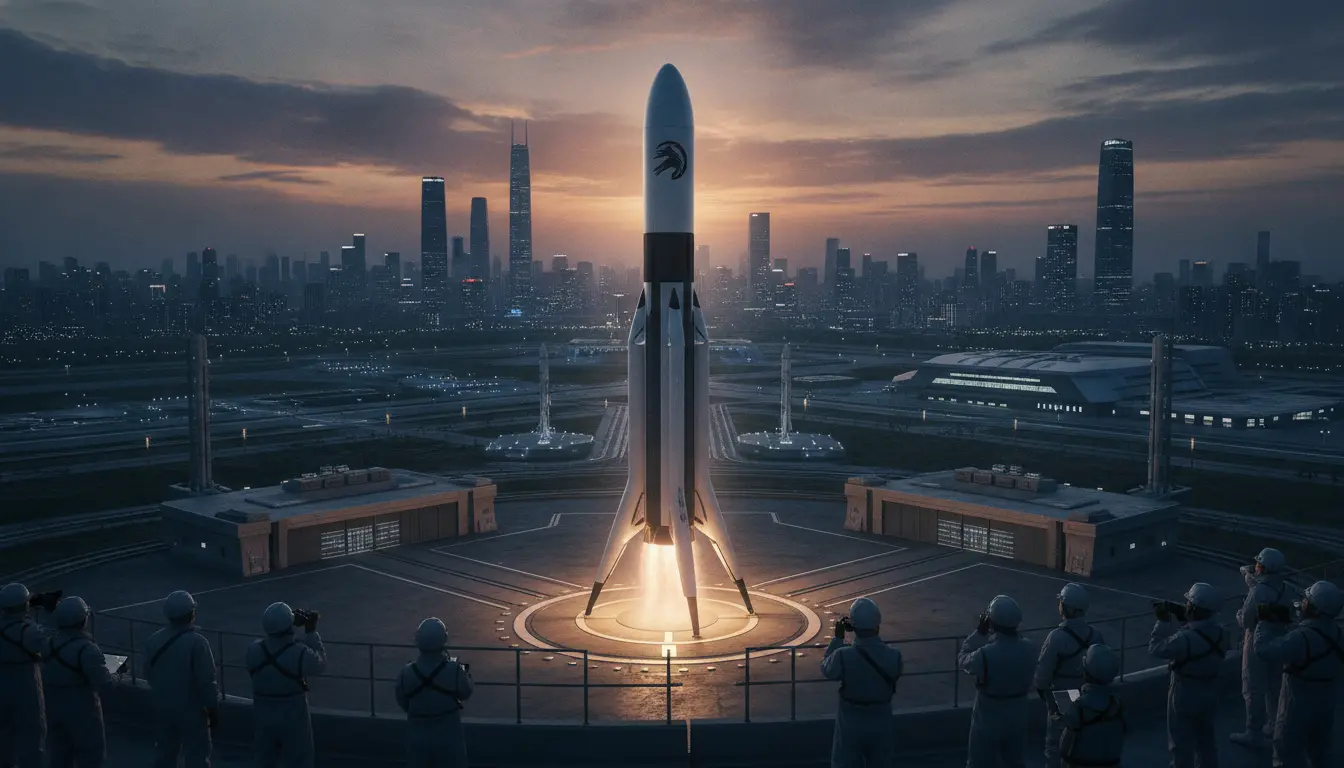
China's Private Space Sector Accelerates Reusable Rocket Development, Targets 2026 Landing
China's burgeoning private space sector has set an ambitious target: to successfully land a reusable rocket booster by 2026. This development marks a significant acceleration in the nation's commercial space capabilities, positioning several homegrown companies to potentially rival global leaders in launch technology. The race to master vertical landing, a critical step towards dramatically reducing the cost and increasing the frequency of space missions, is now a central focus for Chinese innovators, underscoring Beijing's broader strategic push for space dominance and technological self-reliance.
The push for reusability within China’s private space industry mirrors a global trend, most notably pioneered by companies like SpaceX, which has fundamentally reshaped the economics of space access. By making launch vehicles capable of returning to Earth and flying again, the cost per kilogram to orbit can be drastically reduced, opening new avenues for satellite deployment, space tourism, and lunar exploration. China’s government has actively encouraged private enterprises to innovate in this domain, viewing it as essential for fostering a vibrant space ecosystem that complements its state-backed programs, such as the China National Space Administration (CNSA).
Several key players are at the forefront of this effort. LandSpace, for instance, made headlines with the successful launch of its Zhuque-2 Y3 rocket in December 2023, marking the first successful methane-liquid oxygen rocket launch globally. While Zhuque-2 is currently expendable, the company has explicitly stated its intentions to develop a reusable variant, Zhuque-3, with a prototype already undergoing testing. Similarly, i-Space, another prominent private firm, successfully launched its Hyperbola-1 solid-fueled rocket and is actively working on the larger, liquid-fueled Hyperbola-2, designed with reusability in mind. Galactic Energy, known for its Ceres-1 series, has also publicly announced its commitment to developing reusable capabilities for its future Pallas-1 rocket, aiming for a test flight in the coming years. These companies are investing heavily in engine development, structural designs, and sophisticated guidance systems necessary for precision vertical landings.
The technical challenges involved in achieving a reliable, precision vertical landing are immense. It requires advanced propulsion systems capable of throttling down and restarting multiple times, robust structural integrity to withstand re-entry forces, and highly precise navigation and control algorithms. The successful execution of such a feat by a private Chinese entity would not only signify a massive technological leap but also validate the commercial viability of its approach. The stakes are high, encompassing not just national pride and technological leadership but also the potential to capture a significant share of the global commercial launch market, estimated to be worth billions of dollars annually. For China, mastering reusable rocket technology is about securing independent access to space, reducing dependency on foreign innovation, and bolstering its geopolitical standing.
The 2026 target represents an ambitious but critical deadline for these companies. Their progress will be closely watched by international observers, as a successful reusable landing would solidify China’s position as a formidable competitor in the commercial space arena. The rapid pace of development, coupled with substantial government support and private investment, suggests that China’s private space sector is poised to deliver on these goals. The outcomes of these endeavors will undoubtedly shape the future trajectory of global space exploration and commercialization, paving the way for a new era of more accessible and sustainable space activities.
Stay Informed. Act Smarter.
Get weekly highlights, major headlines, and expert insights — then put your knowledge to work in our live prediction markets.
Related News
SpaceX Targets Tower Catch of Starship Booster on Next Test Flight
Rocket Lab Readies Neutron for Inaugural Launch Amid High Expectations
SpaceX Advances Toward 'Mechazilla' Tower Catch, A Critical Step for Rapid Rocket Reusability
SpaceX Targets September 2026 Falcon Launch Amid Global Starlink Expansion Efforts
NASA and SpaceX Finalize Preparations for Crew-13 Mission to International Space Station

Shein Targets $26-$27 Billion Valuation Ahead of Anticipated September 2026 Public Listing

xAI Poised to Launch Next-Generation Grok Model by August 2026, Emphasizing Scientific and Reasoning Capabilities

Fast-Fashion Giant Shein Prepares for Hong Kong IPO Amid Intensifying Global Scrutiny

xAI Aims for Grok 5 Full API Rollout by September 2026, Signaling Major AGI Push

Anthropic Poised to Unveil Major Claude Successor by 2026, Promising Advanced Reasoning and Multimodality