

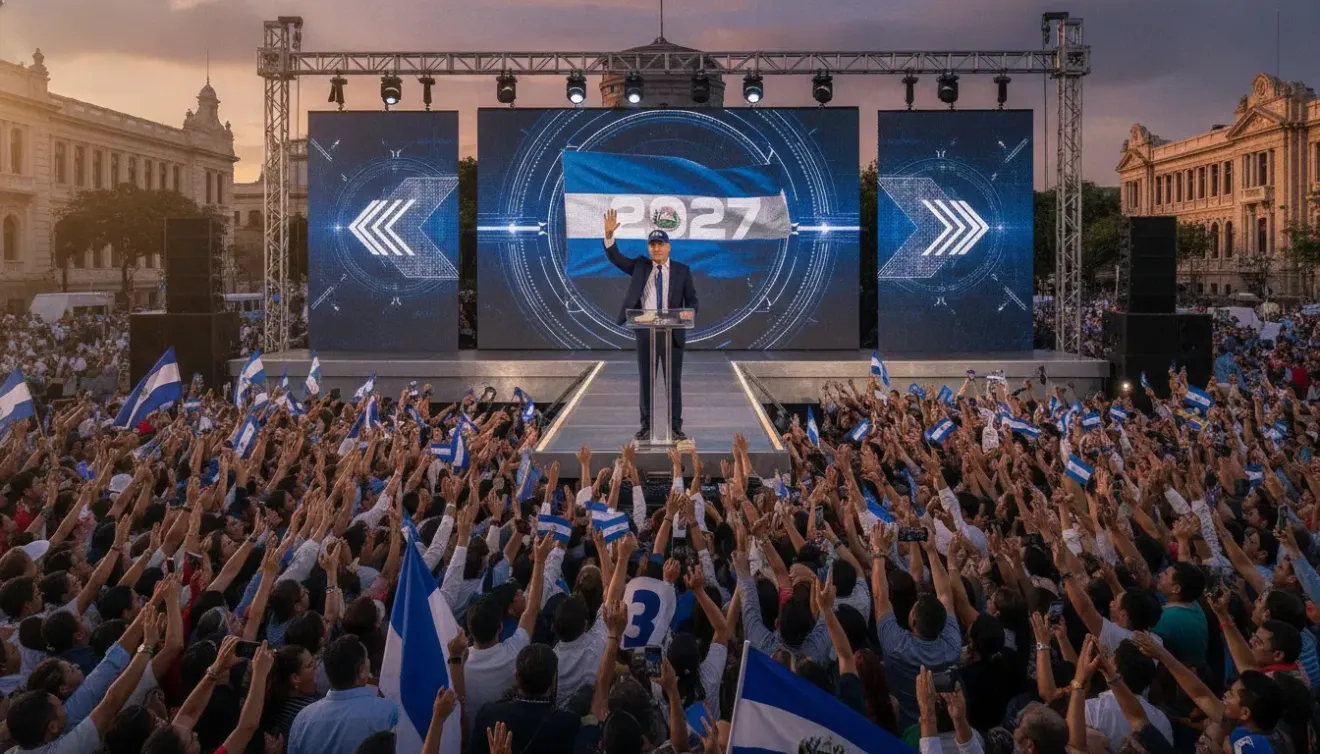
El Salvador’s Political Landscape Shifts as Bukele Eyes Unprecedented Third Term
Fresh off a landslide victory that secured his second term, Salvadoran President Nayib Bukele is already positioned for a potential, and historically unprecedented, third consecutive term in 2027. The groundwork for this extended rule was laid not by a new popular vote, but through a series of controversial legal and judicial maneuvers that have redrawn the boundaries of presidential power in the Central American nation. While Bukele enjoys staggering approval ratings for his dramatic success in dismantling the country's powerful street gangs, critics both at home and abroad warn that El Salvador is trading democratic norms for security, setting a course toward one-man rule.
The path to a potential third term was paved in 2021 when the Supreme Court, stacked with judges appointed by his Nuevas Ideas party after it took control of the legislature, issued a ruling that reinterpreted the constitution. The country’s charter includes several articles explicitly forbidding immediate presidential re-election. However, the court decreed that the prohibition only applied to a president seeking a third term if they had served two consecutive full five-year terms without a brief interruption. By taking a six-month leave of absence before the 2024 election, Bukele was deemed eligible to run. This same legal logic now provides a clear, albeit contentious, precedent for him to seek another term in 2027.
At the heart of Bukele’s immense popularity is his iron-fisted crackdown on crime. For decades, El Salvador was terrorized by brutal gangs like MS-13 and Barrio 18, giving it one of the highest homicide rates in the world. In March 2022, Bukele’s government instituted a state of emergency, suspending certain constitutional rights to facilitate mass arrests. More than 80,000 people have since been incarcerated, effectively crippling the gangs’ operations and causing murder rates to plummet to historic lows. For millions of Salvadorans who can now walk their streets without fear, the trade-off has been worth it. This transformation of public safety forms the bedrock of his political capital, making any opposition to his agenda a formidable challenge.
However, this success has come at a steep price for the nation’s democratic health. Human rights organizations have extensively documented cases of arbitrary detentions, lack of due process, and inhumane prison conditions. Beyond the security strategy, Bukele has systematically consolidated power. His party controls the legislative and judicial branches, effectively eliminating checks and balances. The United States and European Union have repeatedly voiced concerns over the erosion of democratic institutions, but such criticisms have had little impact, often being dismissed by Bukele as foreign interference. His supporters argue that the old system was corrupt and ineffective, and that extraordinary measures were necessary to solve an existential crisis.
Beyond security, Bukele's presidency has been defined by bold, headline-grabbing initiatives, most notably the adoption of Bitcoin as legal tender in 2021. The move was pitched as a way to boost financial inclusion and attract investment, but its economic impact has been underwhelming. The International Monetary Fund (IMF) has cautioned against the risks associated with the cryptocurrency, and its widespread use among the general population remains minimal. While the Bitcoin gamble has not delivered the promised economic revolution, it has cemented Bukele's image as a maverick, tech-savvy leader willing to defy international financial orthodoxy.
Looking toward the 2027 election, the political landscape in El Salvador appears to be entirely Bukele's to command. With a fractured and largely delegitimized opposition, control over all state institutions, and an approval rating that consistently hovers around 90 percent, there are few visible obstacles to his pursuit of a third term. The central question for El Salvador is no longer about defeating crime, but about the nature of the state that emerges from the victory. The nation is at a crossroads, navigating the fraught path between a secure society and the foundational principles of a democratic republic.
Stay Informed. Act Smarter.
Get weekly highlights, major headlines, and expert insights — then put your knowledge to work in our live prediction markets.
Related News
Peruvian President Keiko Fujimori Confronts Immediate Challenges Post-Inauguration

Keiko Fujimori's Enduring Political Influence Sets Stage for Contentious 2026 Peruvian Presidential Race

Speculation Mounts Over Lionel Messi's International Future

Prospective Trump Administration Details 'Trump Accounts' Initiative for Newborn Financial Independence

Conservative Party Grapples with Identity Crisis as Leadership Hopefuls Emerge from Electoral Wreckage
Trump Announces Intent to Impose 50% Tariffs on Most Canadian Goods, Sparking Trade Concerns

Andy Burnham wins key UK by-election, paving way to challenge Keir Starmer

Vuelta a Colombia Prepares for 2026 Edition, Reigniting National Passion for Cycling

Palmeiras and Cerro Porteño Prepare for High-Stakes Copa Libertadores Round of 16 Clash in 2026

Cunha hits Brazil double against Haiti to seal first World Cup 2026 win