

- News
- Politics
- Trump Announces Intent to Impose 50% Tariffs on Most Canadian Goods, Sparking Trade Concerns
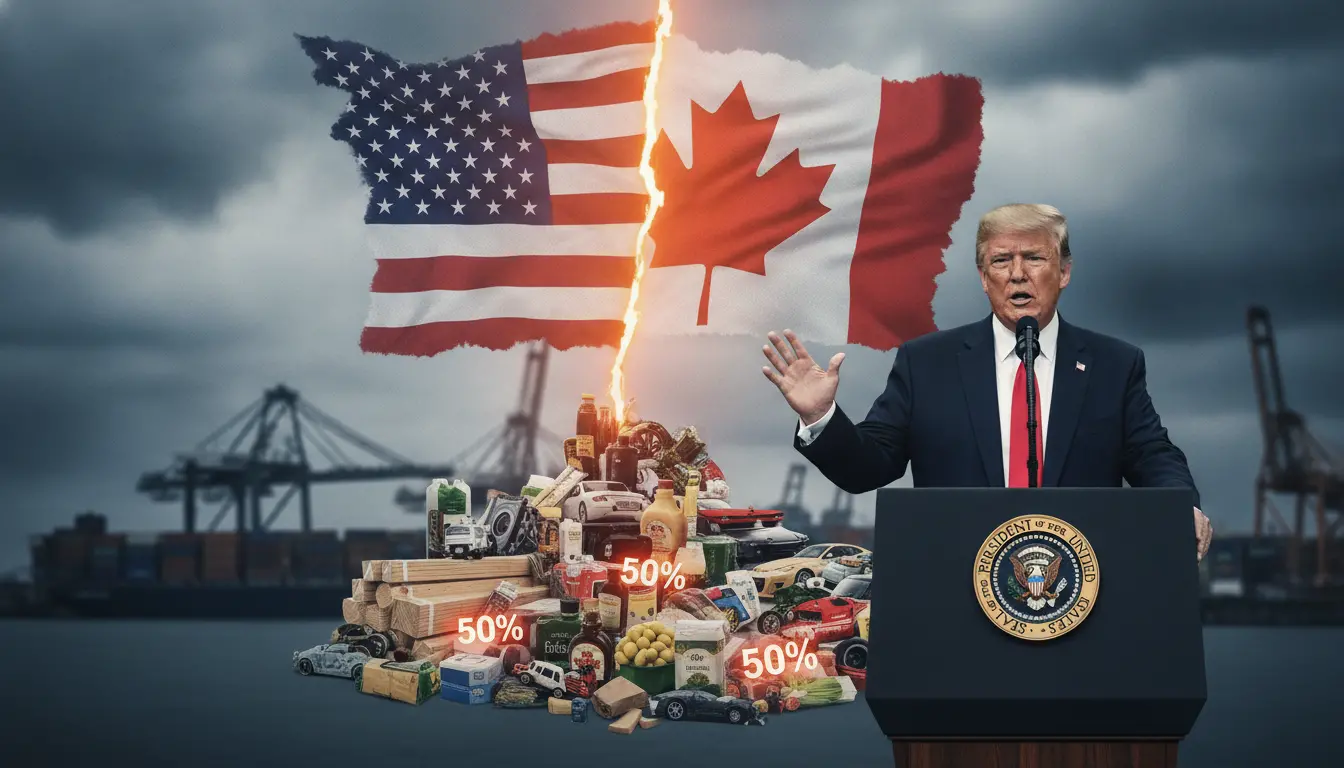
Trump Announces Intent to Impose 50% Tariffs on Most Canadian Goods, Sparking Trade Concerns
Former President Donald Trump, a leading contender for the Republican presidential nomination, has outlined a sweeping plan to impose a 50% tariff on the majority of Canadian goods if he returns to office. This assertive declaration, made on July 20, signals a potential dramatic shift in North American trade relations, rekindling concerns over economic protectionism and its repercussions for two of the world's most integrated economies. While the precise scope and implementation timeline, anticipated to extend through August 2026, remain subject to future political and legislative processes, the mere prospect has already ignited debate across Washington and Ottawa regarding the stability of a crucial bilateral partnership.
The proposed tariffs hark back to Trump's "America First" trade agenda during his first term, which saw the imposition of duties on steel and aluminum imports from Canada, along with a contentious renegotiation of the North American Free Trade Agreement (NAFTA) into the United States-Mexico-Canada Agreement (USMCA). These past actions strained diplomatic ties, and the latest proposal suggests an even more aggressive stance. Analysts note that a 50% tariff would represent an unprecedented economic barrier between the two nations, whose annual bilateral trade exceeds $700 billion. Such a move would aim to force concessions from Canada, presumably to address perceived imbalances or secure specific trade advantages for American industries.
The economic implications for both the United States and Canada would be profound. For Canadian exporters, a 50% tariff would drastically increase the cost of their goods for American consumers, potentially rendering them uncompetitive. Industries such as automotive, agriculture, forestry, and energy, all heavily reliant on the U.S. market, would face immediate and severe disruption, threatening jobs and economic stability across Canada. Conversely, American businesses and consumers would likely grapple with higher prices for imported goods, supply chain disruptions, and potential retaliatory tariffs from Canada, escalating a trade dispute into a full-blown economic conflict. The USMCA, designed to stabilize North American trade, would also face immense pressure, potentially undermining its core principles of free and fair commerce.
From a political standpoint, Trump’s announcement resonates with his base, who favor protectionist policies aimed at safeguarding American manufacturing and jobs. It serves as a clear campaign promise, signaling a continuation and intensification of his previous trade posture. However, it also presents a significant foreign policy challenge. Canada, a longstanding ally and key security partner, would undoubtedly view such tariffs as a hostile economic act, complicating cooperation on other vital issues ranging from continental defense to climate change. The Canadian government has historically emphasized diplomatic solutions to trade disputes with the U.S., but a tariff of this magnitude would likely prompt a robust response, potentially including counter-tariffs and appeals to international trade bodies.
The uncertainty surrounding the implementation date and exact scope reflects the complex path such a policy would need to navigate. Should Trump win the presidency, the actual imposition of tariffs would require executive action, potentially facing legal challenges and intense lobbying from affected industries in both countries. The August 2026 timeframe suggests a period for policy development and negotiation, yet the announcement itself creates an environment of apprehension. Businesses are already grappling with how to plan for such a disruptive scenario, weighing diversification of supply chains, potential shifts in investment, and the overall heightened risk of cross-border trade.
Ultimately, the prospect of a 50% tariff on Canadian goods underscores the volatile nature of global trade policy and the significant power wielded by executive decisions. What is at stake is not merely the price of imported goods, but the fundamental architecture of North American economic integration, the strength of a vital diplomatic alliance, and the future direction of trade relations on a global scale. The announcement ensures that trade policy will remain a central and contentious issue in the lead-up to the next presidential election and beyond, casting a long shadow over the future of U.S.-Canada ties.
Stay Informed. Act Smarter.
Get weekly highlights, major headlines, and expert insights — then put your knowledge to work in our live prediction markets.
Related News

United States Imposes Landmark 50% Tariffs on Canadian Goods Following Diplomatic Stalemate

Prospective Trump Administration Details 'Trump Accounts' Initiative for Newborn Financial Independence
Peruvian President Keiko Fujimori Confronts Immediate Challenges Post-Inauguration

Tropical Storm Dolly Forms in Atlantic, Threatens US Coastline

Keiko Fujimori's Enduring Political Influence Sets Stage for Contentious 2026 Peruvian Presidential Race

S&P 500 Faces Crucial Economic Tests on Path to Potential 8,200 Point Milestone by 2026

Conservative Party Grapples with Identity Crisis as Leadership Hopefuls Emerge from Electoral Wreckage

CF Monterrey and Chicago Fire FC Set for Crucial 2026 Leagues Cup Quarterfinal Clash

Meta Faces Landmark Youth Addiction Lawsuit as Opening Arguments Loom

Speculation Mounts Over Lionel Messi's International Future