

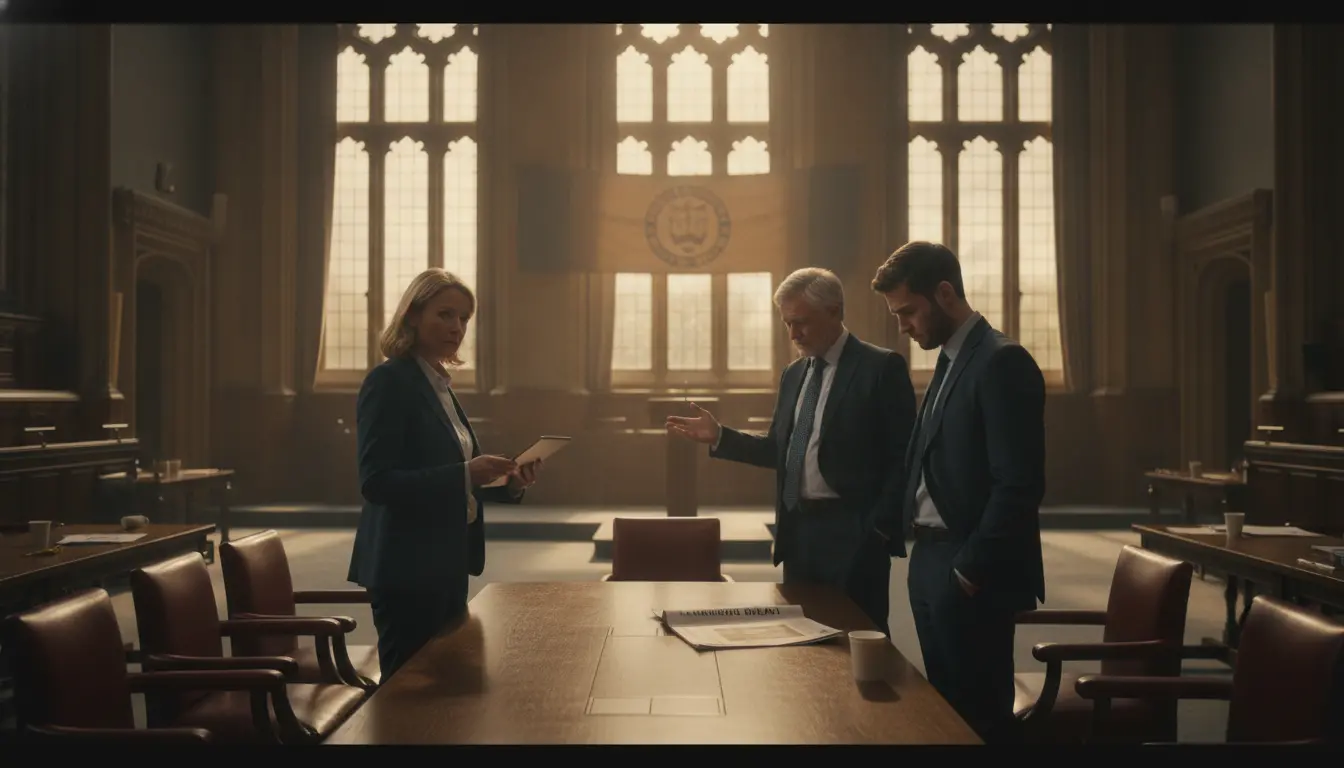
Conservative Party Begins Leadership Race After Decisive 2026 General Election Defeat
The political landscape of the United Kingdom has been irrevocably redrawn, as the dust settles on the 2026 general election, which delivered a sweeping victory for the Labour Party under the charismatic leadership of Andy Burnham. Having secured a commanding majority, Mr. Burnham is now ensconced in Downing Street, ushering in a new era for Britain. For the Conservative Party, however, the electoral defeat is not merely a loss of power; it has precipitated an immediate and profound crisis of leadership, pushing the party into a period of intense introspection and a challenging quest for its future direction. Now firmly in opposition, the Conservatives are poised to embark on their third leadership contest in just a few electoral cycles, a stark testament to their struggle to articulate a unifying vision and reconnect with an increasingly disillusioned electorate.
This devastating outcome was not an overnight phenomenon but the culmination of several years of mounting challenges for the Conservatives. The period preceding the 2026 election was marked by persistent economic volatility, an unrelenting cost-of-living crisis that squeezed household budgets across the nation, and a public perception of instability at the very top of government. Successive prime ministers since the turn of the decade had grappled with deep internal divisions, formidable economic headwinds, and the enduring after-effects of complex geopolitical shifts, each struggling to consolidate authority or craft a compelling, consistent narrative. The party’s traditionally strongholds had shown signs of fraying, with voters in key swing regions signaling a desire for definitive change. Ultimately, the electorate turned decisively towards Labour’s promises of revitalized public services, economic rebalancing, and a fresh start, delivering a scale of defeat that many observers, while perhaps anticipating a change, found truly staggering. This outcome now demands a fundamental and painful reckoning for the party that dominated British politics for much of the preceding two decades.
As the Conservative Party grapples with its worst electoral performance in decades, attention has immediately shifted to the succession. With the previous leader having resigned almost instantly after the final results were confirmed, the intricate mechanisms for selecting a new permanent leader are already in motion. Political commentators and party insiders anticipate a diverse field of potential contenders, each likely to emerge from differing ideological wings and geographical bases within the party, offering a distinct and often competing vision for the path forward. Early speculation points to the potential candidacies of figures from the relatively younger generation, individuals who have managed to remain somewhat untainted by the recent government’s more contentious decisions. Simultaneously, more seasoned parliamentarians, often seen as steadying hands, are also expected to throw their hats into the ring, advocating for a return to perceived core Conservative values. The process will almost certainly involve a series of internal ballots among Conservative Members of Parliament, a rigorous elimination stage, culminating in a final vote by the wider party membership – a system that has historically produced both moments of galvanizing unity and periods of further, debilitating fragmentation.
The incoming leader will inherit a monumental and unenviable task. Beyond the immediate challenge of galvanizing a demoralized parliamentary party and forging a credible opposition to Andy Burnham’s newly empowered Labour government, they must confront the deeper, almost existential questions facing the future of British Conservatism. This includes the arduous work of meticulously rebuilding a shattered electoral coalition, particularly in those crucial regions that once formed the bedrock of their support, and articulating a compelling suite of policy solutions that genuinely resonate with a post-2026 Britain. Economically, the new leader will need to chart a distinct and persuasive course that offers a clear alternative to Labour’s anticipated fiscal and social plans. Socially, they will face considerable pressure to reconcile the party's traditional values and principles with the rapidly evolving public attitudes and expectations of the mid-2020s. Ultimately, re-establishing the Conservative Party as a viable and trusted governing force will demand not merely a new public face, but a comprehensive and courageous re-evaluation of its fundamental principles, policy priorities, and its very identity.
Therefore, this imminent leadership contest transcends a mere change in personnel; it represents a critical and defining juncture for the Conservative Party. Its outcome will not only determine who stands opposite Andy Burnham at the dispatch box during the next parliamentary session but will also crucially shape the party's ideological direction, its core policy platform, and its overarching electoral strategy for the next five years and beyond. The choices made by Conservative MPs and party members in the coming months will reveal whether the party intends to pursue a radical overhaul and a transformative shift in its approach, or if it will opt for a more incremental, perhaps even cautious, path to recovery. While the immediate and intense focus remains internal, the wider political landscape of the United Kingdom has undeniably undergone a seismic shift, presenting both formidable challenges and unexpected opportunities for a party desperately seeking to reclaim its relevance and influence in an era now undeniably defined by a new Labour government. The shadow of the 2026 election loss looms large, demanding nothing less than a profound and lasting transformation from whoever ultimately takes the helm of the Conservative Party.
Stay Informed. Act Smarter.
Get weekly highlights, major headlines, and expert insights — then put your knowledge to work in our live prediction markets.
Related News
UK Political Landscape Intensifies as Leadership Race Takes Shape Ahead of General Election
UK Labour Party Poised for Leadership Transition as 2026 Ballot Deadline Approaches
Labour's Leadership Contest Set to Anoint UK's Next Prime Minister
Governing a Fractured UK: The Political Minefield Awaiting a Starmer Premiership
UK Political Circles Deliberate Andy Burnham's Future Leadership Prospects Amidst Snap Election Scenarios
Starmer considers political future as pressure to quit mounts
Scrutiny Intensifies Over Keir Starmer's Long-Term Leadership of the UK Labour Party
Starmer weighing 'political realities', ally says, as PM considers future
Nigel Farage Readies for Potential Clacton By-Election Amid Mounting Political Scandal
Keir Starmer's Iron Grip on Labour Faces Test as Premiership Realities Loom