

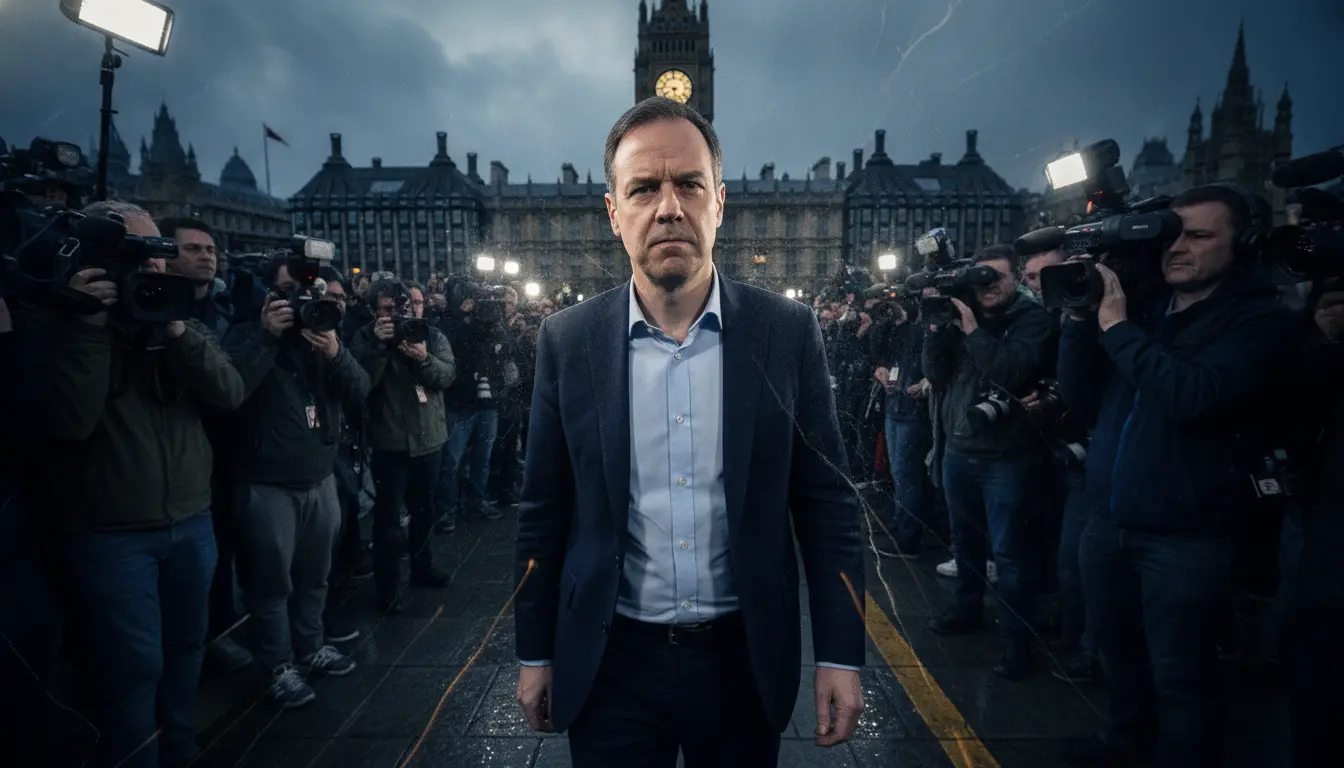
Scrutiny Intensifies Over Keir Starmer's Long-Term Leadership of the UK Labour Party
As the United Kingdom braces for an imminent general election, the political landscape surrounding Labour leader Keir Starmer is increasingly defined by intense scrutiny regarding his future at the helm of the party. While Labour has consistently held a significant lead in opinion polls for months, a quiet but persistent conversation has begun to emerge within political circles and beyond, questioning the longevity of Starmer's leadership, particularly as the anticipated electoral contest draws nearer and the pressure to deliver a decisive victory mounts. The stakes for both Starmer personally and the Labour Party are exceptionally high, with the outcome of the next election poised to either solidify his authority or potentially usher in a period of introspection and leadership challenges.
Starmer ascended to the leadership in 2020 following Labour's devastating defeat in the 2019 general election, inheriting a party grappling with its worst electoral performance since 1935. His mandate was clear: to detoxify the Labour brand, move it back towards the mainstream, and restore public trust. Over the past four years, he has systematically worked to distance the party from its recent past, purging certain elements and recalibrating its policy platform. This strategic shift has undoubtedly contributed to Labour's current polling advantage over the ruling Conservative Party, an advantage that has often hovered in double digits. However, translating this poll lead into a commanding parliamentary majority remains the ultimate test, and any perceived underperformance could swiftly reignite internal debates about the party’s direction and leadership.
The discussions surrounding Starmer’s future are not entirely rooted in open dissent but rather in the inherent volatility of political fortunes and the unforgiving nature of electoral accountability. Despite Labour’s strong polling, there has been a notable lack of widespread public enthusiasm for Starmer himself, often reflected in personal approval ratings that, while generally positive, rarely match the party's overall standing. Furthermore, the political tightrope he walks, attempting to appeal to both traditional Labour voters and disillusioned Conservative centrists, has occasionally led to policy adjustments that have drawn criticism from various wings of his party. Notable examples include shifts on climate pledges, a perceived wavering on certain economic commitments, and the delicate balancing act required on international issues like the conflict in Gaza, all of which test the unity of his broad coalition.
Inside the Labour Party, the echoes of past leadership contests are never far from memory. While Starmer has largely consolidated his authority and silenced overt challengers, the party is a complex ecosystem of diverse viewpoints, from the soft left to the more centrist elements. Should the general election yield a result that falls short of expectations — whether a hung parliament or a narrow victory that doesn't feel transformative — the door could open for alternative figures to gain traction. Prominent shadow cabinet members, often seen as potential successors, carefully navigate their own public profiles while remaining steadfastly loyal to the current leadership, at least for now. The historical precedent of leaders being challenged or replaced following disappointing electoral outcomes is a well-understood dynamic within Labour.
The timeline, stretching to December 2026, implies that any significant leadership transition would likely occur in the aftermath of the next general election, which must be held by January 2025 at the latest. If Starmer secures a comfortable victory, his position would be unassailable, likely setting him on course for a full term as Prime Minister. However, a less decisive outcome, or even a scenario where Labour fails to form a government despite a poll lead, would undoubtedly trigger a period of intense scrutiny and potential internal dissent. The challenges of governing, should he become Prime Minister, would also present fresh tests of his leadership, as the realities of economic pressures and global events inevitably collide with campaign promises.
Ultimately, Keir Starmer's long-term leadership is inextricably linked to the forthcoming electoral performance of the Labour Party. He has meticulously crafted a platform designed to appeal to a broad swathe of the electorate, seeking to restore the party's credibility as a government-in-waiting. However, the political landscape is notoriously unpredictable, and public sentiment can shift rapidly. The quiet discussions about his future underscore the immense pressure on Starmer to not just win, but to win convincingly, thereby securing his mandate and silencing those who ponder whether his 'political days' at the head of the Labour Party are definitively numbered.
Stay Informed. Act Smarter.
Get weekly highlights, major headlines, and expert insights — then put your knowledge to work in our live prediction markets.
Related News
Keir Starmer's Iron Grip on Labour Faces Test as Premiership Realities Loom
Starmer considers political future as pressure to quit mounts
Starmer weighing 'political realities', ally says, as PM considers future
Governing a Fractured UK: The Political Minefield Awaiting a Starmer Premiership

UK Labour Party Poised for Leadership Transition as 2026 Ballot Deadline Approaches
UK Political Landscape Intensifies as Leadership Race Takes Shape Ahead of General Election
Labour's Leadership Contest Set to Anoint UK's Next Prime Minister
UK Political Circles Deliberate Andy Burnham's Future Leadership Prospects Amidst Snap Election Scenarios
G7 Leadership Turmoil Deepens as Starmer Exit Fuels Speculation on Succession Waves
Conservative Party Begins Leadership Race After Decisive 2026 General Election Defeat