

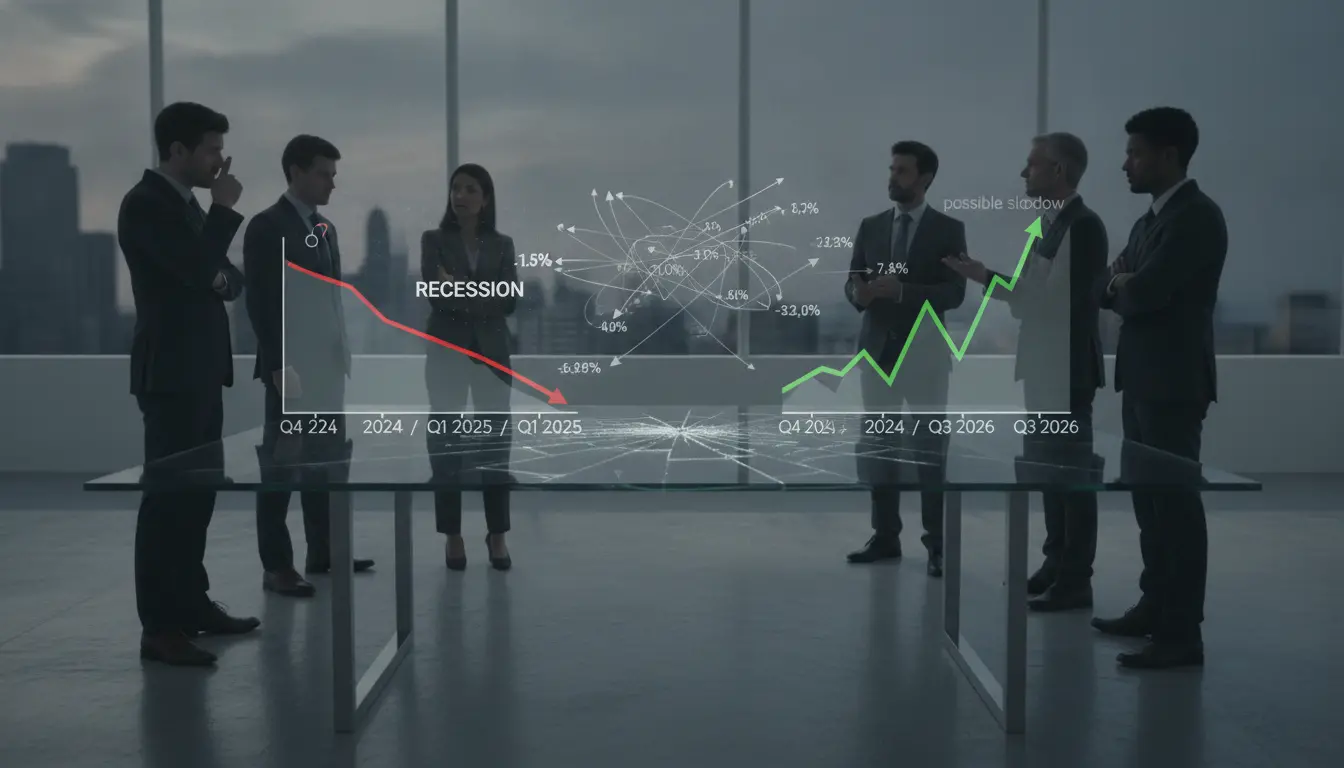
Economists Intensify Debate on US Recession Timeline Amid Evolving Economic Landscape
A significant divergence in economic forecasts has emerged among leading analysts regarding the likelihood and timing of a potential recession in the United States. With key macroeconomic indicators sending mixed signals and global events adding layers of complexity, experts are engaged in a spirited debate over whether the nation's economy can navigate current headwinds without contracting significantly by mid-2027.
The discussions are rooted in the unique post-pandemic economic environment. Following an unprecedented period of fiscal and monetary stimulus, the US economy experienced a surge in demand that, coupled with supply chain disruptions, propelled inflation to multi-decade highs. In response, the Federal Reserve embarked on one of its most aggressive monetary tightening cycles in decades, rapidly raising interest rates to curb price pressures. While inflation has shown signs of moderation, the lingering effects of these policies, combined with persistent labor market strength and shifts in consumer behavior, create an intricate puzzle for forecasters.
One camp of economists, often dubbed the 'recession realists,' points to several traditional harbingers of economic downturns. They highlight the inversion of the yield curve, a historical predictor of recessions, and note the tightening credit conditions impacting both businesses and consumers. Concerns also mount over decelerating manufacturing activity, softening consumer spending in certain discretionary sectors, and the eventual impact of higher borrowing costs on corporate earnings and investment. These analysts suggest that while the labor market has proven remarkably resilient, it is often a lagging indicator, and a downturn could materialize as companies adjust to a slower growth environment.
Conversely, a substantial number of economists hold a more optimistic view, arguing for a potential 'soft landing' or even a prolonged period of modest growth. They emphasize the robustness of the US labor market, characterized by low unemployment rates and strong wage growth, which continues to underpin consumer confidence and spending. Advocates of this perspective also point to healthy corporate balance sheets, robust household savings built during the pandemic, and the potential for technological advancements to drive productivity. They contend that the economy's underlying fundamentals are sound enough to absorb the impact of higher interest rates without tipping into a deep contraction, allowing inflation to normalize without significant job losses.
Adding another layer of uncertainty are the myriad external factors shaping the global economic landscape. Geopolitical tensions, particularly in Eastern Europe and the Middle East, continue to influence energy prices and global trade flows. The ongoing slowdown in major international economies, including China and parts of Europe, could also spill over into the US through reduced export demand and supply chain vulnerabilities. These international dynamics introduce variables that are difficult to quantify, making precise economic projections even more challenging and contributing to the wide range of current forecasts.
Policymakers, particularly the Federal Reserve, find themselves in a delicate balancing act, closely monitoring a vast array of economic indicators. Key metrics such as the Consumer Price Index (CPI), Personal Consumption Expenditures (PCE), GDP growth figures, ISM purchasing managers' indices, and jobless claims reports are scrutinized for any definitive shifts. The stakes are high: a prolonged recession would bring significant job losses and financial hardship, while a successful navigation would confirm the possibility of bringing inflation under control without severely impacting economic growth. As such, the debate over the US economic trajectory will continue to be a central theme for markets, businesses, and households in the coming quarters.
Stay Informed. Act Smarter.
Get weekly highlights, major headlines, and expert insights — then put your knowledge to work in our live prediction markets.
Related News
Economists Intensify Debate on US Recession Risk Through 2026 Amid Fed's Inflation Fight

US Economy Navigates Heightened Recession Risks Amidst Shifting Monetary Policy and Global Headwinds
US Economic Outlook for 2026 Hinges on Inflation Control and Productivity Revival
Fed Grapples With Long-Term Rate Outlook as 'Higher for Longer' Mantra Tested by Economic Data
US Federal Reserve's Long-Term Interest Rate Path Under Intense Scrutiny
Analysts Eye Potential Rise in US Unemployment Rate as Federal Reserve Navigates Economic Crossroads
Federal Reserve's Rate Cut Prospects by 2026 Hinge on Evolving Inflation and Growth Data
Federal Reserve's Long-Term Inflation Battle Intensifies Ahead of July 2026 Core PCE Report

Federal Reserve's Long-Term Strategy Under Scrutiny as Analysts Project Path to 2026 Rate Decisions
US Unemployment Rate Poised for Scrutiny Ahead of Mid-2026 Data Release