

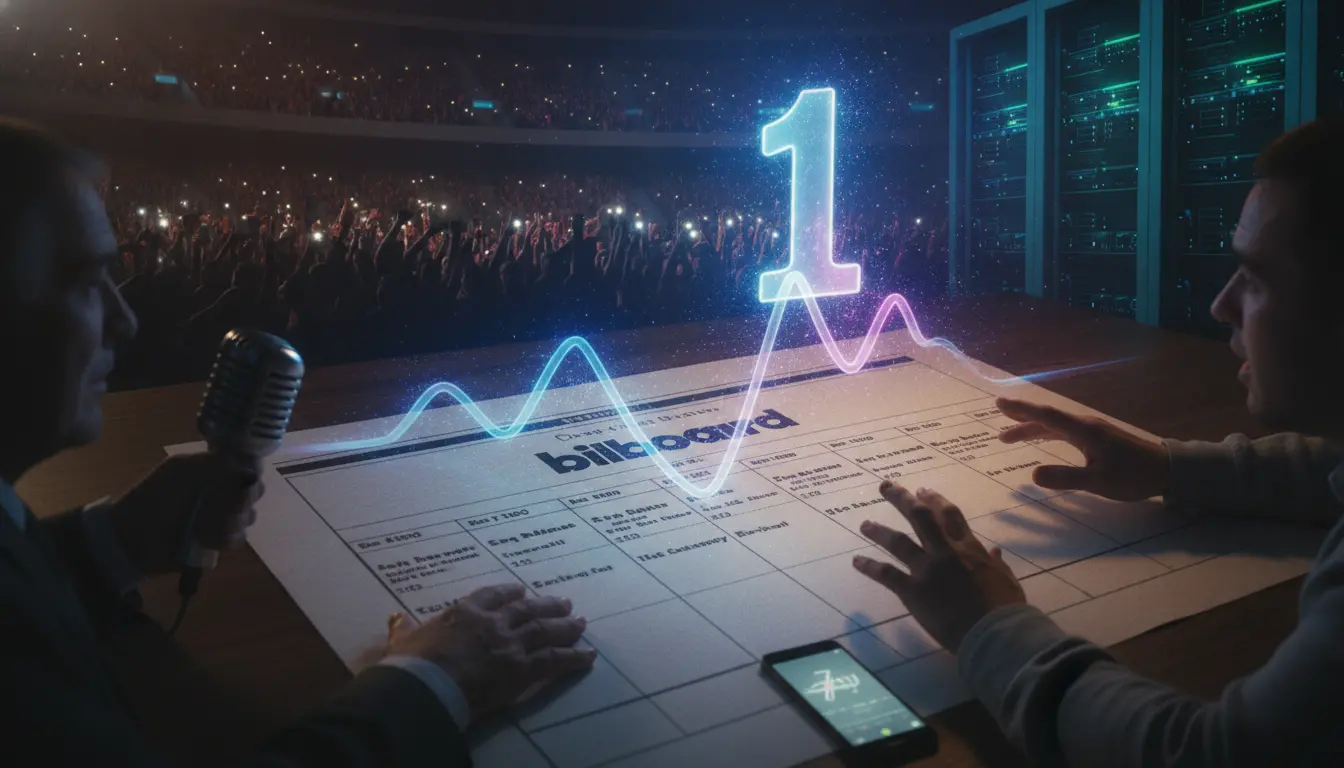
Fully AI-Generated Tracks Spark Debate Over Future of Music Charts
The rapid advancement of artificial intelligence is poised to redefine the music industry, with growing speculation that a fully AI-generated song could soon claim the coveted #1 spot on the Billboard Hot 100. This potential milestone sparks both excitement and apprehension among artists, labels, and listeners, raising fundamental questions about creativity, authorship, and the very essence of musical expression in the digital age. As algorithms grow more sophisticated, their capacity to compose, arrange, and even perform music without direct human intervention challenges long-held notions of what constitutes a musical artist.
While AI has long been a tool in music production, assisting with mastering, mixing, and even rudimentary composition, the recent surge in sophisticated generative AI models represents a paradigm shift. These systems can now produce original melodies, harmonies, lyrics, and even entire vocal tracks, mimicking human styles with startling accuracy. Platforms from startups like Suno and Anthropic to tech giants are investing heavily, releasing tools that allow users to generate professional-sounding tracks from simple prompts, pushing the boundaries of what constitutes "music creation." This proliferation of accessible AI composition tools means the sheer volume of potentially chart-worthy material could increase exponentially, forcing the industry to adapt quickly.
The prospect of a chart-topping AI song without any human songwriter involvement presents significant challenges to the established music ecosystem. Central to the debate is the definition of "authorship" and "originality." Who owns the copyright to a piece of music created by an algorithm? How do performance rights organizations attribute royalties when a human creator isn't directly involved in the compositional process? Beyond legalities, there's a profound philosophical question: can an algorithm, devoid of human experience or emotion, truly create art that resonates deeply and authentically with an audience? This distinction is crucial for industry bodies like Billboard, which must grapple with how to credit and rank such compositions, particularly when the line between human-assisted and fully autonomous creation blurs.
Industry response has been mixed. Some embrace AI as a powerful new creative partner, a tool that democratizes music production and allows for unprecedented experimentation, enabling aspiring musicians to realize complex sonic visions. Others voice deep concerns about job displacement for human musicians, composers, and lyricists, as well as the potential for a flood of algorithmically identical, soulless content that could diminish the overall quality and diversity of the musical landscape. High-profile instances of AI-generated tracks mimicking famous artists have already gone viral, albeit often without explicit commercial intent or sustained chart ambitions, hinting at the technology's persuasive capabilities and rapid evolution.
The ethical implications extend beyond copyright and job security. There are worries about the dilution of artistic integrity, the potential for deepfake voices to mislead listeners, and the broader impact on the human connection inherent in music. If the emotional impact of a song can be synthetically replicated, does it diminish the unique value of human-crafted music, born from personal struggle, joy, and lived experience? The discussion also touches on the role of human curation and taste in a world potentially saturated with AI-generated content, questioning whether true chart success can genuinely be achieved and sustained without human emotional investment or deep cultural resonance from both creators and listeners.
Many experts believe it's no longer a matter of if but when a fully AI-generated track achieves mainstream chart dominance. The speed of AI innovation, coupled with increasing public exposure to sophisticated AI-generated content across various media, suggests that the music industry is on the cusp of a profound transformation. The coming years will likely see intense debates shaping new regulations, evolving definitions of musical creation, and ultimately, a re-evaluation of what it means for a song to be a cultural phenomenon. The race to the top of the charts for AI-generated music is a bellwether for the broader integration of artificial intelligence into creative industries worldwide, challenging us to reconsider the very nature of art.
Stay Informed. Act Smarter.
Get weekly highlights, major headlines, and expert insights — then put your knowledge to work in our live prediction markets.
Related News
US Congress Intensifies Efforts to Forge Comprehensive Federal AI Regulation
OpenAI's Ambitious AGI Quest Intensifies as Industry Eyes Potential Pre-2027 Breakthrough
Major AI Companies Intensify Race to Unveil Next-Generation Flagship Language Models
Global Tech Giants Accelerate Development of Next-Generation Flagship AI Models
Major AI Companies Poised to Launch Advanced LLMs by End of 2026
Autonomous Multi-Step AI Agents Emerge as Next Major Frontier in Artificial Intelligence Development
AI Giants Intensify Race to Unveil Next-Generation Flagship Large Language Models by 2026
OpenAI Pushes for Human-Equivalent Multi-Modal AI Agents by 2026
Leading AI Firms Intensify Push for Flagship LLM Releases by 2026
Global AI Leaders Vie to Unveil Next-Generation Large Language Models