PoliticslegislationHealthcare Policies
Hong Kong public hospital fee hike raises concerns for low-income patients.
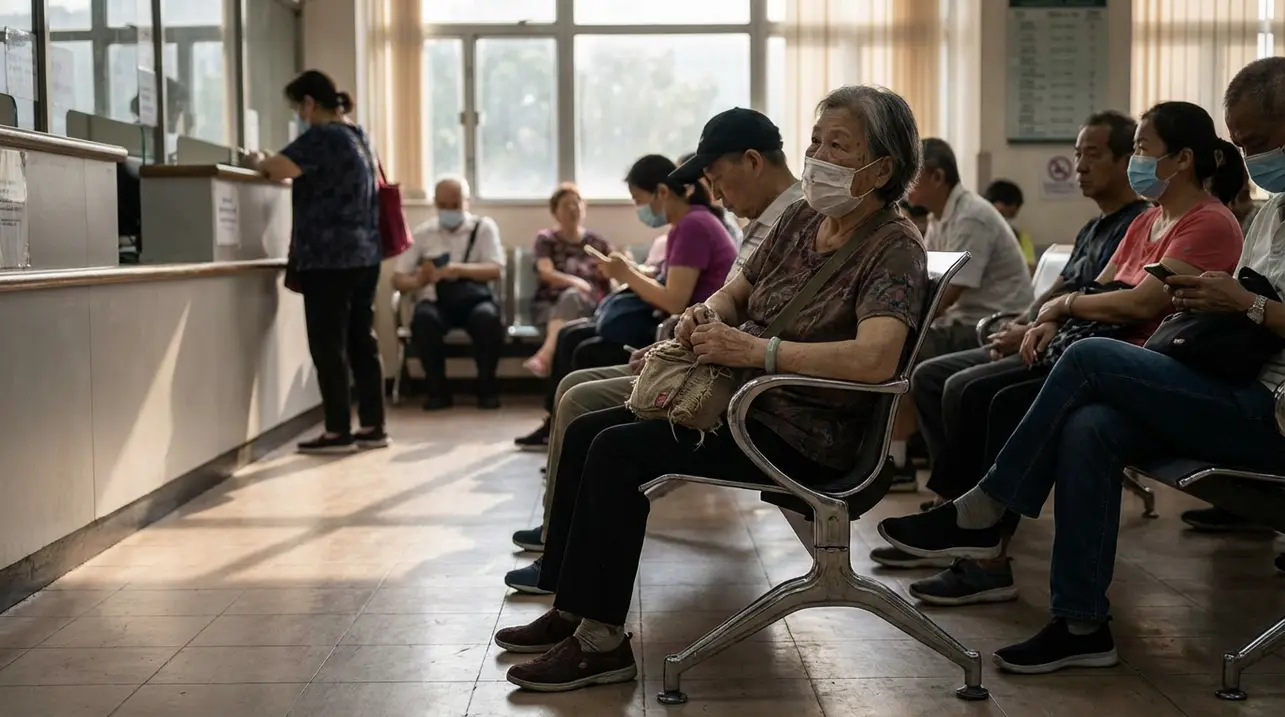
Hong Kong’s public hospital fee hike, set to take effect on January 1st, is a policy move that lays bare the perennial tension between fiscal sustainability and social equity, a tension felt most acutely by the women and families who form the backbone of the city’s low-income communities. While the government frames the increases as a necessary recalibration to ensure the long-term viability of a cherished public health system, the simultaneous expansion of the safety net—introducing an annual cap of HK$10,000 on medical fees and extending fee waivers to an additional 1.1 million people—feels, to many advocates, like a carefully staged compromise that still leaves too many vulnerable individuals in a dangerous limbo. The core of the anxiety, echoing debates I’ve followed from UN social policy forums to local grassroots documentaries, isn't just about the raw numbers on a bill; it's about the deeply personal calculus of fear that precedes a doctor's visit.For a single mother working two part-time jobs without comprehensive employer insurance, the raised charge for an emergency department visit or a specialist consultation isn't a line item—it's a deterrent. It's the moment she decides to endure a worsening cough, hoping it's just a cold, rather than risk a financial blow that could unravel her carefully balanced household budget for rent and groceries.This is the human impact often lost in top-down announcements. The government’s rationale, grounded in the system's rising operational costs and an aging population, is administratively sound.Public hospitals have long been subsidized at an exceptionally high rate, creating a model of accessibility that is the envy of many but is straining under demographic and inflationary pressures. The expanded waiver scheme, targeting households with incomes up to 75% of the median, is a significant step.Yet, the critique from social workers and community organizers is pointed and personal: the thresholds remain blunt instruments. They fail to capture the precarious reality of the 'working poor'—those whose earnings technically place them above the cutoff but whose lives are one medical emergency away from crisis, burdened by debt, unstable employment, and sky-high living costs.This policy moment reminds me of analyses of Scandinavian welfare models, where universality is often championed not just as equity but as efficiency, reducing bureaucratic means-testing and stigma. Hong Kong’s approach, by contrast, intensifies the means-testing.The psychological burden of applying for waivers, of proving one's poverty repeatedly to different agencies, can be a humiliation that erodes dignity as surely as the disease erodes health. Furthermore, we must consider the gendered dimension.
#Hong Kong
#public hospitals
#fee increase
#low-income patients
#medical costs
#government policy
#healthcare access
#weeks picks news