Politicssanctions & trade
Government says it is ‘fully committed to free speech’ after campaigners’ US visa ban – UK politics live
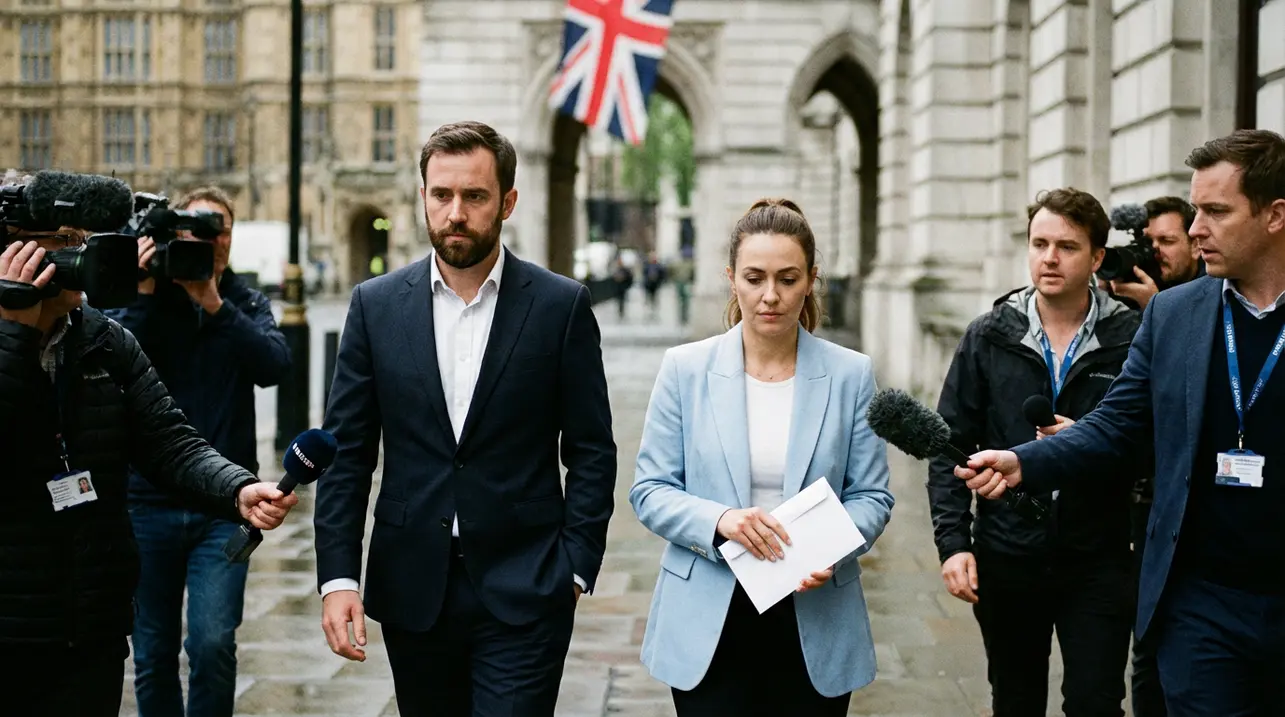
In a move that has sent shockwaves through the transatlantic policy community, the United States has imposed visa bans on five European disinformation researchers and campaigners, including two British citizens, Imran Ahmed and Clare Melford. The action, framed by the US State Department as a defense against those seeking to 'suppress American viewpoints they oppose,' represents a stark escalation in the long-simmering ideological conflict over the boundaries of free speech and platform governance.The targeted individuals are central figures in organizations like the Global Disinformation Index (GDI) and Germany's HateAid, entities that operate as 'trusted flaggers' under the European Union's landmark Digital Services Act (DSA). This legislation, a cornerstone of the EU's digital strategy, mandates platforms to swiftly remove illegal content and mitigate systemic risks, a framework that stands in direct contrast to the US's traditionally more laissez-faire, First Amendment-oriented approach.The GDI's response was swift and severe, labeling the sanctions 'an authoritarian attack on free speech and an egregious act of government censorship,' a charge that turns the Trump administration's own rhetoric neatly back upon itself. This is not merely a bureaucratic spat; it is a profound clash of constitutional philosophies, echoing historical tensions where national security and sovereign control over information space collide with ideals of open discourse.The inclusion of HateAid's leaders, Anna-Lena von Hodenberg and Josephine Ballon, is particularly telling. Their organization, born from the toxic online climate following the 2017 German elections, explicitly links online hate speech and disinformation to real-world political violence, a perspective deeply informed by Europe's twentieth-century history.Ballon's public assertion that 'free speech needs boundaries' and her advocacy for 'regulating platforms' to stop the 'emotionalization of debates' encapsulates a European regulatory mindset that views unmoderated digital spaces as existential threats to democratic cohesion, especially with pivotal US and EU elections on the horizon. From an analytical standpoint, this visa ban functions as a potent political signal, a warning shot across the bow of European regulators and their allied civil society actors.It effectively weaponizes immigration policy to chill cross-border collaboration and research, potentially isolating EU efforts to enforce the DSA by cutting off key personnel from international forums and data-sharing agreements. The precedent is alarming: it suggests that engaging in legally mandated content moderation work under a foreign jurisdiction can now render one persona non grata in America.For the UK government, which has professed a 'full commitment to free speech,' this incident creates a delicate diplomatic tightrope. Britain, post-Brexit, is attempting to carve out its own path on online safety with its Online Safety Act, a regime that shares more DNA with the EU's risk-based model than with US absolutism.
#US visa ban
#disinformation
#free speech
#UK government
#Global Disinformation Index
#featured