

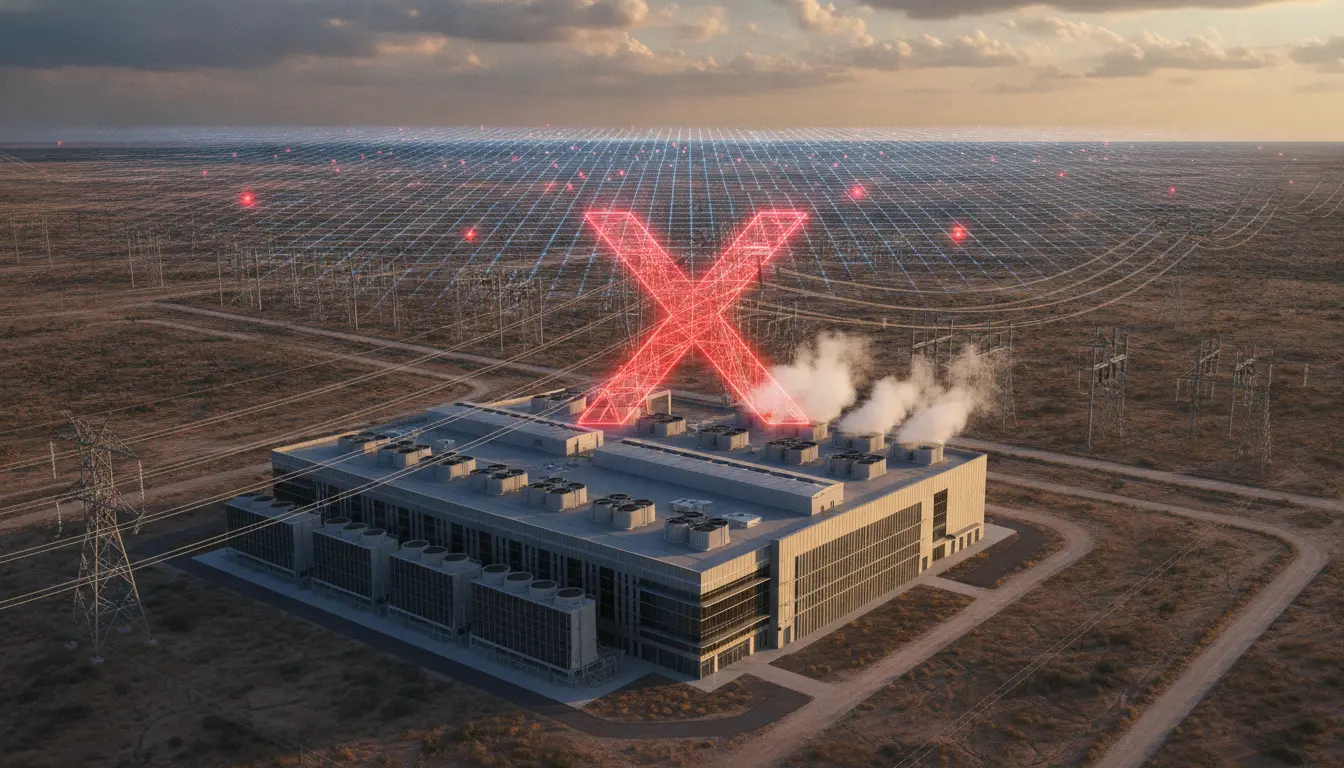
Texas Grid Operator Grapples with Surging Data Center Demand, Halts New Connections
Texas’s independent grid operator, ERCOT (Electric Reliability Council of Texas), has enacted a significant pause on new data center connections to its sprawling power network, a decisive move reflecting the unprecedented surge in electricity demand from power-intensive industries. The moratorium underscores a growing challenge for the state’s energy infrastructure, which is straining under the weight of rapid economic growth, population increases, and a dramatic influx of energy-hungry operations, particularly cryptocurrency mining and increasingly, artificial intelligence data centers. This regulatory action signals a critical juncture for Texas, balancing its appeal as a burgeoning tech hub with the imperative to maintain a stable and reliable power supply for its millions of residents and businesses.
The decision by ERCOT to halt new large-load interconnections comes as a direct response to a future demand forecast that threatens to overwhelm existing and planned generation capacity. Projections indicate that the state could require several gigawatts of additional power purely for data centers and crypto mining operations in the coming years, a load equivalent to that of a small country. Texas, known for its deregulated energy market and relatively low power costs, has become a magnet for these sectors. However, the sheer scale and rapid deployment of these facilities present unique challenges to grid planning and stability. Unlike traditional industrial loads, data centers can materialize quickly and demand continuous, high-volume power, making long-term resource adequacy a complex puzzle for grid managers.
Historically, the Texas grid has faced scrutiny over its resilience, most notably during Winter Storm Uri in 2021, which led to widespread outages and tragic consequences. While significant investments and reforms have been made since then, the current demand spike introduces a new layer of complexity. ERCOT’s role is to ensure that generation matches demand in real-time to prevent blackouts, a task that becomes exponentially harder when large, unpredictable loads enter the system. The moratorium is not merely a temporary pause; it is a strategic measure designed to provide ERCOT and state regulators with crucial time to assess the true scale of the impending demand, plan for necessary infrastructure upgrades, and potentially adjust market mechanisms to incentivize more rapid generation development and grid hardening.
Key stakeholders are now scrambling to adapt to the new reality. Technology companies that had earmarked Texas for expansion are re-evaluating their strategies, while energy developers are seeking clarity on the future regulatory landscape. The situation pits the state's desire for continued economic growth and tech leadership against the fundamental need for reliable utilities. Policymakers are engaged in intricate discussions about how to accelerate the deployment of new power plants, enhance transmission infrastructure, and potentially implement demand-response programs tailored to these high-consumption facilities. The debate also encompasses the role of renewable energy sources, which Texas has embraced, and their integration challenges within a grid designed to prioritize reliability.
The long-term solution to this capacity crunch will likely involve a multi-pronged approach. Significant capital investment in new generation, whether natural gas, solar, wind, or potentially nuclear, is essential. Upgrades to the transmission network are also critical to efficiently deliver power from generation sites to demand centers. Furthermore, regulatory frameworks may need to evolve to better manage the unique characteristics of high-density, rapidly deployable loads like data centers. The current moratorium, while disruptive for some industries, serves as a stark reminder of the delicate balance required to maintain a robust energy grid in an era of unprecedented technological advancement and increasing electrification. Its eventual lifting will depend heavily on the successful implementation of these complex and costly solutions, a process that is anticipated to span several years as Texas navigates this pivotal energy transition. Given the scale of the challenge and the lead times involved in building new energy infrastructure, sustained effort and coordinated action across state agencies and private industry will be paramount. Ultimately, the future trajectory of Texas's energy landscape hinges on its ability to effectively respond to these burgeoning demands while safeguarding grid stability for all consumers. This ongoing situation underscores a broader national and global challenge for regions attracting significant tech investment: how to ensure energy infrastructure keeps pace with the exponential growth of digital technologies.
Stay Informed. Act Smarter.
Get weekly highlights, major headlines, and expert insights — then put your knowledge to work in our live prediction markets.
Related News

Rep. Ro Khanna Set to Unveil 'Data Center Bill of Rights' Addressing AI's Energy Footprint

Bitcoin Faces Crucial Test at $70,000 Amid Escalating Geopolitical Tensions

Persistent Blackouts Plague Cuba as Aging Infrastructure and Fuel Shortages Intensify Crisis

Cuba's Deteriorating Power Grid Plunges Nation Into Frequent Blackouts

Global Energy Markets Brace for Potential $100 Brent Crude Amid Persistent Geopolitical Instability

US States Confront Escalating Heatwave Crisis, Potential for Emergency Declarations Looms

Escalating Middle East Tensions Point to Sustained Upward Pressure on Brent Crude Prices

Global Oil Markets Brace for Sustained Volatility as Geopolitical Tensions, US-Iran Talks Shape Brent Crude Outlook

US Federal Ban on Central Bank Digital Currency Development Becomes Law

US Congressional Measure Seeks to Block Federal Reserve From Issuing Digital Currency