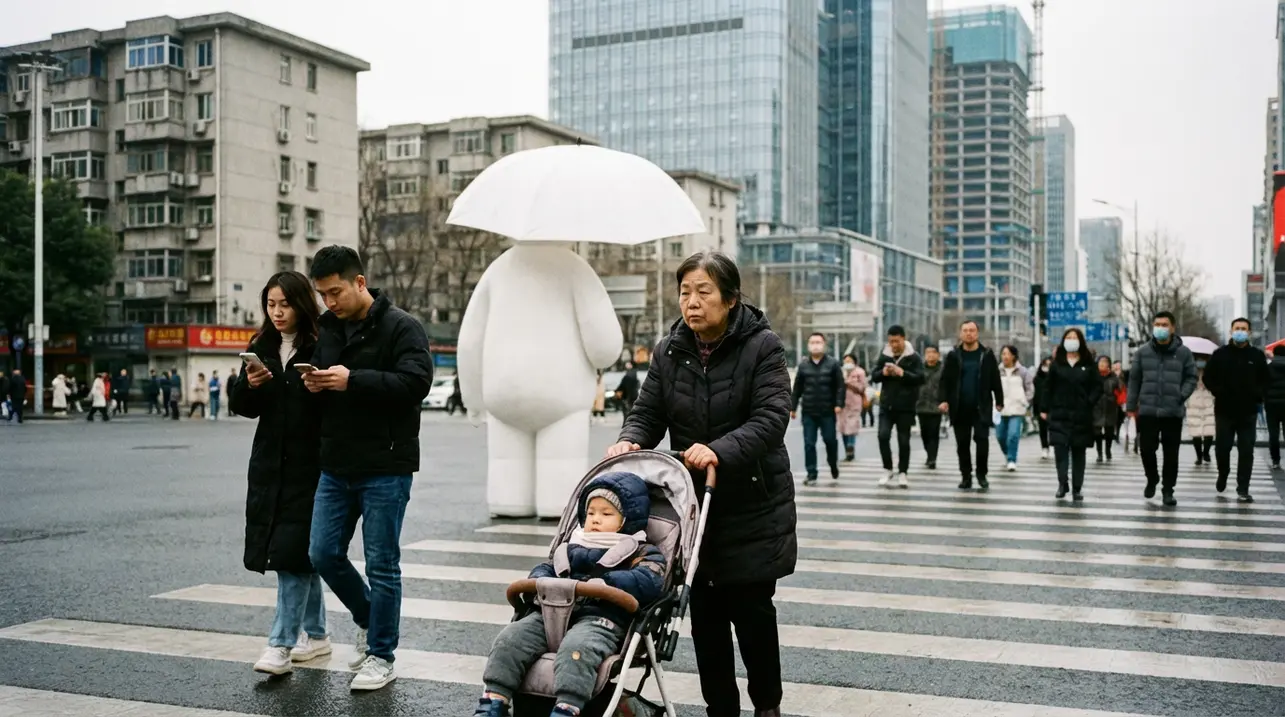
China's Fertility Policies: Coercion vs. Public Backlash
The specter of demographic decline now haunts China's corridors of power, prompting a frantic, and often contradictory, scramble for solutions. While the world widely expects a suite of aggressive pronatalist policies to be unveiled in a bid to reverse plummeting birth rates, the path forward is fraught with peril.Recent efforts—cash subsidies, extended parental leave, patriotic appeals—are likely to produce only short-lived, marginal bumps in the statistics, akin to applying a decorative bandage to a structural wound. The deeper, more dangerous temptation for policymakers might lie in coercive measures: whispers of restricting contraception access, rolling back abortion rights, or imposing social penalties on childless citizens.Such a draconian turn, however, would not be a solution but a profound miscalculation, almost certain to trigger a ferocious public backlash and prove utterly futile in its ultimate aim. To understand why, one must look beyond spreadsheets and into the lived experiences of China's women, particularly the post-80s and 90s generations who came of age under the one-child policy's shadow.They were raised in a society that explicitly framed childbearing not as a personal choice but as a state-mandated limitation, often enforced through intrusive surveillance and brutal penalties. That legacy of bodily autonomy being subordinated to national targets is not easily forgotten.Now, to pivot and demand these same women produce children for the nation, while the crushing economic realities of urban life—exorbitant education costs, unaffordable housing, brutally long work cultures—remain unaddressed, is seen not as an invitation but as a profound betrayal. The feminist consciousness that has grown in China, though often constrained, means women are increasingly vocal in rejecting a return to a barefoot-and-pregnant ideology.They are calculating the cost, not just in yuan, but in career prospects, personal freedom, and mental health. Expert demographers from Peking University to international bodies like the UN consistently argue that coercion backfires; it breeds resentment and clandestine resistance, as seen in historical precedents from Ceaușescu's Romania to more recent pushes in Hungary.The only sustainable path is to dismantle the barriers families actually face: making childcare universally accessible and affordable, legislating against workplace discrimination for mothers, and perhaps most critically, addressing the deep-seated gender inequities that still see domestic and child-rearing burdens fall disproportionately on women. Without this fundamental renegotiation of the social contract, any top-down mandate will be met with a quiet, determined boycott—a fertility strike, if you will.The Chinese state finds itself in a paradox of its own making: having spent decades engineering family size, it now seeks to engineer it again, but the tools of social control are blunter and the populace far more skeptical. The coming years will test whether Beijing listens to the nuanced demands of its people or retreats into counterproductive authoritarian nostalgia, a move that would not only fail to cradle more babies but risk rocking the very foundations of social stability it seeks to preserve.
#population policy
#fertility rates
#China
#pronatalist measures
#public response
#editorial picks news