Politicshuman rightsHuman Rights Reports
The Environmental and Human Rights Costs of China’s Clean Energy Investments Abroad
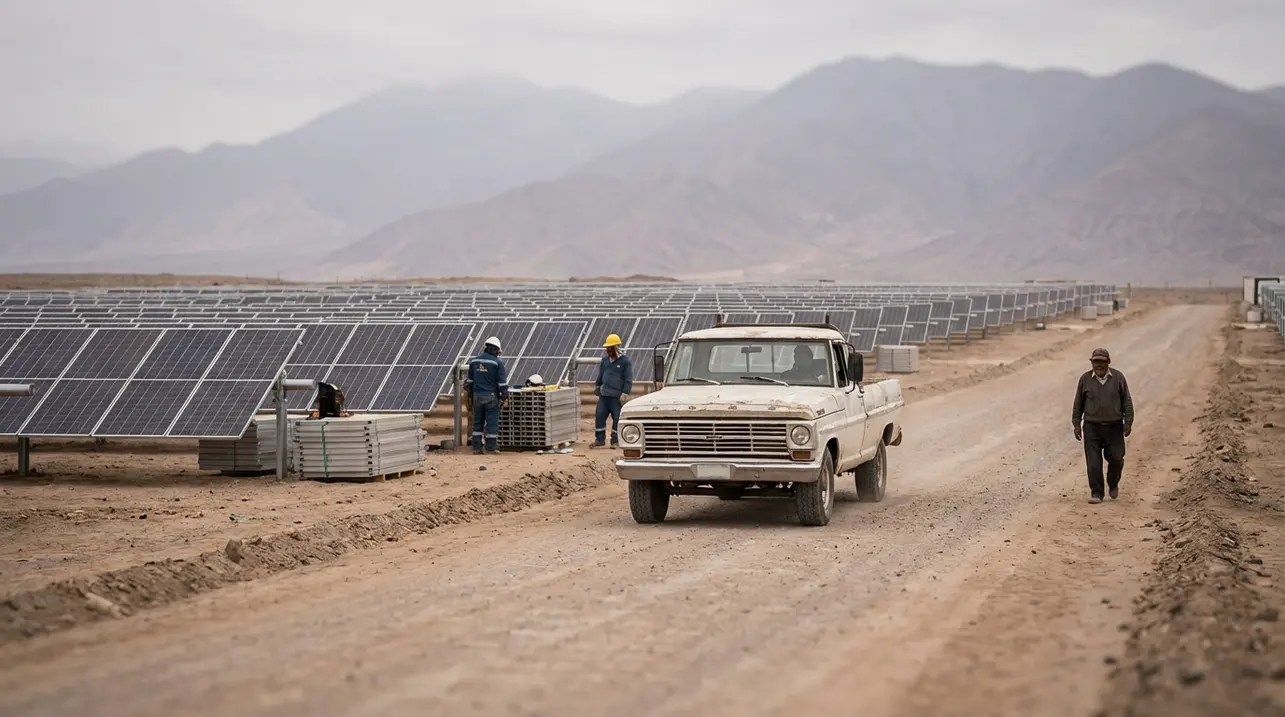
The narrative of a global green transition, championed by massive investments from Chinese companies in overseas clean energy manufacturing, is revealing a troubling paradox. While the world desperately needs to pivot away from fossil fuels, the very projects heralded as our salvation—spanning solar panel factories in Southeast Asia to lithium processing plants in South America and wind farm developments in Africa—are leaving deep scars on local communities and ecosystems.This isn't merely about carbon footprints; it's about the human and environmental costs being externalized in the rush to build the infrastructure of a low-carbon future. On the ground, the story is one of displacement and disruption.In Indonesia's nickel-rich regions, essential for electric vehicle batteries, rapid mining expansion linked to Chinese investment has led to deforestation, water pollution, and conflicts with indigenous communities who see their ancestral lands transformed into industrial pits. Similarly, in the lithium triangle of Argentina, Bolivia, and Chile, the extraction processes required for batteries are consuming vast quantities of scarce water in arid regions, directly impacting farmers and local populations.These are not isolated incidents but a pattern emerging across continents, where the imperative for speed and scale often overrides rigorous environmental impact assessments and meaningful community consent. The human rights dimension is equally stark.Reports from human rights organizations detail labor abuses in some supply chain factories, including excessive overtime, poor safety standards, and restrictions on collective bargaining. The geopolitical framing of these investments as pure South-South cooperation or benevolent climate aid often obscures the complex power dynamics at play, where host countries, eager for economic development and technology transfer, may compromise on regulatory enforcement.From an ecological perspective, the irony is profound. The manufacturing of renewable technology itself is energy and resource-intensive.Mining for critical minerals devastates landscapes, while the construction of large-scale solar and wind farms can fragment habitats and threaten biodiversity if not meticulously planned. The promise of clean energy abroad is thus shadowed by a replication of old, extractive models, merely swapping oil derricks for open-pit mines.This creates a moral and practical dilemma for the international community. How do we balance the urgent, existential need for decarbonization with the imperative to uphold social justice and ecological integrity? The answer likely lies in demanding far greater transparency and adherence to the highest international standards from all actors, including Chinese firms and the financial institutions backing them.It requires strengthening the environmental and social governance frameworks within host nations and ensuring that communities have a genuine voice in projects that will irrevocably alter their lives. The transition to a clean energy future must be just, or it will not be sustainable.The current trajectory, where the burdens of building this new world fall disproportionately on the global south's most vulnerable, risks breeding resentment and conflict, ultimately undermining the very stability needed for long-term climate action. We must confront the uncomfortable truth that a technology's end-use being 'green' does not automatically render its lifecycle benign.The path forward demands a holistic vision—one where investments are measured not just in gigawatts and dollars, but in the health of ecosystems, the dignity of workers, and the rights of communities. Otherwise, we risk solving one crisis by accelerating several others.
#featured
#China
#clean energy
#overseas investment
#environmental impact
#human rights
#renewable energy
#social impact