Politicsgovernments & cabinetsLeadership Transitions
Political Potty Mouths: How Cursing Became Common in Politics
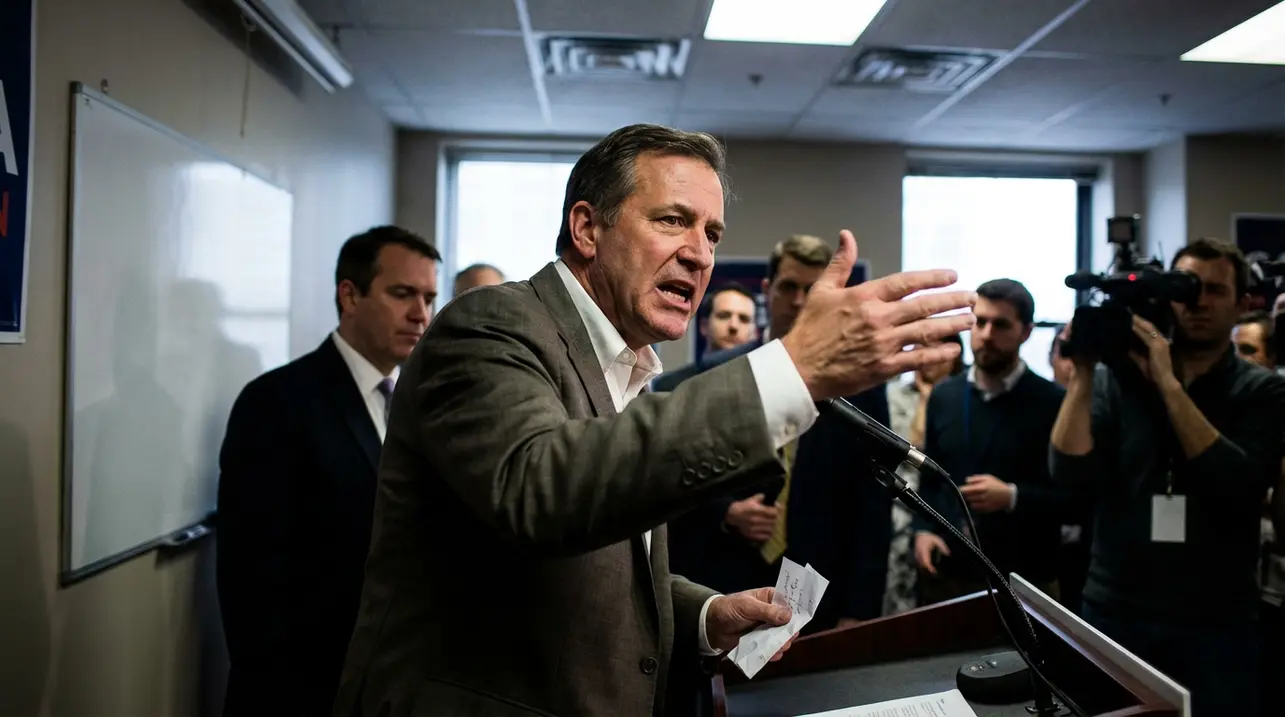
American politics has gotten dirty, and the language of its leaders has followed suit, evolving from whispered expletives to headline-grabbing battle cries. This isn't just about a few salty words; it's a calculated erosion of decades-old media and political norms, a strategic weaponization of profanity pioneered by Donald Trump and now adopted across the aisle.Think of it as a political campaign ad writ large, where the F-word is the new authenticity, a blunt instrument designed to cut through the noise, signal defiance, and rally a base. In the Trump era, the long-standing separation between private vulgarity and public, sanitized discourse has utterly collapsed.We now operate in a single, unfiltered linguistic arena where, as Syracuse University's Robert Thompson notes, politicians have discovered what comedians did a generation ago: you can get a reaction, make a point, and even garner laughs simply by deploying these once-forbidden terms. The case studies are stark and strategic.When Minneapolis Mayor Jacob Frey, amid the high-stakes tension following a federal agent's shooting, looked into the cameras and demanded ICE officers 'get the f-ck out,' it wasn't a slip. It was a piece of political theater, an eloquent piece of expressive swearing, as Indiana University's Michael Adams put it, designed to project raw, local fury against a federal agency.It made headlines because it was meant to. Similarly, Trump’s deployment of profanity is never accidental; it’s core to his brand.Telling reporters Venezuela’s leader didn’t 'want to f-ck around with the United States' and promoting it with a 'FAFO' catchphrase is a deliberate tactic—a profanity-laden punch that projects unvarnished strength and dismisses diplomatic niceties as weakness. His administration and allies have taken the playbook and run with it.Vice President J. D.Vance casually calls a podcast host a 'dips--t' on social media, while Defense Secretary Pete Hegseth told a room of top generals the Pentagon was 'done with that s--t,' explicitly tying the vulgarity to a policy shift away from diversity initiatives. This is messaging, pure and simple.But to view this as a purely Republican phenomenon is to miss the broader strategic shift. Democrats, recognizing the changed landscape, are singing in the same chorus of curse words, weaponizing the language against its originator.Senate Minority Leader Chuck Schumer’s 'No f--king way' video during a shutdown fight or Kamala Harris deploying her favorite expletive at a summit are calculated moves. As Adams observes, if Trump opened the door, he’s now getting a dose back—swearing is now the lingua franca for expressing frustration, and refusing to use it can seem weak or inauthentic.To understand the seismic nature of this shift, flashback to Watergate. The White House transcripts, famously littered with '[expletive deleted],' shocked the nation because they revealed a foul-mouthed Nixon, shattering the presidential facade.Nixon himself later lamented the 'bad judgment' of having it on tape, a stark contrast to today’s leaders who actively seek the microphone. The late Dick Cheney took pride in telling Senator Patrick Leahy to 'f--k yourself,' calling it 'the best thing I ever did.' Even Joe Biden’s not-so-secret 'big f--king deal' whisper about the ACA was a giddy breach of the old decorum. The scandal has been replaced by strategy.Today, a curse word in politics is less likely to trigger a week of media pearl-clutching and more likely to be analyzed for its electoral potency. It’s a shortcut to seeming real, direct, and unscripted in an age of deep distrust.However, as Thompson warns, sometimes 'it's kind of pathetic'—a cheap substitute for substantive argument. And the strategy has its limits: while Trump’s curses may raise only momentary eyebrows, his other rhetoric—calling a female reporter 'piggy' or Somali immigrants 'garbage'—still sparks rightful outrage, a reminder that some lines remain.The bottom line is that the arena has fundamentally changed. The newscasts of today, peppered with the language of George Carlin rather than George Stephanopoulos, reflect a political combat where norms are not just broken but repurposed as weapons. The F-bomb is no longer a mistake; it’s a message.
#political discourse
#profanity
#Trump
#authenticity
#norms
#featured