

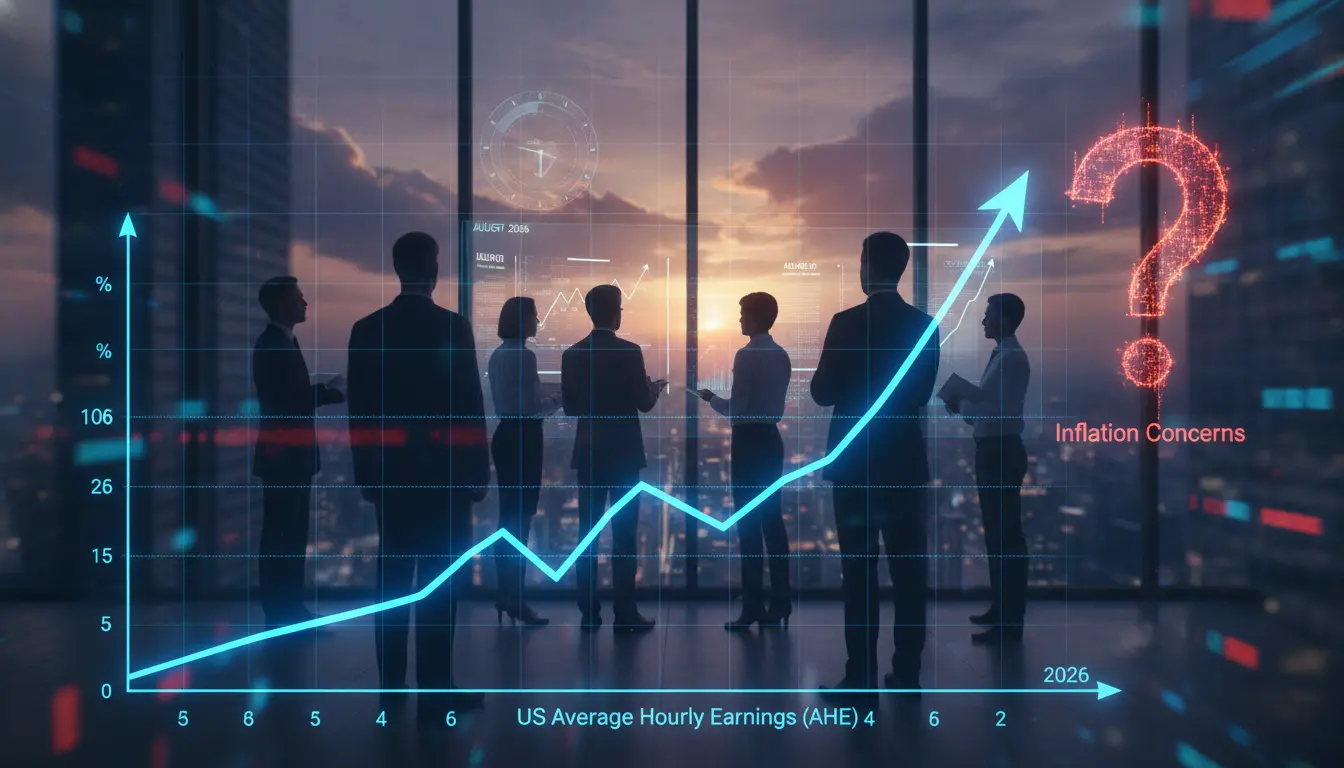
US Wage Growth Trajectory for 2026 Under Scrutiny Amid Inflation Concerns
As the economic landscape continues to evolve, the trajectory of US Average Hourly Earnings (AHE) by August 2026 stands as a pivotal indicator for policymakers, businesses, and consumers alike. This key metric, closely watched for its implications on inflation and the overall health of the labor market, will significantly shape the Federal Reserve's monetary policy decisions and influence the broader economic outlook. The question of whether wage growth can moderate to sustainable levels without dampening employment remains a central challenge, reflecting the delicate balance central banks must strike.
Average Hourly Earnings serve as a critical gauge of wage inflation, reflecting the cost of labor for businesses and the purchasing power of consumers. Sustained high wage growth, particularly when it outpaces productivity gains, can fuel inflationary pressures by increasing production costs that are often passed on to consumers. Conversely, a moderation in wage growth, especially if accompanied by healthy productivity, is generally viewed as conducive to bringing inflation back to target levels without triggering a recession. Economists and Fed officials are acutely focused on identifying if current trends signal a durable moderation in the labor market, a necessary condition for achieving price stability in the long run.
The period leading up to 2026 is expected to be marked by ongoing adjustments in labor supply and demand dynamics. Factors such as shifts in demographics, immigration policies, technological advancements, and the lingering effects of the pandemic on workforce participation will all play a role. A tightening labor market, characterized by low unemployment and high job vacancies, typically puts upward pressure on wages as employers compete for talent. However, if the labor force participation rate sees a sustained increase, or if economic growth cools somewhat, this could alleviate some of the pressure on wages, allowing for a more gradual and controlled deceleration of AHE. The structural changes in various industries, including the adoption of AI and automation, could also exert disinflationary pressure on certain job categories while potentially boosting wages in others.
For the Federal Reserve, the annual percentage change in Average Hourly Earnings is a crucial input into their inflation models. Should AHE growth remain elevated above, for example, a 4.0% year-over-year rate approaching August 2026, it would likely signal persistent inflationary risks, potentially necessitating a continuation of restrictive monetary policy or a slower pace of easing. Conversely, a sustained deceleration below 4.0% would provide stronger evidence that the labor market is rebalancing, offering the Fed more flexibility to adjust interest rates and potentially support economic growth. The central bank's commitment to its dual mandate of maximum employment and price stability means it will continue to scrutinize these figures intently, seeking a ‘soft landing’ where inflation is tamed without an undue rise in unemployment.
Beyond monetary policy, the trajectory of wage growth carries significant implications for corporate profitability and consumer spending. Businesses facing higher labor costs must either absorb them, pass them on to consumers through higher prices, or seek efficiencies. Each of these options has ripple effects across the economy. For households, real wage growth — wages adjusted for inflation — determines their actual purchasing power. A scenario where nominal wage growth moderates but inflation falls even faster would represent an improvement in living standards, fostering consumer confidence and discretionary spending, which are vital components of economic expansion.
The global economic environment will also cast a long shadow over domestic wage dynamics. Geopolitical stability, global supply chain resilience, and international trade relations can all influence domestic inflation and, by extension, the demand for labor and wage expectations. Energy prices, commodity costs, and the strength of the U.S. dollar against other major currencies are external factors that could either amplify or mitigate internal inflationary pressures, impacting the overall context in which wage negotiations occur and compensation packages are structured. Forecasting wage trends over such an extended horizon remains challenging, laden with uncertainties, yet the underlying drivers continue to be a primary focus for economic analysis.
Stay Informed. Act Smarter.
Get weekly highlights, major headlines, and expert insights — then put your knowledge to work in our live prediction markets.
Related News
US Economic Forecasts Point to Sustained PCE Inflation Moderation by Mid-2026
Federal Reserve Focuses on July 2026 CPI Amid Persistent Inflationary Pressures
US Inflation Outlook: Analysts Project Sub-3% CPI by July 2026 Amid Economic Crosscurrents

US Producer Price Growth Expected to Moderate Below 2.5% by August 2026

US Producer Price Index Report Looms, Offering Key Insights into August 2026 Inflation Trends

July 2026 ISM Services PMI Release Set to Offer Crucial Insights into US Economic Health

Tesla's Automotive Gross Margin Under Intense Scrutiny Ahead of Q2 2026 Earnings Report

2026 Midterms Set to Decide Critical Control of US House of Representatives

US Congress Accelerates Efforts to Enact Comprehensive Federal AI Regulation by 2026

US Political Landscape Girds for Pivotal 2026 Midterm Elections as Control of Congress Hangs in Balance