

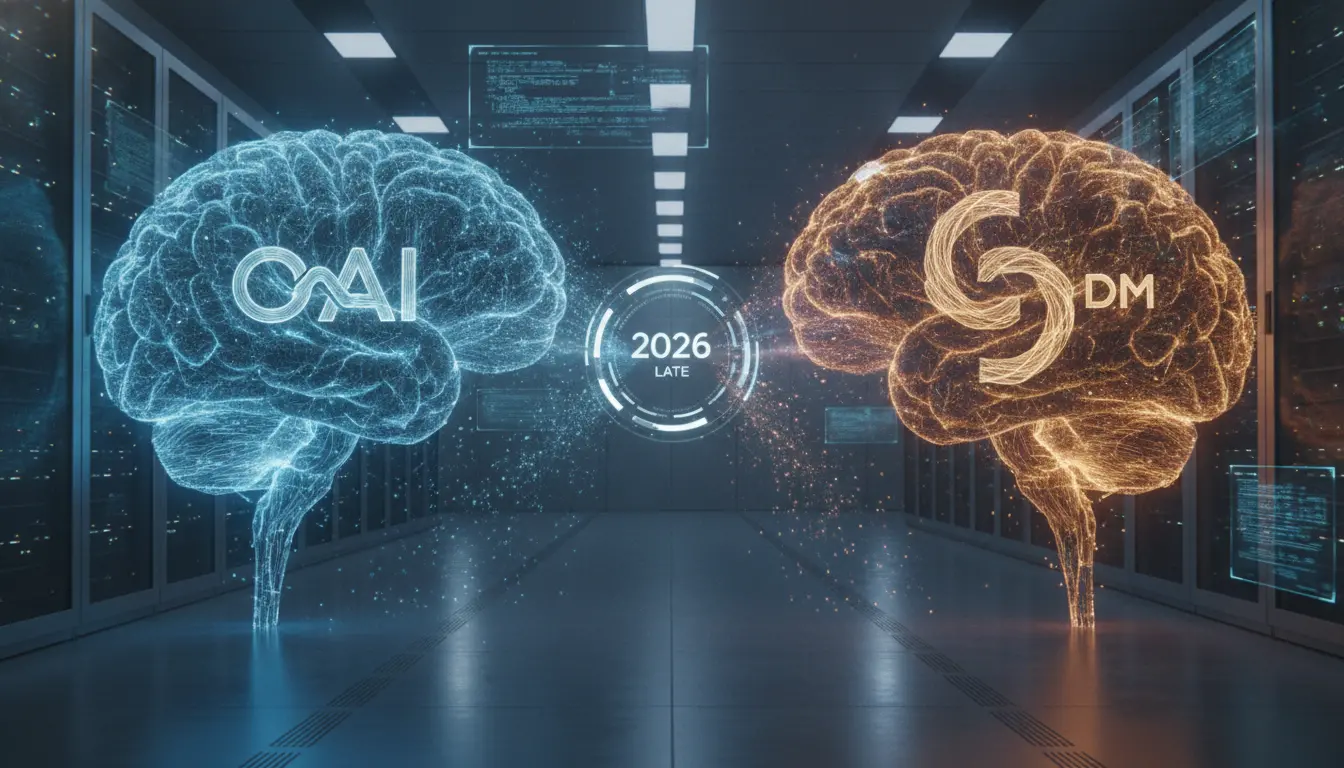
Tech Giants OpenAI, Google DeepMind Poised for Next-Gen AI Model Revelations by Late 2026
The global artificial intelligence landscape is bracing for what could be a seismic shift, as industry leaders OpenAI and Google DeepMind are widely anticipated to unveil major new AI models by late 2026. This period is expected to mark a significant leap forward in AI capabilities, with particular focus on groundbreaking advancements in multimodal processing and sophisticated reasoning abilities. The potential announcements underscore the intensifying competition at the bleeding edge of AI research, as these tech titans vie for dominance in a field poised to redefine technology and human interaction.
The race to develop more capable and versatile AI models has been accelerating at an unprecedented pace. OpenAI, known for its GPT series, and Google DeepMind, with its Gemini family of models, have continually pushed the boundaries of what large language models can achieve. Current iterations, such as OpenAI's GPT-4 and Google DeepMind's Gemini Ultra, have demonstrated remarkable proficiency in understanding and generating text, coding, and even basic image interpretation. However, the next generation is expected to transcend these capabilities, moving towards a truly integrated understanding of diverse data types—including vision, audio, and even sensor data—and a more robust form of cognitive reasoning that approaches human-like problem-solving.
Multimodal AI represents a crucial frontier, enabling models to perceive and interpret information across different modalities seamlessly, much like humans do. Imagine an AI that can not only generate text based on a prompt but also understand the nuances of a complex video, analyze a detailed image, and respond with relevant audio or visual outputs. Such capabilities would unlock a vast array of new applications, from sophisticated content creation and hyper-personalized educational tools to advanced robotics and more intuitive human-computer interfaces. The ability to integrate and synthesize information from multiple sensory inputs is seen as a key step towards more general and adaptable AI systems.
Equally transformative is the pursuit of enhanced reasoning. While today's top AI models excel at pattern recognition and retrieval of information, their genuine reasoning and planning capabilities remain limited. The goal for the next wave of models is to exhibit deeper cognitive functions, such as abstract thinking, complex problem-solving, and the ability to generalize knowledge across disparate domains. This involves moving beyond mere statistical correlation to a more profound comprehension of causality and intent, enabling AIs to perform tasks requiring genuine strategic foresight and nuanced decision-making. Such breakthroughs could revolutionize scientific discovery, engineering, and even fields like law and medicine, where complex logical deduction is paramount.
Behind these ambitious goals are thousands of researchers and engineers at both OpenAI and Google DeepMind, led by visionary figures such as OpenAI CEO Sam Altman and Google DeepMind CEO Demis Hassabis. Both organizations are investing colossal resources in computing power, talent acquisition, and novel architectural designs to achieve these milestones. The rivalry between the two has often been described as an “arms race,” not just for technological supremacy but for the very future of AI development. Each major announcement from one company typically spurs the other to accelerate its own research and development efforts, creating a dynamic feedback loop of innovation.
The implications of these impending advancements are profound and far-reaching. On one hand, the potential benefits for humanity are immense, promising tools that could tackle some of the world's most intractable problems, from climate change to disease. On the other, the rapid progress raises significant questions about AI safety, ethics, and societal impact. Concerns about job displacement, the spread of misinformation, and the potential for autonomous systems to make critical decisions without human oversight are becoming increasingly pressing. As these powerful new models emerge, policymakers, researchers, and the public will need to engage in ongoing dialogue to ensure responsible development and deployment.
As the October 2026 timeframe approaches, the AI community and various industries will be watching closely. Any major unveiling from OpenAI or Google DeepMind could not only redefine the capabilities of artificial intelligence but also set the strategic direction for technological innovation for years to come. The stakes are high, not just for the companies involved, but for the global economy and the future trajectory of human civilization itself, as AI continues its inexorable march toward ever-greater sophistication.
Stay Informed. Act Smarter.
Get weekly highlights, major headlines, and expert insights — then put your knowledge to work in our live prediction markets.
Related News
OpenAI Eyes Major Leap in Multimodal AI and Reasoning with Anticipated GPT-5 Release by Mid-2026

OpenAI Poised for Major AI Model Unveil in September 2026, Eyeing Long-Running Tasks and Multi-Agent Systems

OpenAI Intensifies Efforts on Next Foundational LLM, Aiming for Post-GPT-5.6 Release by Early 2027
OpenAI Navigates Evolving Regulatory Landscape Ahead of Next-Generation AI Rollout

US Government Prepares Potential Directives on Public Access to Advanced OpenAI Models

OpenAI Prepares for GPT-5.6 Rollout, Prioritizing General API Availability for Developers
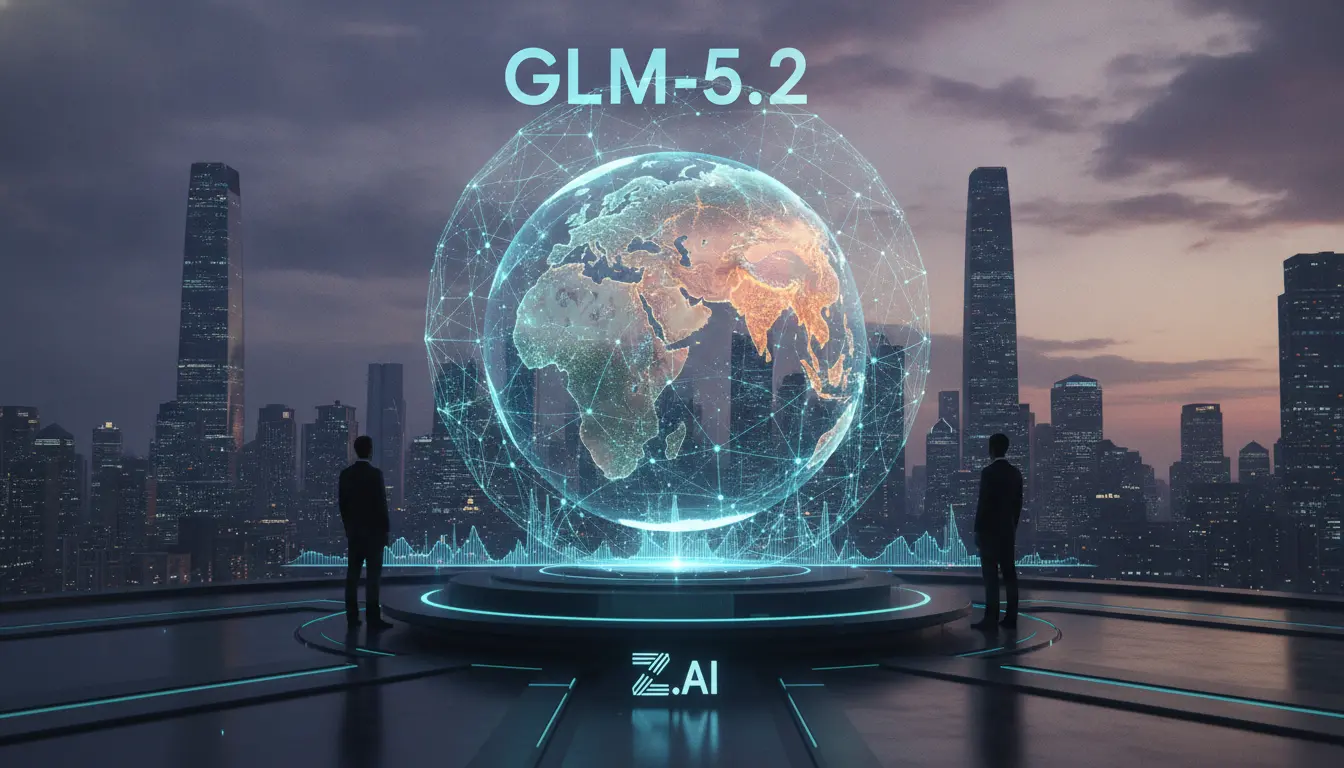
China's Z.AI Readies GLM-5.2, Eyeing Global Commercial LLM Dominance by Early 2027
MiniMax Eyes Release of Groundbreaking 2.7 Trillion Parameter Open-Weight AI Model

Trump Administration Reportedly Seeks Restrictions on OpenAI's GPT-5.6 Public Release
Trump Administration Reportedly Seeks Restrictions on OpenAI's Forthcoming GPT-5.6 Model