

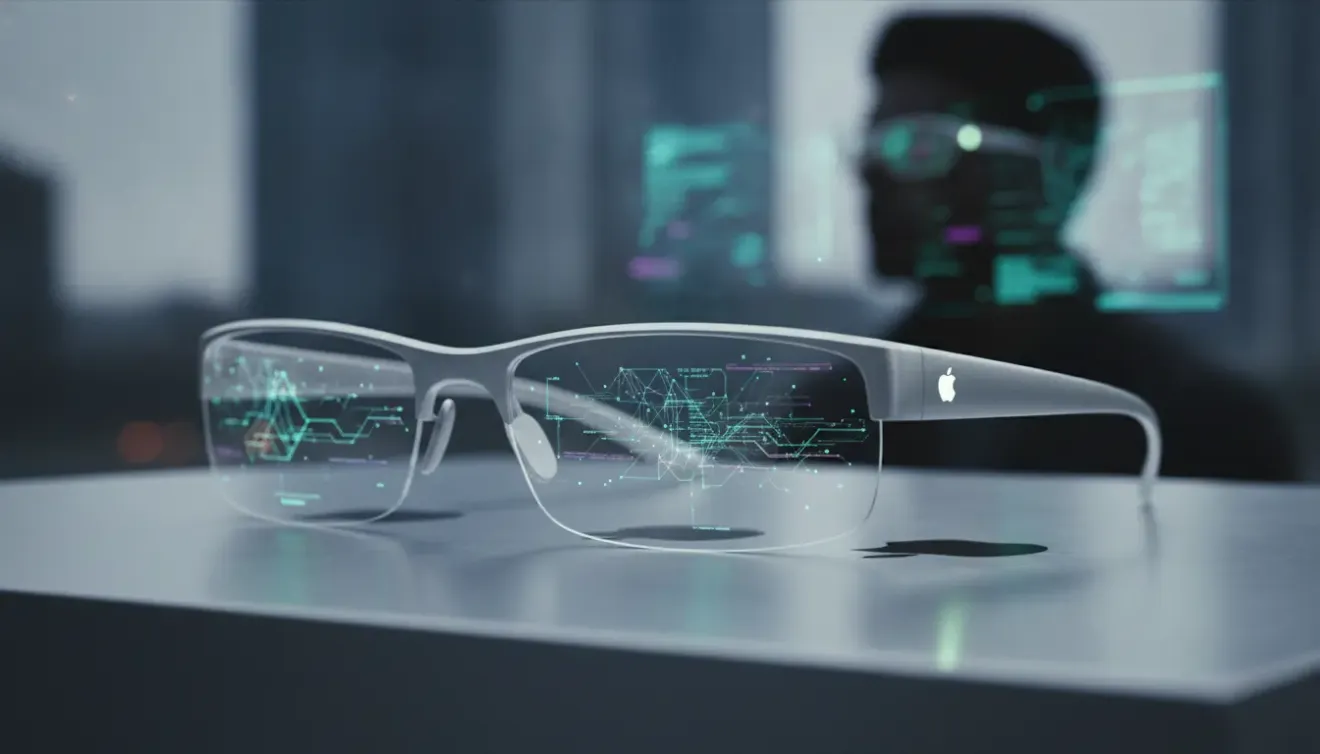
Apple Reportedly Ramping Up Development of Lightweight, AI-First Smart Glasses
In the wake of its ambitious launch of the Vision Pro headset, Apple is reportedly intensifying its focus on a new, potentially more transformative wearable category: lightweight, AI-driven smart glasses. This strategic pivot, according to sources familiar with the company's long-term product roadmap, prioritizes the development of a device designed for all-day use, aiming to seamlessly integrate artificial intelligence into a user's daily life. The project, rumored to be in advanced research and development, represents a significant shift from the immersive, high-cost "spatial computing" of the Vision Pro towards a more accessible and mainstream form of ambient technology that could one day succeed the smartphone.
For years, Apple's interest in augmented reality has been one of Silicon Valley's most closely watched, yet secretive, endeavors. The culmination of this effort, the Vision Pro, launched earlier this year to critical acclaim for its technological prowess but also faced skepticism regarding its $3,499 price tag, weight, and limited real-world applications. While the headset serves as a powerful statement piece and a platform for developers, the internal consensus at Apple has reportedly long viewed a less obtrusive pair of glasses as the ultimate goal. This next-generation product is envisioned not as a device for dedicated sessions of work or entertainment, but as a constant companion that enhances reality with contextual, AI-powered information and assistance.
The distinction of being "AI-first" is crucial to understanding Apple's strategy. Unlike earlier smart glasses concepts that focused on displaying notifications or simple overlays, Apple's project is believed to be deeply integrated with its recently announced 'Apple Intelligence' platform. The glasses would leverage advanced on-device processing and multimodal AI models, enabling a next-generation Siri to understand a user's visual environment. This could translate into real-time language translation of signs, identification of objects, or providing step-by-step instructions overlaid on the real world. The device would function as a proactive assistant, anticipating user needs based on what they are seeing and doing, marking a significant leap beyond the capabilities of competitors like Meta's Ray-Ban smart glasses, which currently focus more on camera and audio functionalities.
However, the path to a consumer-ready product is fraught with immense technical challenges that have stymied the industry for over a decade. The primary obstacle is miniaturization: engineering a powerful processor, sophisticated sensors, high-resolution micro-displays, and a battery with sufficient life into a frame that is comfortable and socially acceptable to wear all day. Reports suggest that Apple has explored various technologies, including advanced waveguide displays, but has faced hurdles with power consumption and thermal management. The company has purportedly scaled back more ambitious AR features in the short term to concentrate on perfecting the core AI-assistant functionalities, with a potential consumer launch targeted for the 2026-2027 timeframe, though such timelines remain highly fluid in deep R&D projects.
What is at stake for Apple is nothing less than the next dominant computing platform. Just as the iPhone redefined mobile communication and the Apple Watch established the smartwatch market, AI-powered glasses could represent the next major pillar of the company's ecosystem. Success would create a powerful new hardware category, further locking users into Apple's suite of services and software. It's a high-risk, high-reward bet on the future of human-computer interaction, moving beyond the screen-in-hand paradigm that has defined the last two decades. While the Vision Pro has laid the groundwork for spatial computing, these forthcoming smart glasses may be the product that truly brings Apple's vision for augmented reality and artificial intelligence to the masses.
Stay Informed. Act Smarter.
Get weekly highlights, major headlines, and expert insights — then put your knowledge to work in our live prediction markets.
Related News

Tech Giants Push for 2026 Launch of Consumer-Ready AI Smart Glasses

Beyond Vision Pro: Apple and Meta Locked in High-Stakes Battle for Mainstream AR Dominance

Apple Gears Up for Major AI Integration with iPhone 18 Series Launch in 2026
Apple Explores Ultra-Premium iPhone Tier for 2026 Launch

Apple Readies Foldable iPhone for Potential 2026 Unveiling Amid Industry Scrutiny
Google Poised to Expand Pixel Portfolio with New Foldable Device in 2026

Google Prepares to Unveil Pixel 11 Series with Anticipated Camera Innovations in August 2026

European Commission Intensifies Scrutiny of Google's Android and AI Practices, New Compliance Measures Expected by July 2026

Google's Upcoming Pixel 11 Puts Spotlight on Tensor G6 Chip in High-Stakes Performance Battle

Global Semiconductor Market Forecast to Surpass $1 Trillion in Annual Sales by 2026 Amid AI-Driven Demand