Sciencespace & astronomyNASA Missions
NASA’s science budget avoids cuts, positive outlook.
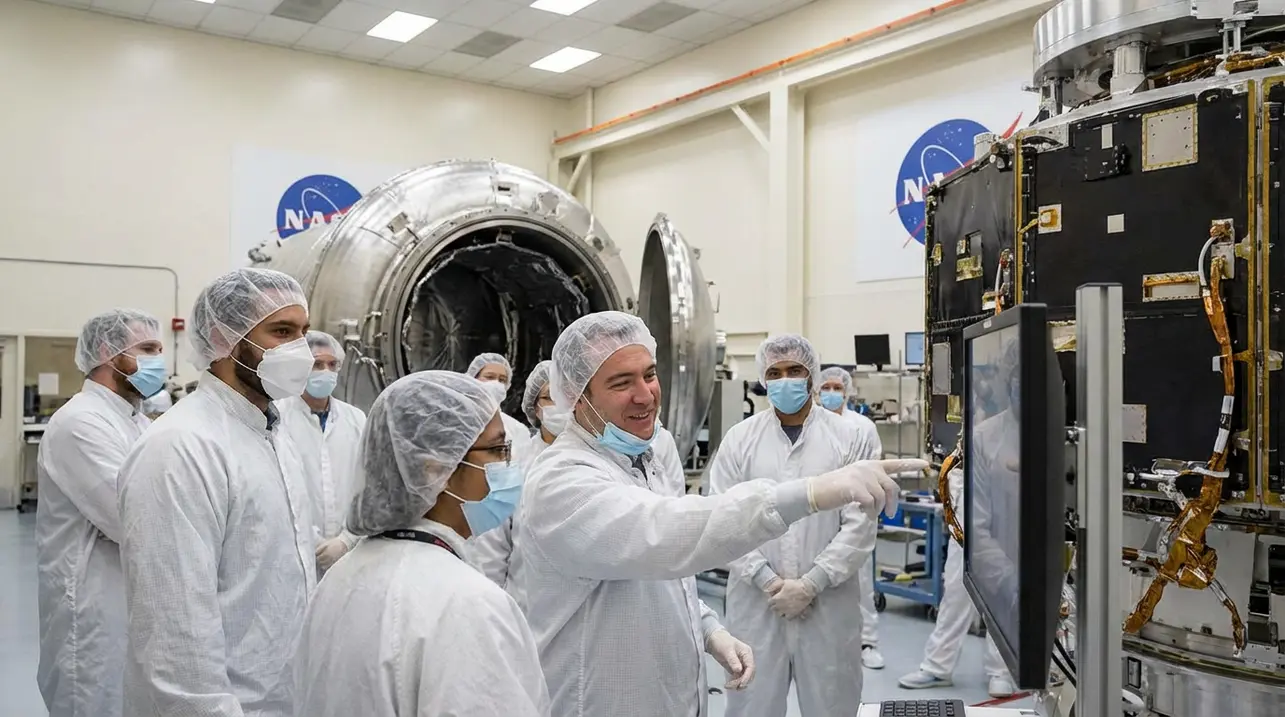
In a political and budgetary climate where sharp cuts have become the grim expectation for non-defense discretionary spending, NASA’s science division has emerged not just unscathed but with a remarkably stable and even optimistic outlook for the coming fiscal year. The sentiment, perfectly captured by a senior agency official’s recent, almost relieved, remark—'There's very little to not like in this'—signals a profound and hard-won victory for the scientific community.This isn't merely about maintaining a status quo; it's a critical endorsement of America's ambitions in the final frontier at a moment when global competition, particularly from China's rapidly advancing lunar and deep-space programs, has never been more intense. The funding stability allows flagship missions, like the Mars Sample Return campaign—an audacious endeavor to bring Martian soil back to Earth—and the Europa Clipper, destined to explore the icy moon of Jupiter for signs of a subsurface ocean, to proceed without the debilitating pauses that budget uncertainty can inflict.These projects are the crown jewels of planetary science, each representing decades of work and billions in investment, and their continued health is a direct function of congressional will, which has, for now, chosen to see value in pure scientific exploration. Behind this positive outcome lies a complex dance of advocacy, where scientists, former astronauts, and industry partners have tirelessly made the case that NASA's science budget is not an expense but an investment—one that fuels technological innovation with terrestrial spin-offs, inspires a new generation of STEM professionals, and secures U.S. leadership in a domain that defines geopolitical prestige in the 21st century.The decision avoids the kind of painful triage that has haunted the agency in past budget cycles, where promising missions in their infancy, such as the next great space telescope or a daring probe to Uranus, are often the first casualties. Instead, it provides the breathing room needed for long-term planning, ensuring that the brilliant minds at JPL, Goddard, and Ames can focus on engineering marvels rather than writing desperate justifications for their existence.However, this rosy picture is not without its shadows and caveats. The overall federal budget remains a zero-sum game, and NASA's win likely came at the expense of other worthy scientific or social programs.Furthermore, while the science budget is protected, other parts of NASA, notably its ambitious Artemis moon program, face intense scrutiny and potential delays due to their staggering costs and complex public-private partnerships with companies like SpaceX and Blue Origin. The tension between human exploration and robotic science is a perennial one within the agency, and a stable science budget does little to resolve the deeper structural questions about Artemis's timeline and ultimate affordability.
#NASA
#budget
#science funding
#space exploration
#research policy
#editorial picks news