SciencearchaeologyExcavations and Discoveries
Cosmic Catastrophe: Did a Comet Airburst Trigger Earth's Last Ice Age and Wipe Out the Mammoths?
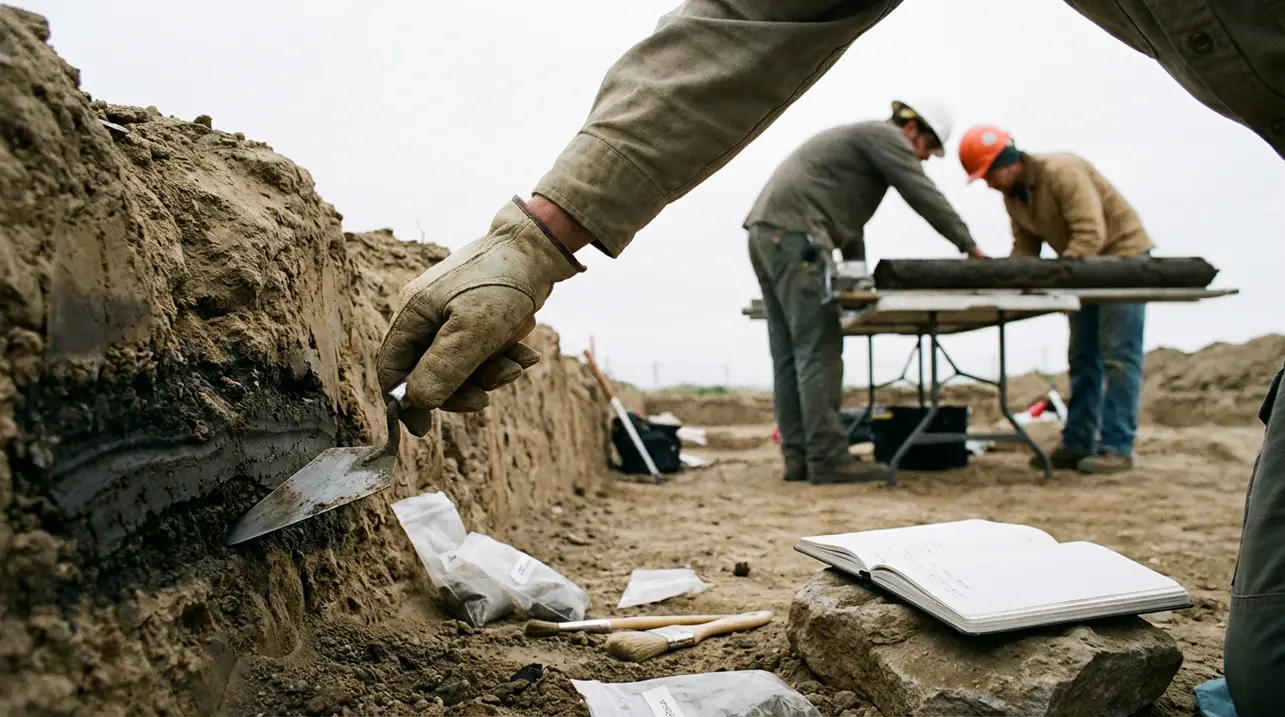
The abrupt disappearance of woolly mammoths and other Pleistocene giants is a prehistoric mystery that has long been pinned on climate shifts and human hunters. Now, a provocative theory is rewriting the story, pointing to a cataclysmic event from outer space.The Younger Dryas Impact Hypothesis proposes that a fragmented comet exploded in Earth's atmosphere approximately 12,800 years ago, unleashing fire and triggering a global deep freeze that decimated megafauna and human societies alike. This idea is moving from the fringes to the forefront, supported by a growing body of geological evidence.At multiple sites across North America, scientists have identified a distinct, dark layer of sediment rich in charcoal, soot, and microscopic forensic clues. These include shocked quartz and nanodiamonds—materials typically created by the immense heat and pressure of a high-velocity impact or a massive airburst.Their concentration at the Younger Dryas boundary marks a precise moment of global upheaval. The hypothesized scenario is dramatic: a comet, fracturing upon atmospheric entry, would have generated a series of titanic explosions over the ice-covered north.The thermal pulse would have ignited wildfires across continents. Soot and dust shrouding the atmosphere would have plunged the planet back into ice-age conditions for over a millennium—a period known as the Younger Dryas.For species like mammoths, mastodons, and saber-toothed cats, this was an unsurvivable catastrophe. Their ecosystems, already stressed, were first scorched, then frozen into oblivion.The collapse extended to humans. The sophisticated Clovis culture, known for its iconic stone tools, vanishes from the archaeological record at this same time, suggesting a devastating societal breakdown.Proponents argue this cosmic event elegantly unites disparate clues from paleontology, archaeology, and climatology into one coherent narrative. Skeptics, however, highlight ongoing debates.They note that alternative processes, like lightning, can form some of the purported impact evidence, and a definitive crater from this era remains elusive, though features under Greenland's ice are considered candidates. Despite the controversy, each new discovery of impact-related materials strengthens the case for an extraterrestrial trigger.If validated, this hypothesis reveals that our ancestors endured a day of celestial fire that reshaped the world. It underscores a profound truth: human history is perpetually vulnerable to the chaotic dynamics of our solar system, reminding us to gaze at the stars with both awe and caution.
#featured
#mammoth extinction
#Clovis culture
#comet airburst
#shocked quartz
#Younger Dryas
#megafauna
#paleontology