SciencephysicsTheoretical Physics
China's 2025 Science Breakthroughs Challenge Global Norms
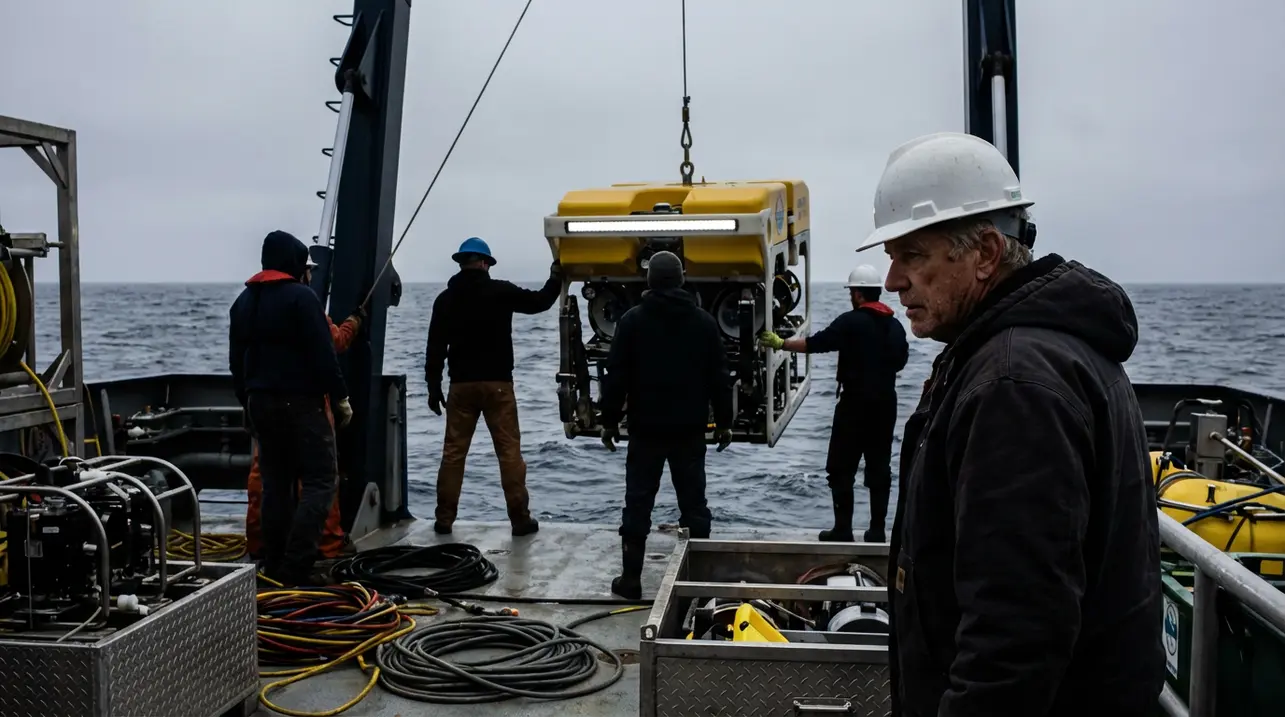
China's unveiling of a compact, deep-sea cable-cutting device represents a seismic shift in the quiet, cold war being waged on the ocean floor, a move that could fundamentally reset global maritime power dynamics and challenge the very architecture of international communication. This isn't just another piece of naval hardware; it's a strategic chess piece placed directly on the board of global connectivity, where over 95% of the world's data traffic flows through a fragile lattice of submarine cables.For decades, this network has been the planet's central nervous system, underpinning everything from financial transactions to military command, and its protection has been a cornerstone of Western, particularly American, strategic dominance. The development of a tool capable of severing the world's most fortified lines—potentially those armored with steel and buried under seabed sediment—moves the threat from theoretical to tangible.It echoes the strategic thinking behind anti-satellite weapons, creating a new domain of asymmetric warfare where a relatively low-cost, deployable device can inflict catastrophic economic and strategic paralysis, a concept that would fascinate any student of cosmic-scale conflict like Elon Musk's vision for multi-planetary resilience. The context here is critical: China's rapid advancement in deep-sea engineering, from its record-setting submersible dives in the Mariana Trench to its expansive ocean-floor mapping initiatives, has provided the foundational science for this capability.This cable cutter isn't an isolated breakthrough; it's the sharp end of a spear forged by years of state-directed investment in maritime science and technology, aimed explicitly at reducing U. S.military advantages. Experts in undersea warfare note that while the U.S. Navy has long possessed similar capabilities, China's public demonstration signals a new era of overt competition and a willingness to weaponize civilian infrastructure dependencies.The potential consequences are staggering, extending far beyond immediate conflict scenarios. In a tense geopolitical standoff, the mere threat of cable severance could act as a powerful deterrent or coercive tool, influencing diplomatic and economic decisions without a single shot being fired.It challenges global norms around the freedom of the seas and the protection of critical infrastructure, potentially spurring a new arms race in deep-sea defense and resilience technologies, such as redundant satellite networks or more easily repairable cable designs. Furthermore, this development dovetails ominously with China's reported testing of a non-nuclear hydrogen bomb, as detailed in scientific papers, which points to advancements in directed energy and simulation technologies that could have dual-use applications.
#featured
#China
#physics
#Einstein
#hydrogen bomb
#deep-sea cable cutter
#research breakthroughs