SciencebiologyCRISPR and Gene Editing
AlphaFold Changed Science. After 5 Years, It’s Still Evolving
KE7 days ago7 min read2 comments
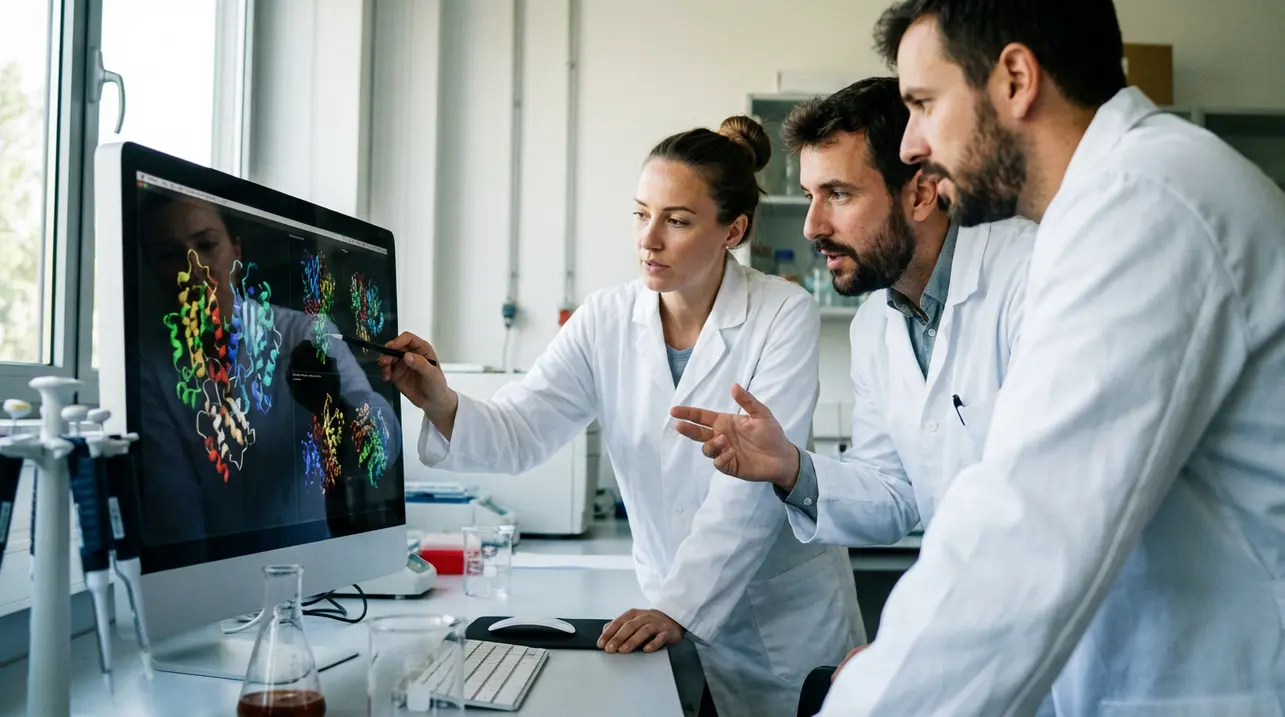
Five years ago, the world of molecular biology experienced a seismic shift that felt ripped from the pages of a science fiction novel. DeepMind’s AlphaFold, an artificial intelligence system, cracked a problem that had stumped scientists for half a century: predicting the intricate, three-dimensional shape of proteins from their amino acid sequences alone.This wasn’t just an incremental advance; it was a fundamental breakthrough that earned its creators a Nobel Prize and effectively handed researchers a new lens through which to view the machinery of life. Today, as WIRED’s conversation with DeepMind’s Pushmeet Kohli reveals, the project is far from a static monument to past achievement.It is a living, evolving platform that continues to push the boundaries of what’s possible in biology and chemistry, promising to accelerate the next generation of scientific discovery from drug design to materials science. The initial release of AlphaFold2 was a thunderclap, delivering atomic-level accuracy for nearly all proteins in the human body and those of 20 other key organisms.Overnight, it transformed a field where experimental methods like cryo-electron microscopy and X-ray crystallography—though powerful—were often painstakingly slow, expensive, and technically fraught. Suddenly, a researcher in Brazil or Botswana could access high-fidelity structural models with a few clicks, democratizing a domain once reserved for well-funded labs with massive infrastructure.The AlphaFold Protein Structure Database, a collaboration with the European Molecular Biology Laboratory, became a global public good, hosting over 200 million predicted structures. This vast catalog has already fueled progress in understanding disease mechanisms, from neurodegenerative disorders to cancer, by revealing previously hidden binding sites and molecular interactions.But the story doesn’t end with a static database. The true evolution lies in AlphaFold’s expanding capabilities.Recent iterations are tackling far more complex challenges. They are moving beyond isolated proteins to model their interactions with other biomolecules—like DNA, RNA, and small-molecule drugs—painting a dynamic picture of cellular processes rather than static snapshots.Furthermore, DeepMind and its spin-off Isomorphic Labs are applying these foundational models to the entire drug discovery pipeline. This means predicting how potential drug candidates will bind to disease targets, forecasting their efficacy and potential side-effects in silico, which could slash years and billions of dollars from the traditional development timeline.The implications are staggering: personalized medicine tailored to an individual’s unique proteome, rapid response platforms for emerging viral threats, and the rational design of novel enzymes for sustainable chemistry and biofuel production. However, this AI-driven revolution also brings nuanced challenges and philosophical debates.
#AlphaFold
#DeepMind
#protein folding
#AI research
#scientific breakthrough
#Nobel Prize
#biology
#chemistry
#featured