Sciencespace & astronomySpace Debris and Sustainability
China Raises Safety Concerns Over Starlink Satellite Network
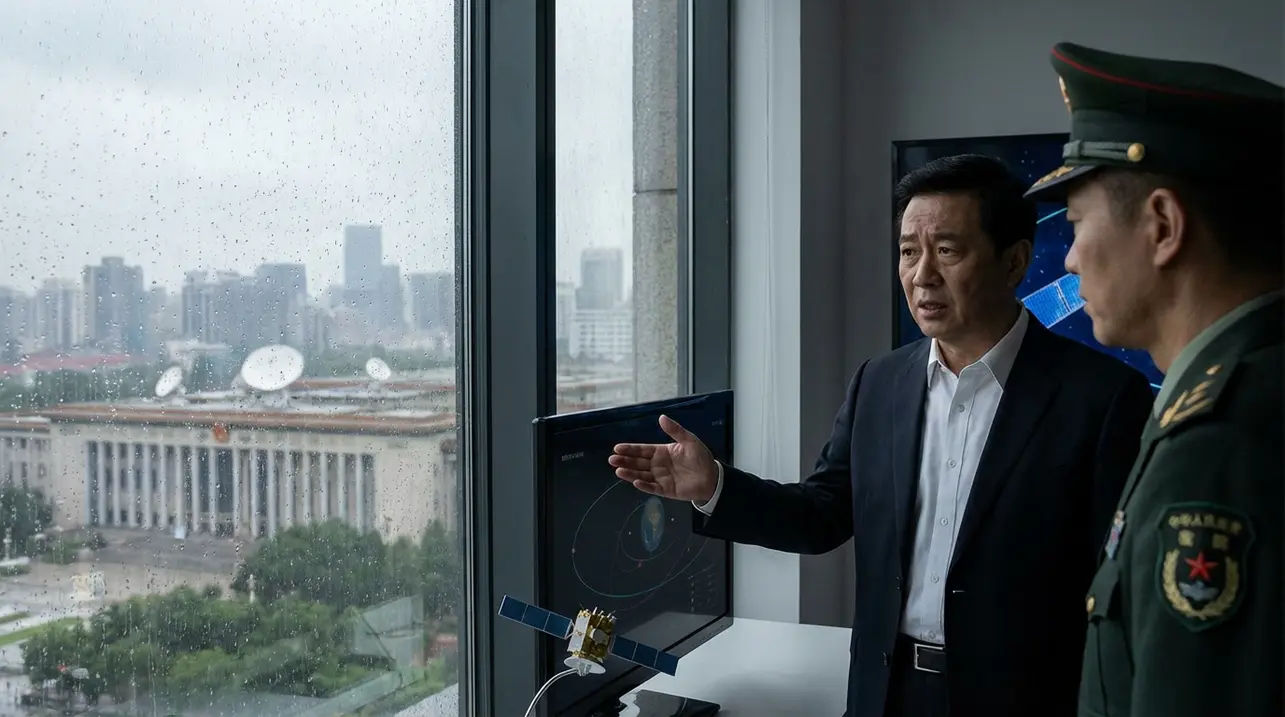
China has raised a stark alarm over the rapid proliferation of internet satellite constellations, singling out SpaceX’s Starlink network as presenting what it terms 'pronounced safety and security challenges. ' This warning, delivered during an informal United Nations Security Council session convened by Russia, isn't merely diplomatic posturing; it's a direct reflection of a simmering crisis in low Earth orbit that has been building for years.The Chinese representative pointed to specific, hair-raising incidents, including two dangerously close encounters between Starlink satellites and China’s Tiangong space station in 2021, which forced the station to perform emergency maneuvers to avoid catastrophic collisions. They also cited the uncontrolled disintegration of a Starlink satellite in December, an event that littered valuable orbital pathways with potentially lethal debris.This isn't just about hurt feelings or geopolitical rivalry; it's about the fundamental physics of space becoming dangerously crowded. The core of Beijing's argument hinges on the sheer scale of Elon Musk's ambition.With approvals for tens of thousands of satellites and thousands already aloft, Starlink is creating a dynamic, automated mega-constellation that operates under U. S.regulatory oversight but has global physical consequences. China contends that this breakneck expansion, driven largely by a private corporation, is outpacing the development of robust international traffic management and safety protocols.The existing space governance framework, largely built during the Cold War era of a few dozen state-owned satellites, is creaking under the strain of this new commercial space age. Experts in orbital mechanics have long warned of the 'Kessler Syndrome'—a cascading chain reaction of collisions that could render key orbits unusable for generations.Each close call, each unplanned breakup, brings that theoretical nightmare one step closer to reality. From a strategic perspective, China's concerns are multifaceted.On one level, there is a genuine, legitimate fear for the safety of its multi-billion-dollar space station and its taikonauts. On another, the Starlink network represents a profound shift in technological and information dominance.Its success in Ukraine demonstrated its potential as a resilient communications infrastructure that can bypass terrestrial networks, a capability that has obvious military implications. By raising this issue at the UN, albeit in a Russian-initiated forum, China is positioning itself as a responsible stakeholder advocating for a new, more inclusive set of rules for space—rules it hopes to help write.The response from the U. S.and SpaceX will be critical. Dismissing these concerns as mere geopolitical noise would be a grave mistake.The incidents cited are documented and highlight a real regulatory gap. The path forward requires moving beyond bilateral suspicion toward a functional, technically detailed international dialogue on space traffic coordination, data sharing for collision avoidance, and end-of-life disposal standards that all mega-constellation operators must adhere to.The silent, airless void above us is becoming a bustling highway, and without a common rulebook, a devastating pile-up is not a matter of if, but when. The future of space exploration, global communications, and even national security depends on finding answers to the very questions China is now forcefully putting on the table.
#China
#Starlink
#space safety
#satellite collision
#United Nations
#SpaceX
#space station
#lead focus news