

- News
- Politics
- South Korean Opposition Leader Lee Jae-myung Advocates Formal Peace Treaty to End Korean War
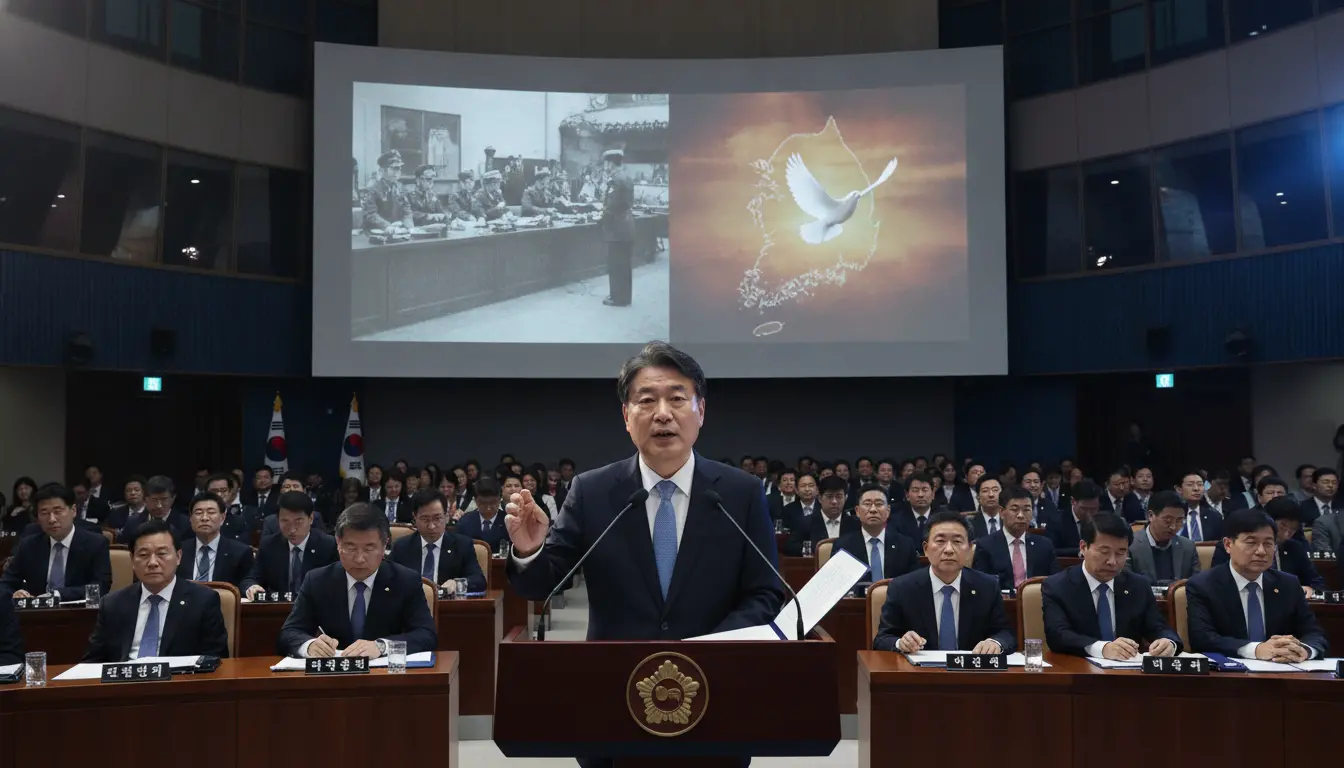
South Korean Opposition Leader Lee Jae-myung Advocates Formal Peace Treaty to End Korean War
A renewed diplomatic push to formally conclude the Korean War, which technically remains ongoing under a decades-old armistice, has been advocated by prominent South Korean opposition leader Lee Jae-myung. The proposal underscores a persistent aspiration within South Korea to move beyond the fragile 1953 ceasefire and establish a lasting peace framework on the Korean Peninsula, even as geopolitical complexities and deeply entrenched mistrust continue to hinder such efforts.
The Korean War, fought from 1950 to 1953, ended not with a peace treaty but with an armistice agreement signed by the United Nations Command (representing South Korea and its allies), North Korea, and China. This provisional ceasefire established a demilitarized zone (DMZ) but left the two Koreas technically still at war, perpetually exposed to the risk of renewed conflict. Over the past seven decades, this state of prolonged armistice has solidified the division of the peninsula, fostered a massive military buildup on both sides, and fueled a cycle of provocations and retaliations that routinely heighten regional tensions. The absence of a formal peace treaty has also complicated inter-Korean relations, making it difficult to pursue substantive economic cooperation, cultural exchange, or genuine reconciliation.
The prospect of a formal peace agreement involves a complex web of actors and interests. Beyond Seoul and Pyongyang, the United States, as a key signatory to the armistice and South Korea's primary security guarantor, plays a pivotal role. Any binding agreement would likely necessitate Washington's consent and could entail adjustments to its military presence in South Korea. China, North Korea's traditional ally and another armistice signatory, also holds significant sway. Beijing has historically supported efforts for denuclearization and stability on the peninsula but remains wary of any arrangements that could compromise North Korea's sovereignty or its own strategic interests in the region. The divergent security priorities and historical grievances among these powers have consistently proven to be formidable obstacles to a lasting peace.
Throughout history, various South Korean administrations have pursued initiatives to declare a formal end to the war, often with little sustained success. Former President Kim Dae-jung's “Sunshine Policy” in the late 1990s and early 2000s, and more recently, President Moon Jae-in's extensive efforts to engage Pyongyang diplomatically, all aimed to build trust and lay the groundwork for a peace declaration. These attempts, while leading to periods of reduced tension and inter-Korean summits, ultimately faltered due to North Korea’s unwavering pursuit of nuclear weapons, a lack of progress on denuclearization, and persistent distrust from the international community, particularly the United States.
The current geopolitical landscape presents both challenges and potential opportunities. North Korea’s continued development of its nuclear arsenal and ballistic missile capabilities, coupled with its increasing belligerence, remains the most significant impediment. International sanctions, spearheaded by the UN and the US, are intended to compel Pyongyang towards denuclearization, yet they often intensify the regime's isolation. Furthermore, domestic political shifts in South Korea and the United States can dramatically alter the diplomatic calculus, with some administrations prioritizing engagement and others adopting a more hardline stance. For a peace treaty to materialize, it would likely require a grand bargain that addresses North Korea's security concerns, its economic development needs, and verifiable steps towards denuclearization, alongside robust guarantees from regional powers.
What is at stake is not merely a symbolic declaration, but the fundamental security and stability of Northeast Asia. A formal peace agreement could unlock unprecedented opportunities for economic integration, humanitarian cooperation, and a significant reduction in military tensions. However, rushing into an agreement without robust safeguards and a clear pathway for denuclearization could inadvertently legitimize North Korea's nuclear status or undermine the existing security architecture. The path to a formal peace treaty is fraught with historical baggage, deep-seated mistrust, and complex strategic considerations, making any swift resolution a monumental diplomatic undertaking. A lasting peace will require sustained, multilateral diplomacy and a willingness from all parties to make significant compromises, far beyond the ambitions of a single proposal.
Ultimately, while the desire for a formal end to the Korean War resonates deeply within South Korea, transforming the 70-year armistice into a binding peace treaty remains one of the world's most intractable diplomatic challenges. The current political climate, characterized by renewed North Korean missile tests and heightened rhetoric, underscores the immense hurdles. Any successful agreement would necessitate a profound shift in geopolitical dynamics and a level of trust and commitment that has historically been elusive among the key players involved.
Stay Informed. Act Smarter.
Get weekly highlights, major headlines, and expert insights — then put your knowledge to work in our live prediction markets.
Related News

US and Iran Face Complex Path Toward Formal Ceasefire Amid Deep-Seated Regional Tensions
US-South Korea Alliance Tested as Debate Over Joint Military Drills Resurfaces

Prospects for a Permanent US-Iran Peace Deal by 2026 Face Formidable Diplomatic Hurdles
Protracted US-Iran Hostilities Raise Stakes for Middle East Stability

Diplomatic Efforts Intensify for Permanent Gaza Ceasefire Amid Protracted Conflict

Diplomatic Efforts Mount to Salvage US-Iran De-escalation Agreement Amid Rising Regional Tensions
Escalating US-Iran Military Confrontation Spurs Calls for Formal Ceasefire
Israel and Hezbollah Agree to Ceasefire Amid Intensified US-Iran Diplomatic Push

US and Iran Navigate Fragile Cease-Fire Amid Heightened Tensions

US and Iran Agree to Extend Ceasefire Until August 2026 Amid Persistent Tensions