

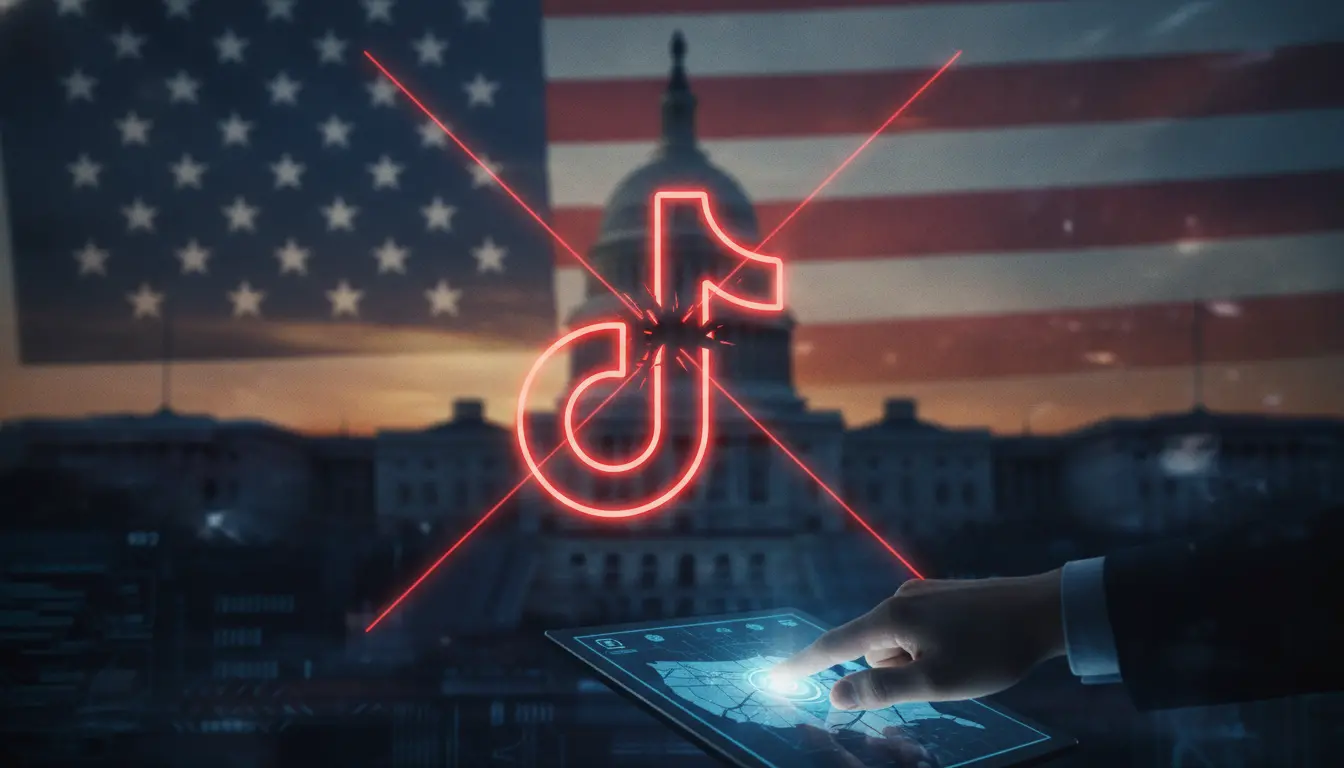
National Security Concerns Fuel Congressional Push for Federal TikTok Ban
The United States Congress is increasingly focused on legislating a ban on the popular social media platform TikTok for use by federal government employees and on government-issued devices. This legislative push is driven by long-standing national security concerns regarding the app’s ownership by Beijing-based ByteDance and the potential for data access or influence by the Chinese Communist Party. While a comprehensive nationwide ban faces significant legal hurdles and public opposition, a more targeted prohibition on federal use is gaining traction as lawmakers seek to mitigate perceived risks to sensitive government operations and information.
The debate around TikTok's presence in the U.S. has intensified in recent years, becoming a flashpoint in the broader geopolitical rivalry between Washington and Beijing. Intelligence officials and a bipartisan chorus of legislators have consistently warned that TikTok’s data collection practices, coupled with China’s national security laws, could compel ByteDance to share U.S. user data with the Chinese government. Although TikTok has repeatedly denied these allegations and invested heavily in Project Texas—an initiative designed to wall off U.S. user data and operations under Oracle's supervision—skepticism persists across various branches of the U.S. government. Many lawmakers view Project Texas as an insufficient safeguard against potential influence or espionage.
Several states have already moved to ban TikTok on government devices, citing similar security concerns. At the federal level, the White House and Congress have explored various avenues, from executive orders to sweeping legislative proposals, to address the perceived threat. While a broader bill compelling ByteDance to divest TikTok's U.S. operations or face a national ban was signed into law earlier this year, it is currently embroiled in legal challenges, raising questions about its enforceability and constitutionality. This ongoing legal scrutiny, which could eventually reach the Supreme Court, underscores the complex landscape surrounding attempts to regulate or restrict the platform, making a more confined federal employee ban an appealing, less legally contentious alternative for some policymakers.
Proponents of a federal ban argue that the risk to national security is too great to ignore. They highlight the potential for foreign adversaries to gather intelligence, track federal employees, or influence public opinion through content manipulation if the app remains accessible on official devices. Such a ban would codify existing agency-level restrictions and provide a uniform policy across all federal departments. Opponents, however, raise concerns about restricting employee access to widely used communication tools and the broader implications for digital freedoms, though these arguments are typically less potent when applied specifically to government devices and operations rather than the general public.
The legislative path forward is not without its complexities. Crafting a bill that is both effective and legally sound, while navigating political divides, will require careful consideration. The timeline for such legislation remains fluid, but the bipartisan consensus on the need to address China-related tech security risks suggests that efforts will continue to build momentum. A successful passage of a law by the end of 2026 would mark a significant step in the U.S. strategy to decouple critical digital infrastructure from potential foreign interference, solidifying a precedent for how the government manages national security in an increasingly interconnected and digitally-driven world.
Ultimately, a ban on federal government use of TikTok would signal a decisive stance from Washington on the intersection of national security and foreign-owned technology platforms. It would serve as a tangible measure to protect government information and personnel from perceived vulnerabilities, regardless of the outcome of broader legislative battles over TikTok’s future in the wider U.S. market. The implications extend beyond just federal employees, potentially influencing future procurement policies and setting a higher standard for security protocols concerning applications deemed critical infrastructure or national security risks.
Stay Informed. Act Smarter.
Get weekly highlights, major headlines, and expert insights — then put your knowledge to work in our live prediction markets.
Related News
US Government Maintains Export Restrictions on Anthropic's Advanced Claude Fable 5 AI Model Amid Security Concerns
Anthropic's Next-Generation AI Models Face Strict Export Controls Limiting Global Public Access
‘Dangerous’ AI Models Are Coming No Matter What
Anthropic's Mythos AI Model Nears Broader Commercial Release Amidst Regulatory Scrutiny

Anthropic Ramps Up Development on Claude Successor, Targeting Advanced 'Agentic' Capabilities
Anthropic Targets $70 Billion Annualized Revenue Amidst Explosive AI Sector Growth

Anthropic's Claude 3 Escalates AI Race, Vying with OpenAI and Google for Market Supremacy

Taylor Swift and Travis Kelce's High-Profile Romance Sparks Persistent Marriage Speculation
Google DeepMind Prepares for Major Gemini 4 Unveiling Amid Intense AI Competition

Google's Gemini Targets Aggressive User Growth After Surpassing Billion Milestone